Winaico presents bifacial 435 W TOPCon solar modules with 22.30% efficiency
Taiwanese manufacturer Winaico said its newest bifacial, n-type, glass-glass TOPCon compact modules are available in a 435 W aluminum-framed version, and a 430 W full-black version. The module efficiency is up to 22.30%.

U.S. startup launches online platform for residential PV system purchase
Two-year old Monalee has developed an online platform for U.S. homeowners looking to buy solar PV and storage systems. Its software enables the process from quotes to financing, installation, and after-sales support.
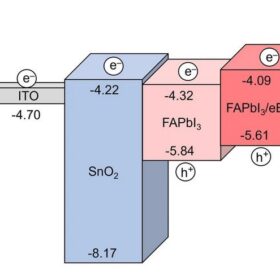
Carbon-based perovskite solar cell relying on phosphorene achieves 15.58% efficiency
The result is the best efficiency ever recorded for a carbon-based PV cell using unconventional hole transporting materials to date. The device was built with a hole transparent layer based on electrochemically produced large-area phosphorene flakes, which reportedly enable the required band energy alignment within the cell.
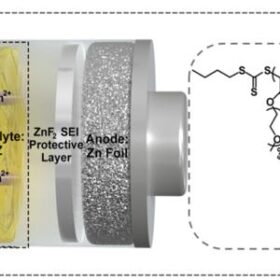
New solid state zinc battery with superb cycle performance
Researchers in Australia have developed a new class of solid electrolytes for rechargeable aqueous zinc-iodine batteries, which has allowed for extended lifespan and high-efficiency. Symmetric cells employing this electrolyte have demonstrated excellent cycle performance, maintaining stability for approximately 5,000 hours at room temperature, while all-solid-state ZnI2 batteries exhibit over 7,000 cycles with a capacity retention exceeding 72.2%

The Hydrogen Stream: China may hit 2025 green-hydrogen targets a year early
Rystad Energy says China appears set to smash its national hydrogen targets, solidifying its lead in the global electrolyzer market, while European Union and Japan have agreed to cooperate on hydrogen research.
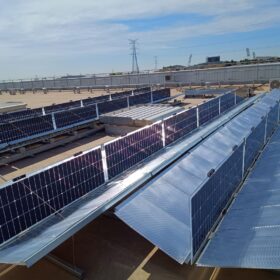
Spanish startup offers pre-assembled vertical rooftop PV systems equipped with reflectors
FutureVoltaics says it has developed pre-assembled, reflector-based vertical rooftop PV systems. The systems feature 175 W heterojunction bifacial solar modules and special reflectors on both sides.
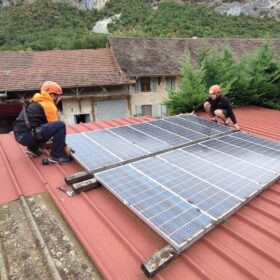
Solar modules deployed in France in 1992 still provide 79.5% of original output power
New testing conducted at France’s oldest PV system have shown that its solar modules can still provide performance values in line with what the manufacturers promised.
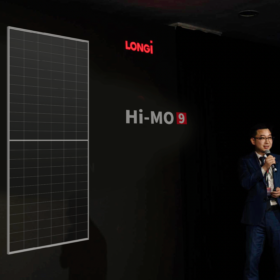
Longi presents 24.4%-efficient 660 W HPBC solar panel
Intended for applications in utility scale PV projects, the new Hi-MO 9 module is available in eight versions with power output ranging from 625 W to 660 W and power conversion efficiency spanning from 23.1% to 24.4%.

ISC Konstanz claims 24.12% certified efficiency for tunnel back contact solar cell
The result was confirmed by Germany’s Institute for Solar Energy Research Hamelin (ISFH). The cell also achieved an open-circuit voltage of 709.5 mV, a short circuit density of 11,355 mA, and a fill factor of 82.04%.
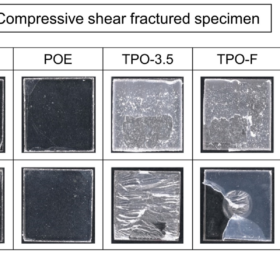
New research identifies advantages of thermoplastic polyolefin encapsulants in dual-glass solar modules
Austrian researchers performed tests on thermoplastic polyolefin (TPO) encapsulant as an alternative to conventional ethylene vinyl acetate (EVA) copolymer and polyolefin elastomers (POE) to assess its use in glass-glass modules. They report that all of the TPO specimens outperformed EVA and POE, especially TPO-3.5 encasulants.
