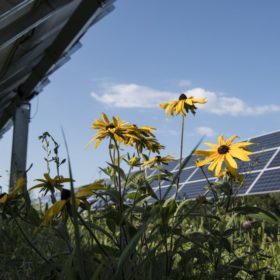
Novel method to turn existing solar parks into agrivoltaic facilities
An international research team has developed a new methodology to increase levels of pollination at ground-mounted solar plants. It involves the development of new vegetated land cover below and around solar parks.
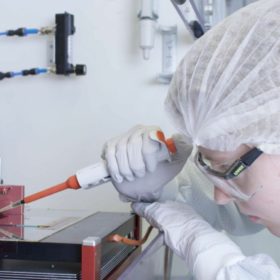
Eco-friendly solvent for a 16.7% perovskite solar cell
Scientists in Germany looked to eliminate the use of toxic solvents in the production of perovskite solar cells, replacing them with a more environmentally material called dimethyl sulfoxide (DMSO) which has so far proved difficult to integrate into processes suitable for large-scale production. The group demonstrated a scalable blade coating process using DMSO as the only solvent, and reached cell efficiencies close to those achieved using more toxic substances.
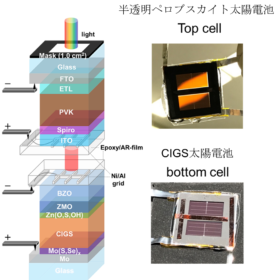
Four-terminal tandem perovskite/CIGS solar cell with 26.2% efficiency
Japanese scientists have developed a tandem device with a 19.5%-efficient perovskite top cell. They claim to have created a semi-transparent perovskite solar cell while maintaining high performance.
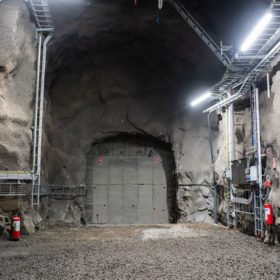
Swedish consortium completes rock cavern for green hydrogen storage
Vattenfall and its partners have finished building a 100-cubic-meter underground facility to store green hydrogen.

Energy Toolbase launches PPA generator platform for solar, storage
US commercial, industrial, and non-profit solar developers can now generate power purchase agreements via Sustainable Capital Finance’s developer platform.

Trina Solar achieves 24.5% efficiency for 210 mm p-type PERC solar cell
Trina Solar said the State Key Laboratory of PV Science and Technology in China has confirmed the efficiency rating of its latest solar panel.

pv magazine Roundtables: Videos on solar everywhere, PV manufacturing trends, risk sharing in PPA markets, and green hydrogen
On day two of the pv magazine Roundtables Europe event, we focused on minimizing land competition for PV with dual use applications, how high efficiency n-type cells are progressing toward large-scale manufacturing at competitive cost, PV module design choices, how unsubsidized power purchase agreements can adapt and evolve, and the determining conditions for solar-plus-storage and solar-plus-hydrogen business models, among other key PV issues. The last five sessions are now available to view on demand.
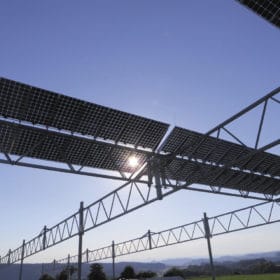
New method to evaluate performance, LCOE of elevated agrivoltaics
Scientists in Belgium have developed a way to assess elevated agrivoltaic projects, by calculating key performance indicators such as energy yield and levelized cost of energy (LCOE). They have found that shade-tolerant crops such as potatoes could potentially be paired with around 1,290 GW of PV capacity in Europe.
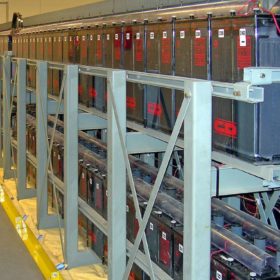
The real value of energy storage
An international research team has developed a new way to evaluate the economic value of energy storage technologies. They went beyond pure cost assumptions to consider the benefits that such technologies could bring to energy systems.
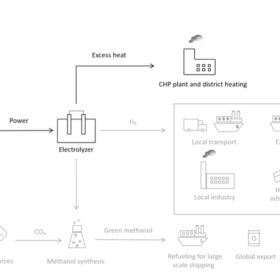
Waste heat from hydrogen production for district heating
The use of waste heat from hydrogen production in district heating could increase the attractiveness of green hydrogen, according to new research from Sweden.
