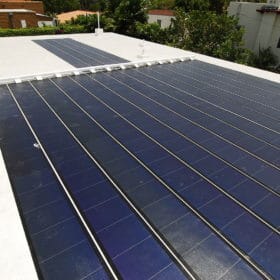
Thin film solar may have carbon intensity advantage over silicon
Thin-film cadmium telluride panels may have a $0.02 to $0.04 per watt carbon cost advantage over traditional polysilicon, said the National Renewable Energy Laboratory in an analysis of embodied carbon, embodied energy, and energy payback.
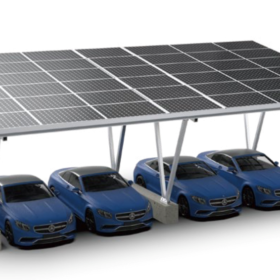
Waterproof all-aluminum solar carport from China
Developed by Chinese manufacturer Enerack, the carport can host all types and sizes of solar panels and relies on waterproof technology for rain protection.

Tennet to build 40 new high-voltage stations in the Netherlands
The Dutch transmission system operator said that more grid capacity is needed to address the continuous growth of wind and solar energy, as well as that of electromobility and heat pumps.
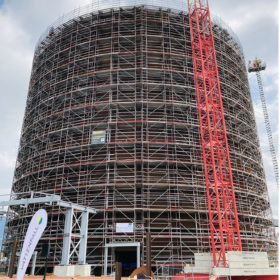
Europe’s largest heat storage tank
The heat storage tank is 45 m high and has a capacity of 56 million liters. It will store district heating water at a temperature of 98 C and, according to Vattenfall, will use heat produced with renewable electricity coming from the grid.
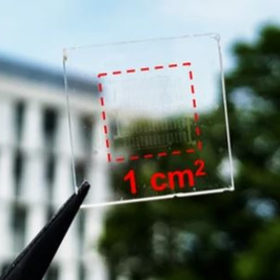
Near-invisible solar cell based on tungsten disulfide photoactive layer
Japanese scientists built a near-invisible solar cell based on indium tin oxide (ITO) and tungsten disulfide (WS2) as a transparent electrode and a photoactive layer, respectively. The cell has the potential to achieve a transparency of 79%.
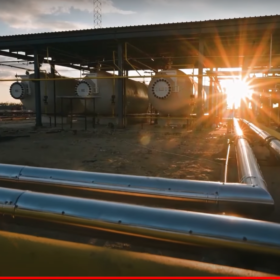
Acme to build 1.5 GW green hydrogen project in India
Indian developer Acme will set up a green hydrogen and ammonia project in Tamil Nadu with 1.5 GW of electrolysis capacity and 1.1 million tons of ammonia synthesis, powered by a 5 GW solar plant.
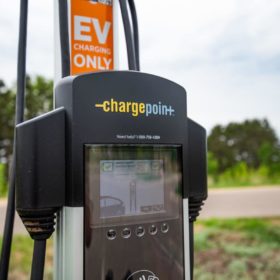
Powering EV charging stations with agrivoltaics
US researchers find that placing agrivoltaic installations along highways to power EV charging stations can reduce both carbon emissions and range anxiety.
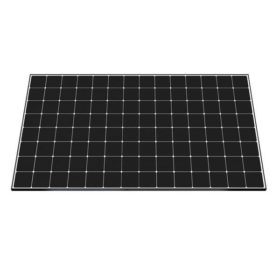
Energy output is over 100 times the input needed to manufacture solar panels
According to a third-party study, the projected output over the 40-year warranty period of Maxeon solar panels exceeds the energy demand of manufacturing them by over 100-fold. Plus, more details from the Maxeon 2021 sustainability report.
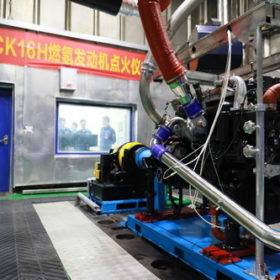
The Hydrogen Stream: Ignited hydrogen-fueled engine from China
Machinery company Yuchai expects mass production by the end of 2022, targeting tractors and other heavy commercial vehicles in mountainous or plateau areas. Sunfire is installing a 2.6 MW high-temperature electrolyzer at Neste’s renewable products refinery in Rotterdam, with commissioning expected in early 2023. Meanwhile, hydrogen-based projects in the mobility and transportation sectors are taking off in France, Czech Republic, and the UK.
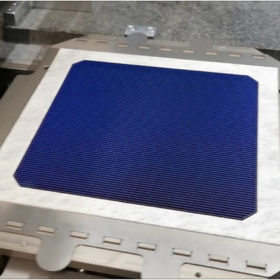
Heterojunction solar cells with lower silver consumption via rotary screen printing
Scientists from the Fraunhofer ISE built a bifacial heterojunction solar cell with a power conversion efficiency of 21.7% via rotary screen printing. They used a machine that is able to achieve a cycle time of just 0.6 seconds per solar cell and enables a strong reduction in silver use.
