
Tokyo Gas invests further in solar and creates JV for storage
The acquisition of a 4.8 MW solar plant in the Kyoto prefecture and creation of a joint venture with Japanese storage specialist Exergy are part of the group’s 2020 plan to diversify its business into renewables and acquire 1 GW of capacity in them.

Solar rail and roads in the UK to get financial shot in the arm
The Department for Transport has announced funding for research projects which could help decarbonize Britain’s railways and generate power from roads and footpaths. Previously explored with limited success, it is hoped the research will push the frontiers of the field and give a fresh impetus to Britain’s ailing solar sector.
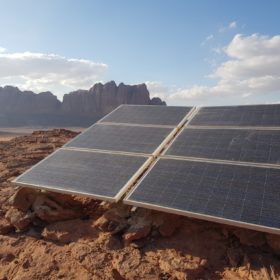
The weekend read: The untapped potential of the MENA region
The region’s climate, developing economies and demographic growth are driving increased electricity demand in the Middle East and North Africa. However, as a hub of conventional energy supply, the region has been slow to embrace PV. To capture more of the value chain and deliver the full potential of solar, there are increasing calls for distributed generation deployment to play a bigger role.

Australian senate: Don’t leave us in the slow lane for EV uptake
Federal and state governments need to do a whole lot more to help the transition to electric vehicles, says the senate, after poll results indicated strong popular backing for the switch from fossil fuel transport.

Spain unveils new provisions for self-consumption regulation
The Spanish government has proposed a Royal Decree with new self-consumption regulation which is expected to be approved in March or April. According to the new rules, power surpluses may be shared with other consumers or fed to the grid.

UK government offering little encouragement to the solar sector says the industry
A conference in London explored the next steps for renewables in the U.K. There was widespread agreement solar has been left in the cold by a government unwilling to alter the current market dynamics.
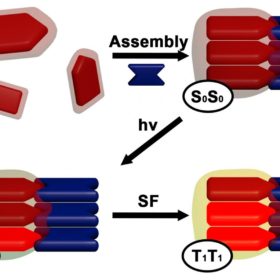
Singlet fission may raise theoretical efficiency of solar cells to 44%
According to a U.S. research team, new nanomaterials relying on dyes based on diketopyrrolopyrrole and rylene can generate a singlet fission reaction that extends the life of harvestable electronic charges.
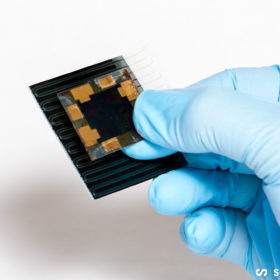
Solliance claims 21.5% efficiency for perovskite CIGS cell
The European solar research organization, Solliance announced it has achieved a 21.5% efficiency for a flexible copper indium gallium selenide (CIGS) tandem solar cell based on perovskite.

‘China’s most efficient’: Hanergy hits 24.34% efficiency on HJT cell
Chinese PV manufacturer Hanergy Thin Film Power Group today announced it has achieved 24.23% cell efficiency using its silicon heterojunction technology. The efficiency has been confirmed by Japan’s Electrical Safety & Environment Technology Laboratories.

Australian city will get 4 MW community battery as grid back-up
Queensland is in line for its first community-scale battery – to be installed on Townsville’s outskirts – because of the high number of rooftop solar systems and close proximity of electricity infrastructure. The energy storage system should be operating by the end of the year.
