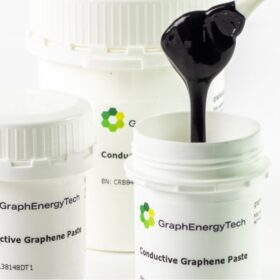
Replacing silver in PV manufacturing with new graphene electrode technology
Swiss-British university spinoff, GraphEnergyTech, is developing graphene electrode technology to replace silver and other metals traditionally used in solar cell manufacturing.

Enhancing PV glazing prospects in solar architecture
To make it easier to adopt building integrated PV (BIPV) as a glazing material, a group within the IEA Photovoltaic Power Systems Programme (IEA-PVPS) has tackled the solar heat gain coefficient (SHGC) calculation for BIPV. It is part of IEA PVPS Task 15 international standardization efforts.
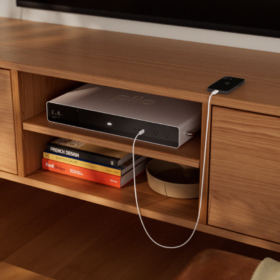
U.S. startup offers plug-and-play, renter-friendly backup battery
The Pila Energy home battery is a portable, renter-friendly backup-power battery with enough energy storage to power a refrigerator for up to three days.
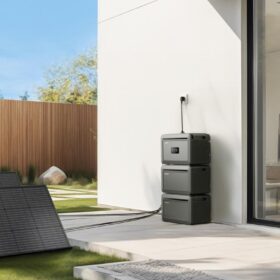
Growatt releases all-in-one 8 kWh balcony storage system
The battery features four MPPTs and can take up to 2,600 W of PV input. It also has an AC nominal output power of 800 W.

Atess Power launches 1,500 kW battery for C&I solar
Atess Power has released a 1,500 kW battery for commercial and industrial (C&I) solar, with up to eight units operating in parallel for 12 MW of capacity. The Chinese inverter manufacturer also offers 1,000 kW and 1,200 kW models.

Atmoce launches new combiners, microinverters
Atmoce’s new combiner boxes can handle up to 30 kW of PV input and offer 42 kWh of battery storage. Its microinverters support PV modules up to 700 W.
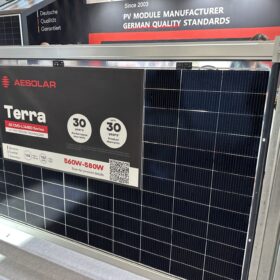
AE Solar releases bifacial solar modules for vertical projects
AE Solar has launched bifacial solar modules with 560 W to 580 W of power output, designed for vertical installations and agrivoltaic projects. The German company says the modules offer up to 10% backside power gain.

All unmanned ground vehicles for solar plant monitoring at a glance
Scientists in Australia have reviewed 36 mobile inspection robots for ground-mounted PV plants and have identified six commercial ground robots that are systematically used for this task. Their work presents the robots according to different types of locomotion, navigation technologies, communication technologies, and market status.

Caribbean has potential to unlock solar-to-X economy
The Caribbean stands to benefit from low-cost renewable energy solutions, reducing the energy system cost, mitigating climate risks, and driving a clean energy transition. With solar PV as the cornerstone technology, the region is poised to transition to a solar-to-X Economy, leveraging its abundant renewable resources to achieve carbon neutrality.
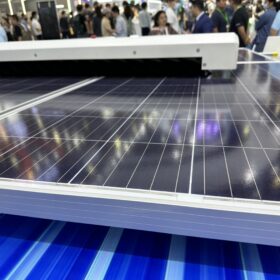
A one stop shop for the certification of solar PV panels
The IEC Conformity Assessment System for Electrotechnical Equipment and Components (IECEE) has been building trust for industries making and selling electronic equipment for the last 40 years, one the most important of them being the solar PV panel industry.
