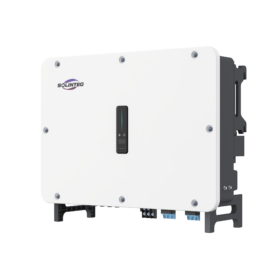
Solinteg unveils hybrid inverter series for C&I applications
The Chinese manufacturer said the product line includes five models with outputs ranging from 25 kW to 50 kW, supporting charge and discharge currents of up to 150 A.
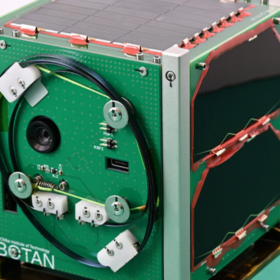
Idemitsu developing CIGS solar modules for satellites
Japan’s oil giant Idemitsu Kosan and U.S.-based Source Energy Company announced a collaboration to develop copper indium gallium-selenide solar modules and arrays for satellite and space applications.

GoodWe releases new residential all-in-one storage solution
The Chinese company says that its new ESA series is available with a hybrid inverter ranging from 3 kW to 10 kW and storage capacities of 5 kWh to 48 kWh. The IP66-rated product supports an MPPT current of up to 20 A on the PV side and allows 200% PV oversizing, according to the manufacturer.

Outdoor testing identifies factors contributing to perovskite solar cell degradation
Tests conducted by a research team in outdoor environments in Spain and Poland have demonstrated a strong correlation between perovskite solar cell degradation and the combined effects of climatic and operating conditions. The scientists found that open-circuit operation accelerates degradation, whereas operation at the maximum power point and under short-circuit conditions has a lower impact.

Increasing PVT-assisted heat pump efficiency with liquid overfeed design
Researchers in China developed a large-scale PV-thermal heat pump system using a liquid overfeed method that reportedly improves both thermal and electrical efficiency. Field tests showed up to a 4.81% boost in power generation and significantly reduced pressure losses compared to conventional systems.

Bangladesh opens testing lab to certify solar module quality
The Bangladesh Standards and Testing Institution (BSTI) says its new solar module testing laboratory in Dhaka marks a major step toward enforcing quality standards and supporting the nation’s export ambitions.

Detecting PV module defects at a single glance
Scientists in China have developed a new deep learning model based on the so-called “You Only Look Once” algorithm, which requires only one forward propagation pass through the neural network to make predictions,

World’s first solar park featuring hydrogen-producing PV modules takes shape in Belgium
A 2 MW solar park in Wallonia, Belgium, will rely 50 kW of hydrogen-producing solar modules developed by Solhyd, a spin-off from KU Lueven. The installation will be the first demonstration of Solhyd’s technology at a commercially-relevant scale.
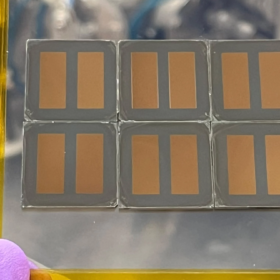
NTU achieves high stability in 25.1%-efficient inverted perovskite solar cell
Researchers at Nanyang Technological University have demonstrated a method to integrate chemically inert low-dimensional interface materials into the fabrication of inverted perovskite solar cells. Their prototype solar cells retained over 93% of the initial power conversion efficiency of 25.1% after 1,000 hours of operation, and 98% after 1,100 hours at 85 C.

Fraunhofer ISE spin-off launches heat pump information platform
Heat Pumps Watch will work to change consumer attitudes towards heat pump adoption by delivering evidence-based information on the technology aimed at professionals, policymakers and homeowners.
