
The Hydrogen Stream: Japanese scientists develop proton-conducting perovskites for fuel cells
Scientists from the Tokyo Institute of Technology (Tokyo Tech) and High Energy Accelerator Research Organization (KEK) have developed a highly oxygen-deficient perovskite for protonic ceramic fuel cells (PCFCs), while the European Commission has approved its fourth Important Project of Common European Interest (IPCEI).

Gulf heat dome and polar jet stream shape solar outcomes in May
In a new weekly update for pv magazine, Solcast, a DNV company, reports that a strong polar jet stream and a record-breaking heat dome in May resulted in a stark contrast in irradiance patterns across North America. The western and central USA, along with Mexico, experienced higher than normal irradiance, while the Gulf and East Coast regions faced lower irradiance.

Indoor PV powered wireless touch-switch to control home, office equipment
U.K.-based indoor PV specialist Lightricity and Japanese capacitator manufacturer Nichicon have developed a PV-powered Bluetooth switch to remotely control home or office equipment, such as lighting, sliding doors, or appliances.
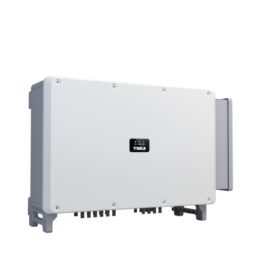
TBEA launches inverters for C&I projects
TBEA has developed new products with nominal power ratings of 75 kW to 110 kW and efficiencies of 98.6%. Their European efficiency rating is 98.4%.
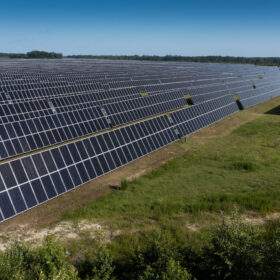
FTC Solar introduces automated hail stow for solar tackers
FTC Solar has developed a hail stow strategy that positions solar modules to minimize the impact of hail and wind, based on a collaboration with VDE Americas.
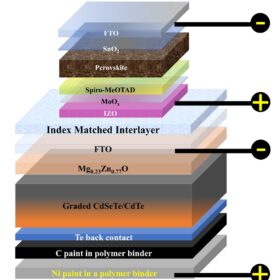
Perovskite-cadmium telluride tandem solar cell based on special electrode achieves 24.2% efficiency
An Indian-US research team has fabricated a four-terminal perovskite-cadmium telluride tandem solar cell by utilizing a highly conductive and sputtered transparent electrode to increase the current density of the bottom cell. The tandem device combines a 18.3%-efficient top perovskite cell and a 19.53%-efficient cadmium telluride bottom device.
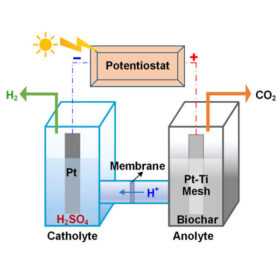
Producing hydrogen fuel from solar power and agricultural waste
Using 600% less voltage to produce hydrogen, a research team at the University of Illinois Chicago has developed a new method for splitting water.

Assessing feasibility of solar arrays at airports
A team of researchers developed a methodological framework for assessing solar potential at airports and applied it to seven Indian airports. They found the greatest potential at an airport in Raipur, central India, where they say an at least 21 MW array could be installed without compromising customer experience or safety.
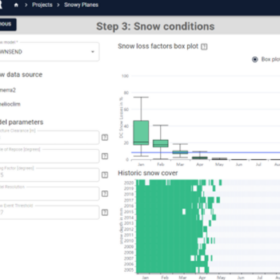
PVRadar offers solar project risk assessments factoring in historical climate data
PVRadar Labs has expanded its software platform to include PV project risk assessment functionality, reportedly enabling more realistic performance estimates based on historical climate data.
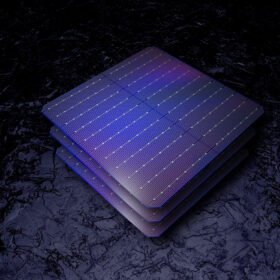
Qcells to deploy Lumet’s fine-line metallization tech
Qcells says it will use Lumet’s fine-line metallization technology for its solar cells, for higher efficiency and lower production costs.
