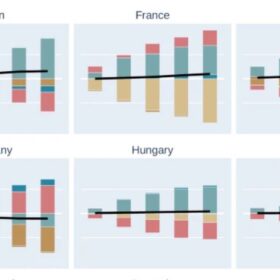
Massive amounts of vertical PV may reshape European energy market
A group of scientists led by the Joint Research Centre (JRC) of the European Commission has analyzed the impact of deploying more vertical PV systems in the European energy markets and has identified potential advantages that may be offered by this scenario. These include lower electricity prices, lower system costs, and an increasing power exchange between neighboring countries.
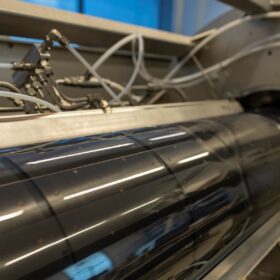
Kalpana Systems launches roll-to-roll spatial atomic layer deposition tools
Kalpana Systems, a Dutch equipment manufacturer, is launching spatial atomic layer deposition (sALD) tools to be used in roll-to-roll manufacturing processes in the solar PV, organic light emitting diode, battery and packaging industries. The initial application is expected to be barrier layer deposition.

Porsche reveals second-life battery at Germany plant
Porsche has revealed a battery energy storage system (BESS) at its Leipzig powered by second-life Porsche Taycan batteries. The project is based on a feasibility study in collaboration with the University of Applied Sciences Zwickau in Saxony, Germany.
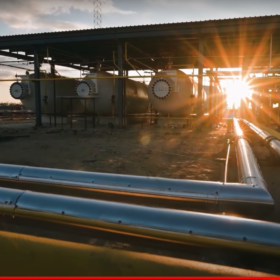
The Hydrogen Stream: Clean ammonia supplies set to soar, says BNEF
BloombergNEF says clean ammonia supplies could expand by 30 times to 32 million tons by 2030, while MAX Power Mining has roughly tripled the size of its Rider Natural Hydrogen Project in western Canada.
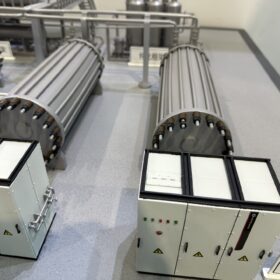
New method to calculate levelized cost of hydrogen
Scientists in Australia have incorporated overload capacity and power-dependent efficiency of the electrolyser in a novel techno-economic model to calculate the levelized cost of hydrogen. The proposed methodology was applied to ascertain the impact of internalizing environmental costs on the cost-competitiveness of green hydrogen compared to grey hydrogen.
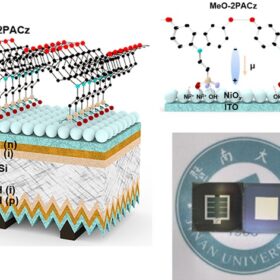
Perovskite-silicon tandem solar cell based on hybrid interconnecting layers achieves 28.47% efficiency
An international research team has designed a two-terminal perovskite-silicon tandem solar cell that utilizes new hybrid interconnecting layers to reduce recombination losses in the top perovskite device. The tandem cell achieved an impressive fill factor of 81.8%, which the scientists said is the highest value ever reported for this cell technology to date.
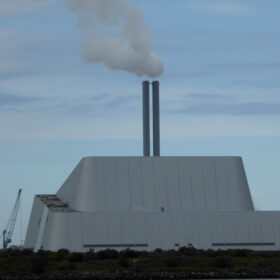
Coupling photovoltaics with waste-to-energy
Researchers have simulated the addition of PV plants and waste-to-energy systems in the Iraqi Al-Gharab region, that suffers from power cuts, and have identified the optimal size and locations for these hybrid plants, with the LCOE dropping by 7.7%.
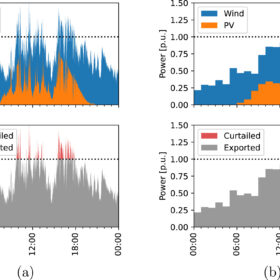
Novel approach to estimate curtailment, clipping losses in hybrid wind-solar plants
A European research team has proposed a new methodology for optimal design of hybrid wind-solar power plants. Their approach is based on 1-minute resolution data, which the scientists said provide much more accurate information about potential curtailment and clipping losses compared to 1-hour resolution data.

Radiative cooling tech based on polydimethylsiloxane film increases PV module generation by up to 3.72%
Scientists in China have proposed to use polydimethylsiloxane films doped with soda glass to reduce solar module temperature. The coating achieved solar transmittance of 94.8% and sky window emissivity of 95.3%.
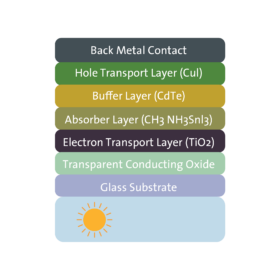
Improving perovskite solar cell performance with cadmium telluride buffer layer
An international research team has conducted a series of simulations to investigate how a cadmium telluride buffer layer may help increase efficiency and stability in perovskite solar cells. Their experiment showed that cell efficiency may climb from 11.09% to 23.56%.
