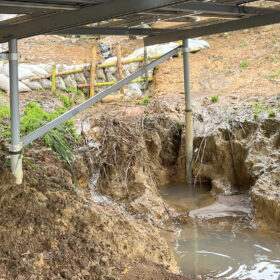
Solar floodplains and fault lines
With the early expiration of key US solar tax credits in 2026 and 2027, solar developers from the United States and Europe are looking to diversify, and the Asia-Pacific (APAC) region represents attractive prospects for many. But unpredictable site conditions can defy even the most experienced developers’ assumptions, causing delays and cost hikes. Upfront due diligence is vital, argue Clean Energy Associates engineers Nicholas Hudson and Evan Woolard.

Panasonic testing new energy management system to combine solar, heat pumps, batteries
The Japanese company said the first pilot projects are being carried out in the Tokyo metropolitan area with the support of Japanese oil giant Eneos.
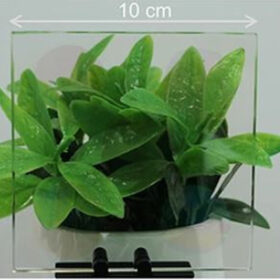
Chinese scientists develop colorless solar concentrator for PV windows
The research team’s semi-transparent solar concentrator can be directly coated onto standard window glass. It uses liquid crystal films to reflect and guide circularly-polarized sunlight to solar cells installed toward the edge of a window. A 1-inch diameter prototype was found capable of directly powering a 10 mW fan under sunlight.
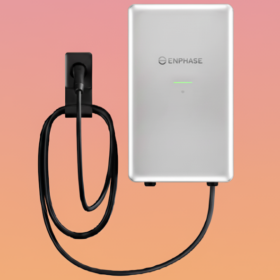
Enphase presents bidirectional EV charger
The microinverter company has disclosed details on the architecture of its IQ Bidirectional EV Charger, which will be available for sale in the second half of 2026. It is reportedly able to deliver up to 11.5 kW of bidirectional power.

Decision making tool for crop selection in agrivoltaics
Researches in Germany have created a comprehensive crop selection tool for agrivoltaics across more than 25 countries. The proposed matrix evaluates species-specific responses of 12 major crop types to shading, microclimate changes, and crop growth, while also assessing their water needs, shade tolerance, and space requirements.
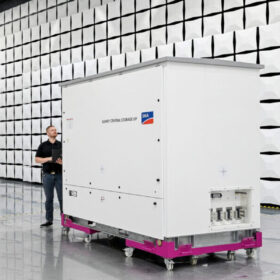
SMA secures German certificate for grid-forming battery inverter
SMA Solar Technology AG has obtained the first German unit certificate for a grid-forming battery inverter with instantaneous reserve. The certification allows use in high- and extra-high-voltage projects ahead of the new reserve market in 2026.

Rable offers mounting system for east-west PV systems on low-load flat roofs
The Dutch startup said it is developing markets in France, Sweden, and Belgium after completing more than 50 solar rooftop projects in its home market based on its east-west oriented, self-supported mounting system.
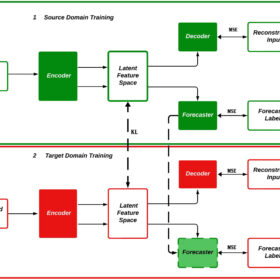
Domain adaptation framework for PV power forecasting
A team of researchers have developed a domain adaption framework capable of transferring knowledge from solar power plants with abundant data to plants that need to be trained without labelled data. The framework has been tested at three solar power sites in Germany and was found to perform better than reference models.

Italy issues new fire safety rules for PV and storage systems
Italy’s fire service has introduced binding guidelines for PV systems up to 1,500 V, adding rules on storage, spacing, compartmentalization, and maintenance.

Tesla unveils new generation of utility-scale batteries
Tesla’s long-anticipated innovation in utility-scale battery storage has yielded two new products, marking a leap toward faster deployment, greater scalability, and higher energy density.
