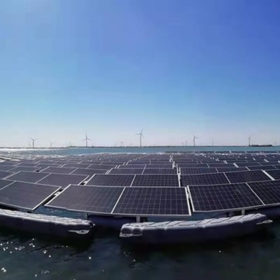
Floating solar combined with wave, tidal, wind power
A consortium of Singaporean universities and companies will study the feasibility of integrating a hybrid floating solar project with ocean, tidal, and wind capacity. If successful, the parties plan to deploy a pilot system with at least 100 MW of renewables capacity.
优睿科.jpg-280x265.png)
Latest advances in sodium-ion battery research
Qingdao University researchers have synthesized high-performance titanium dioxide-based anode materials with excellent cycling stability, while German scientists have used operando techniques to observe how solvated sodium ions embed themselves in electrodes.

The Hydrogen Stream: Svevind to invest in 20 GW of electrolysis capacity in Kazakhstan
A unit of Svevind has signed an agreement to invest up to $50 billion in a project on the Caspian Sea that could produce up to 2 million tons of green hydrogen per year. Stellantis, meanwhile, has revealed plans to mass produce light commercial hydrogen vehicles.
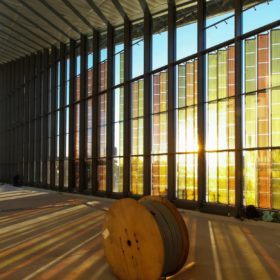
EPFL sets new efficiency record for dye-sensitized solar cells
Scientists at EPFL in Switzerland have achieved a new efficiency record for dye-sensitized solar cells. The group reported 15% efficiency in direct sunlight, and up to 30% under ambient light conditions. Their key achievement was the development of a new combination of photosensitizer materials that can absorb the entire light spectrum.
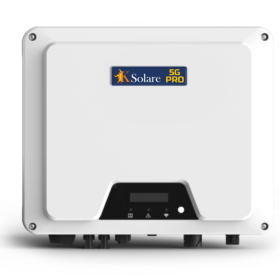
KSolare unveils new three-phase solar inverters
KSolare’s 5G-Pro series grid-tie solar inverters are now available with power ranging from 3 kW to 60 kW.
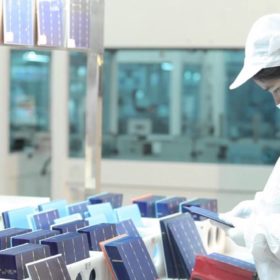
Globalized supply chains saved $67 billion in solar panel production costs
A new study has calculated that the globalized PV module supply chain has saved billions for PV installers in Germany, the US and China. It also found that if strong nationalistic policies that limit the free flow of talent and capital were implemented going forward, solar panel costs would be 20-25% higher by 2030.
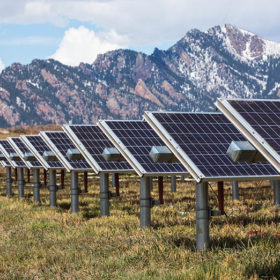
Cooling down solar modules by increasing space between panel rows
A US research team claims to have demonstrated that increasing the spacing of solar panels between rows improves PV system efficiency and economics by allowing airflow to cool down the modules. The method could improve a project’s LCOE by as much as 2.15% in certain climates.
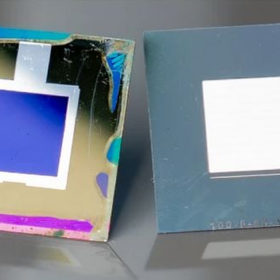
Tandem perovskite-silicon solar cell with 29.80% efficiency via periodic nanotextures
Researchers from Germany have designed a tandem perovskite silicon PV cell that reportedly has lower reflection losses and improved open-circuit voltage. They demonstrated a device with submicrometre-periodic nanotextures and an improved back-reflector design.
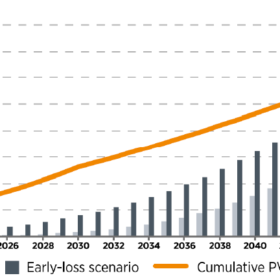
New process to recycle Si-PV modules
A team of researchers from the University of New South Wales (UNSW) has proposed a novel cost-effective way to recycle silicon solar panels. Their process consists of module deframing, laminate shredding and material concentration using electrostatic separation, reducing their original weight by 2% to 3%.

Algae could boost solar panel efficiency by 4%
A Swedish team has inaugurated a pilot facility to mass produce algae material that can potentially boost silicon solar module efficiency by 4% and thin film by 36%. The algae are added to the encapsulant in silicon-based modules or to the anti-reflective coating on the glass of thin film modules. The team estimates the resulting modules would be 3.9% cheaper.
