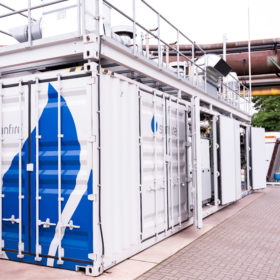
The Hydrogen Stream: Salzgitter claims record efficiency for largest high-temperature electrolyzer
Salzgitter has claimed a record efficiency level for its EU-funded GrInHy2.0 hydrogen project, which is based on solid oxide electrolysis cell tech. The high-temperature electrolyzer uses waste heat from the company’s steel production processes.
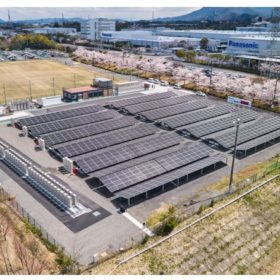
Panasonic combines fuel cells, batteries, PV to power factory in Japan
Japan’s Panasonic claims its new pilot solar-plus-hydrogen facility marks the first attempt to create a factory powered by 100% renewables, via the full-scale use of hydrogen.
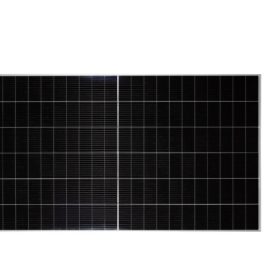
Eging releases 685 W TOPCon PV module with 22.05% efficiency
Chinese manufacturer Eging has unveiled a new line of bifacial TOPCon solar panels based on n-type wafers and 210 mm cells. The modules have a temperature coefficient of 0.31% and efficiencies ranging from 21.24% to 22.05%.
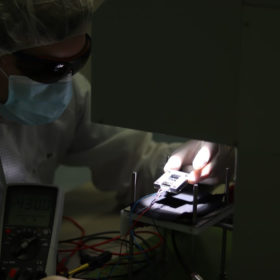
Ultra-thin perovskite-organic tandem solar cell with 24.0% efficiency
Researchers in Germany have built a perovskite-organic solar cell with low interfacial losses and a high open-circuit voltage. The device achieved an open-circuit voltage of 2.15 V, a short-circuit current of 14.0 mA cm−², and a fill factor of 80%.
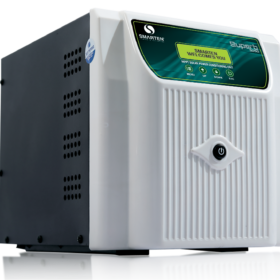
Smarten launches 2.4 kW hybrid PV power conditioning unit for offgrid applications
Smarten has released the Superb 3050 hybrid solar power conditioning unit (PCU) for offgrid applications. The 2.4kW product is priced at INR 19,999 ($260).
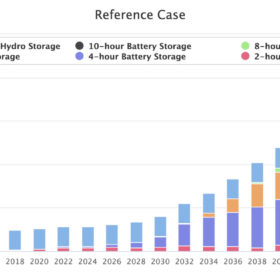
NREL’s storage projections for 2050
The National Renewable Energy Laboratory’s (NREL) final report on the future of storage presents “key learnings” from a series of six in-depth studies.
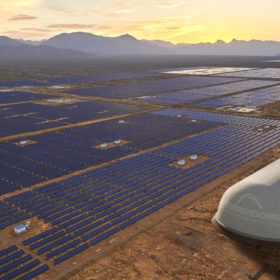
Energy Dome wins BNEF Pioneers 2022 for CO2 battery long-duration energy storage technology
Energy Dome’s emission-free energy storage method uses carbon dioxide in a closed loop charge/discharge cycle that can store and dispatch renewable energy onto the grid over periods from four to 24 hours.
The mobility rEVolution: Honda ups the ante on EVs, solid state batteries
In other news, further Covid-19 lockdowns in China continue to negatively impact the EV battery supply chain and broader industry, Porsche is testing V2G capabilities, and Israeli startup Electreon announces extension of its wireless dynamic EV charging project in Sweden.
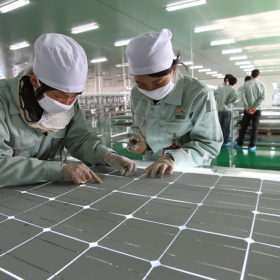
AI method learns from experienced staff on perovskite solar production lines
Academics from MIT and Stanford who have posited a new production method for perovskite solar cells have also developed a machine learning system which benefits from the experience of seasoned workers – and they’ve posted it online for anyone to use.
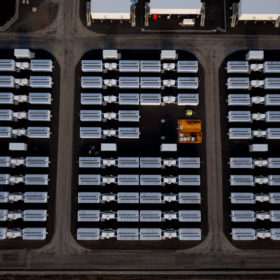
Neoen, AGL sign Australia’s first grid-scale virtual battery contract
French renewable energy developer Neoen has signed a seven-year agreement with Australian utility AGL to provide 70 MW/140 MWh of virtual battery capacity in New South Wales.
