
The weekend read: Hype and hope for solid-state batteries
Hype and hope for solid-state batteries (SSBs) continues to grow as industries from automotive to storage bet big on the technology. Leading battery manufacturers and a roll call of start-ups are jostling to get from lab to fab. The reality of SSBs is in question though. As Marija Maisch reports, the window of opportunity for the decades-old technology to make the next big step toward commercialization is now.
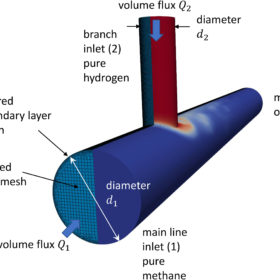
The Hydrogen Stream: Traditional hydrogen blending could damage gas pipelines, say researchers
UK researchers have revealed that gaseous hydrogen could cause problems in natural gas pipelines, while electrolyzer manufacturer Nel has announced plans to build a second production line in Norway.
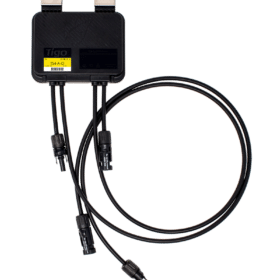
Huge opportunity for module-level power electronics
A new report form analysts at IHS Markit notes that the market for module-level power electronics (MLPE) grew by 33% between 2019 and 2021, with around one-third of new residential solar installations now taking advantage of MLPE’s promise of improved safety, energy yield and fault detection. And with smaller, distributed generation systems expected to represent 43% of global PV installations between now and 2025, the opportunity for MLPE will only get larger.
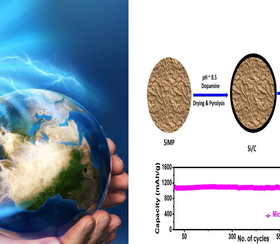
Resilient anode material for high-performance lithium-ion batteries
Scientists in Japan have developed black glasses grafted silicon microparticles as a negative electrode material to improve lithium-ion battery performance.
Gallium doping keeps p-type in the frame
Scientists at Germany’s Fraunhofer Institute for Solar Energy Systems (ISE) have investigated gallium-doping in p-type silicon wafers as a route to better performance. Testing these specially produced p-type wafers in TOPCon and heterojunction cell architectures, which several major PV cell manufacturers are gearing up to produce on more expensive n-type wafers, the scientists found that with gallium doping, the p-type wafers can achieve similar or even better cell efficiencies compared to those made so far with n-type wafers.
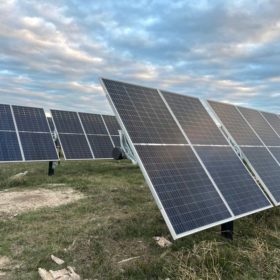
Exus acquires 1 GW project pipeline in Brazil
Exus Management Partners has acquired 20 planned solar plants, totaling 1.06 GW of generating capacity, in northern Brazil. The plants all fall under the banner of the Riacho da Serra project, which Exus has acquired from developers Decal Renewables and Upside Value for BRL 3.5 billion ($650 million).
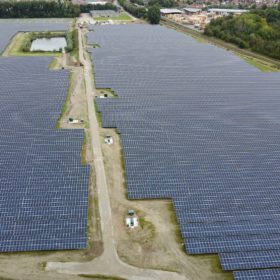
Shell to purchase 100 MW UK portfolio from Anesco
Shell will purchase four planned PV projects totaling 100 MW in various locations across northern England. It says it will seek offtakers for the projects through its power trading team and sees strong demand in the corporate power purchase agreement sector.
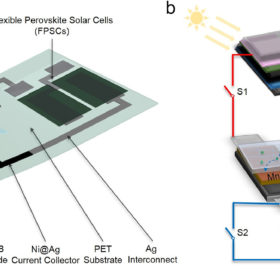
New battery needs seconds of sunlight to keep wearables charged
Researchers at Surrey’s Advanced Technology Institute have demonstrated a new, highly integrated, flexible photo-rechargeable system based on zinc-ion batteries and perovskite solar cells. It only needs a few seconds of sunlight to keep smart wearables charged.

Backward ray tracing for fast energy yield simulations
Scientists in the Netherlands have developed a model to forecast the energy yield of a PV system. It is able to take into account factors such as partial shading and multiple module orientations. Tested against a reference cell and pyranometer, the model showed less than 5% error, and the scientists claim their approach is up to three orders of magnitude faster than more common approaches using complex ray tracing.
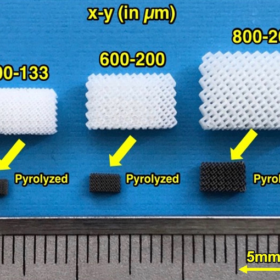
Micro-engineered, high-performing anode for sodium-ion batteries
Scientists in Japan have demonstrated sodium-ion batteries using hard carbon microlattices, produced with an inexpensive 3D printer. In addition to reducing the battery size and slashing manufacturing costs, the resulting anode allows fast transportation of energy-generating ions.
