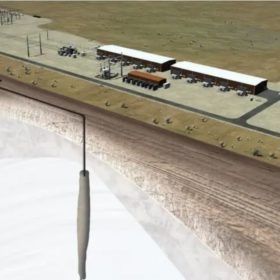
World’s largest underground hydrogen storage project
Mitsubishi Power Americas and Magnum Development are set to begin construction on a 300 GWh underground storage facility in the US state of Utah. It will consist of two caverns with capacities of 150 GWh, to store hydrogen generated by an adjacent 840 MW hydrogen-capable gas turbine combined cycle power plant.

Agrivoltaics for rice growth
Scientists in Bangladesh have investigated the potential of agrivoltaics in rice fields. They analyzed the economic viability of bifacial agrivoltaic projects in Vietnam, Bangladesh, China, Egypt, Brazil, and India.
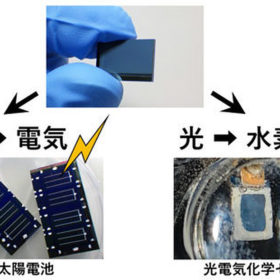
Chalcopyrite solar cell for tandem applications, photocatalytic water splitting
Japanese scientists have built a chalcopyrite PV device for tandem solar cells and water splitting for hydrogen generation. The device has a power conversion efficiency of 11.05%, an open-circuit voltage of 0.960 V, a short-circuit current density of 15.9 mA cm−2, and a fill factor of 72.4%.
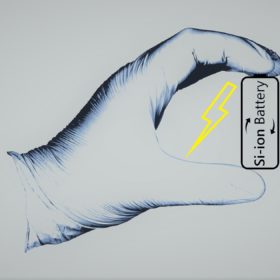
Rechargeable silicon redox battery for renewable energy storage
Israeli researchers have developed a device that combines a reversible Si anode with halide cathodes and uses hybrid electrolytes to enable cell recharging. In the proposed system configuration, silicon is dissolved during the battery discharge process, and upon charging, elemental silicon is deposited.
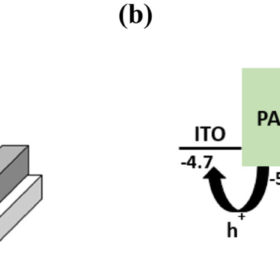
Inverted perovskite solar cell with 16.94% efficiency
A US-Chinese research group has built a perovskite solar cell with a hole-transporting material (HTM) based on conducting polyaniline (PANI) polymer. The device showed significantly higher efficiency than a reference solar cell relying on an HTM made of commonly used PEDOT:PSS.
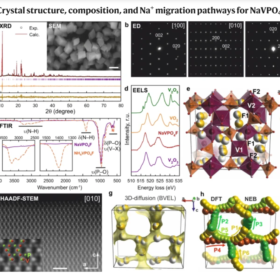
High-voltage sodium-ion batteries with up to 15% higher energy density
Researchers in Russia have developed a new sodium-vanadium phosphate fluoride powder. It has a particular crystal structure that provides superior energy storage capacity in the battery cathode.
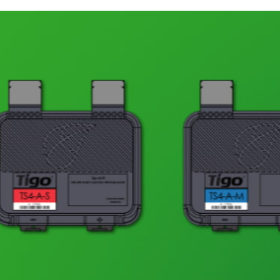
Tigo releases design quality tool for large commercial solar
The US module level power electronics provider also introduced an installer certification course.
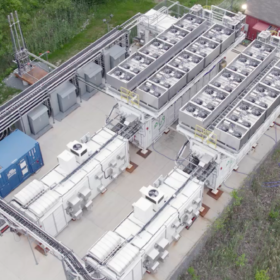
The Hydrogen Stream: Fuel cells for backup power
The PEM fuel cell test in New York demonstrated the viability of this technology at 3 MW, the first time at the scale of a backup generator at a data center. Meanwhile, a Spanish-Indian venture will develop up to 300 MW of installed green hydrogen production capacity in the Iberian Peninsula, and a Norwegian-German partnership aims to have a demo track powered by a fuel cell system on the road in mid-2023.
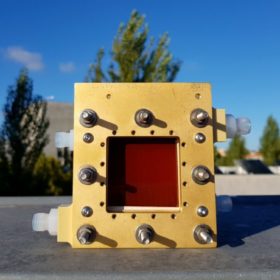
Straight to storage via solar integrated batteries
Scientists in China evaluated the prospects for various approaches to integrating both solar generation and energy storage in a single device. Their work outlines several ways this could increase the efficiency of solar energy storage, and recommends that future research on this area should focus on integration of materials with the highest specific capacity for energy storage, alongside the dual function of solar energy harvesting.
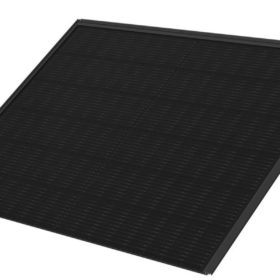
Aleo Solar unveils 345 W rooftop photovoltaic module
The new panel from the German manufacturer may also be used as a solar tile and is claimed to be particularly suitable for historical buildings and aesthetically demanding new construction and renovation projects.
