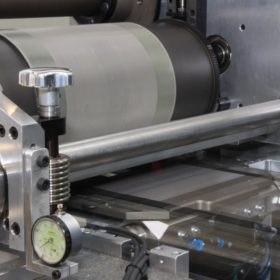
Demonstrator machine for high-throughput solar cell metallization
Developed by Germany’s Fraunhofer Institute for Solar Energy Systems ISE and ASYS Automatisierungssysteme GmbH, the new machine is claimed to increase the print process throughput by a factor of 1.5.
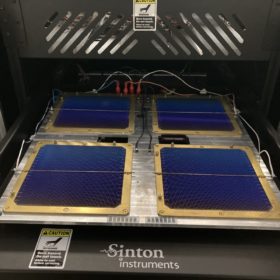
The Solar Tech Check: Toward 50-year modules, and how the numbers add up for HJT
This week sees new technoeconomic analysis published on different aspects/materials for heterojunction: Important to consider as Europe in particular looks to be betting big on this technology for its manufacturing comeback. And a new report from NREL in the United States examines progress in degradation and durability to increase module lifetimes.
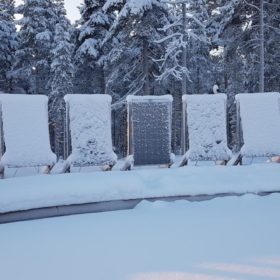
Snow, ice-repellent coating for solar panels
Researchers in Sweden are currently testing three kinds of coatings — hydrophobic, superhydrophobic and slippery liquid-infused porous surfaces. The goal of the new technology is to halve ice adhesion compared to standard modular glass and ensure 96% light transmittance.

Italian research agency ENEA launches call for innovative agrivoltaics
The agrivoltaic facility may have a capacity of 1 to 3 MW and will have to be designed to comply with landscape requirements and the agricultural practices of NeoruraleHub, which applies a blue economy model to agriculture.
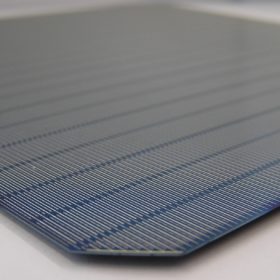
POLO-IBC solar cell with 23.7% efficiency
Scientists in Germany have developed two kinds of solar cells based on n-type doped electron-collecting poly-Si on oxide (POLO) junctions with aluminum-alloyed p+ contacts. Both devices are claimed to be possible upgrades of PERC technologies. The best-performant cell is an IBC device showing a power conversion efficiency of 23.71%, an open-circuit voltage of 711.5mV, a short-circuit current of 41.3mA/cm2, and a fill factor of 80.9%.
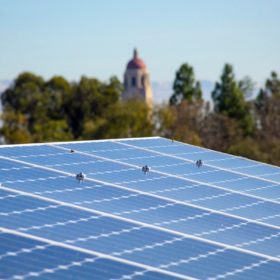
Stanford University now running on 100% renewables
Stanford University is flipping the switch on a 88MW solar array this week, marking a major milestone toward its goal of net zero emissions by 2050.
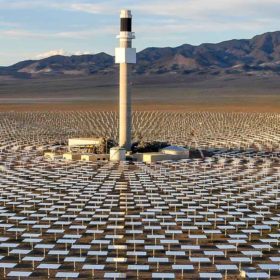
Concentrating solar power with heat storage could compete with batteries
For short-term storage in a 100% renewables grid, thermal energy storage located at concentrating solar power plants could compete with batteries, according to a new study using an idealized grid model. Seasonal storage needs could best be met with power-to-gas-to-power technology.
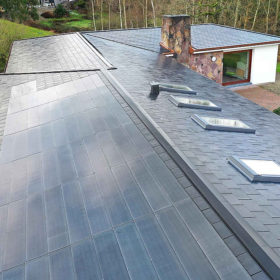
New solar tiles from Denmark
Danish BIPV specialist Dansk Solenergi has added two more tiles to its product range – an 18.15%-efficient dark grey panel and a 16.7%-efficient terracotta product. Both panels have an operating temperature coefficient of -0.34% per degree Celsius.
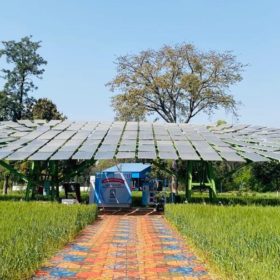
World’s largest solar tree record smashed
With a PV panel surface area of 309.83 sq.m, the solar tree is officially certified by Guinness World Records (GWR) as the largest solar tree in the world.
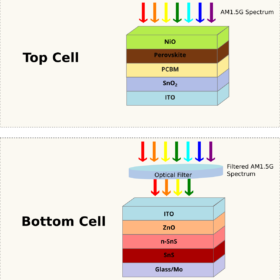
Double-junction perovskite-tin sulfide PV cell design with up to 28.92% efficiency
An Iranian-Italian research group has simulated a double-junction tandem solar cell based on perovskite and tin sulfide. They said that it can reach an efficiency rating of between 22.9% and 28.92%.
