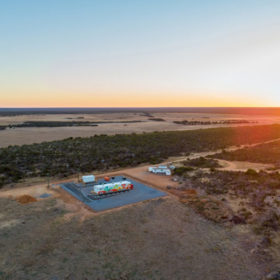
Australian town to be powered by pumped-hydro microgrid
The town of Walpole on Western Australia’s southernmost tip will soon be powered by a pumped-hydro microgrid, a first for the state which is already renowned for its rollout of microgrids and distributed renewable solutions.
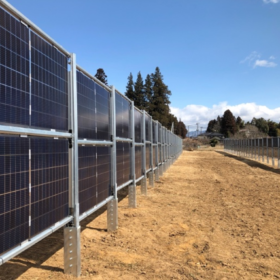
Japan’s first vertical agrivoltaic project
The facility was built with heterojunction modules and mounting systems provided by German companies Luxor Solar and Next2Sun, respectively. The distance between the panel rows ranges from 8 to 10 meters and the agricultural surface within the rows will be utilized by local livestock farmers as pasture.
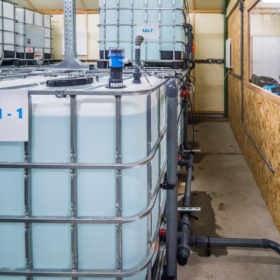
Long-duration storage solution based on saltwater
Developed by Dutch start-up AquaBattery, the storage technology is claimed to independently amend power and energy capacity. The battery system utilizes three storage tanks, one with fresh water, one with concentrated salt water and one with diluted salt water, and also relies on membrane stacks.
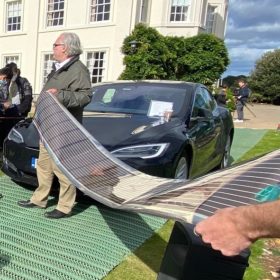
Printed solar panels for Tesla’s journey around Australia
Commercially printed solar cell technology developed by the University of Newcastle is being put to the test to power an electric vehicle’s 15,097-kilometre journey around the entire coastline of Australia.

PV in the Circular Economy: Modeling tool helps predict flow of solar materials
PV ICE uses the latest data from the solar industry to model the flow of PV materials over the next several decades, helping to predict the effects of different market trends, technological developments, and government policies.

New method for long-term prediction of renewables generation in Europe
Developed by scientists in Spain, the new methodology is claimed to be capable of mitigating energy crises in Europe through climate predictions.
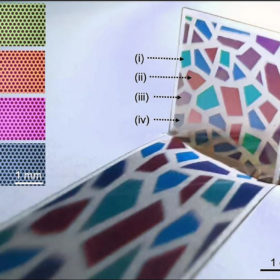
Perovskite microcells for solar windows
Developed by Korean scientists through a novel lift-off-based patterning approach based on swelling-induced crack propagation, the perovskite PV device achieved an open-circuit voltage of 1.16 V, a short-circuit current density of 22.5 mA/cm2, and a fill factor of 77%. With the microcells, the researchers also built a first prototype of a solar window which they claim has vivid colors and high color purity.
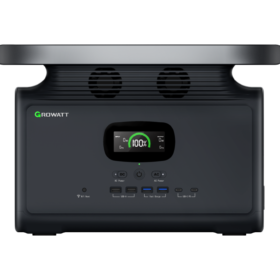
Growatt unveils solar rechargeable portable power station
Chinese inverter maker Growatt has launched Infinity 1500, a portable power station for off-grid applications.
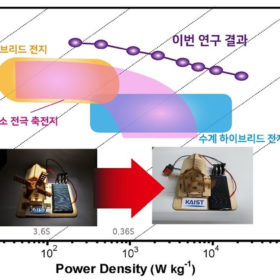
The mobility rEVolution: Hybrid lithium-ion battery capable of recharging within a minute
In other news, Volvo has invested in fast-charging battery tech firm StoreDot, Tesla has reported record profits in Q1, and Dutch start-up behind the world’s first commercial grid-independent solar car Lightyear has entered a carsharing partnership.
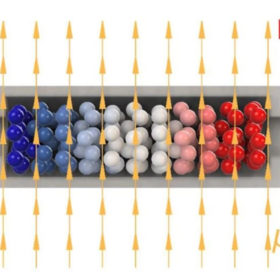
The Hydrogen Stream: Magnetic alloys for efficient hydrogen cooling
While a Japanese team developed a series of Er(Ho)Co2-based magnetic cooling alloys for hydrogen cooling, a US research team used a “simple” acid treatment to increase flow of hydrogen atoms within protonic ceramic electrochemical cells (PCECs). Hydrogen-fuelled mobility registered significant developments: the first hydrogen-electric passenger aircraft was piloted between two major airports in Germany, and a 75-passenger ferry service in the San Francisco Bay braces for operations in June.
