Fully PV-driven system to produce water, electricity, crops
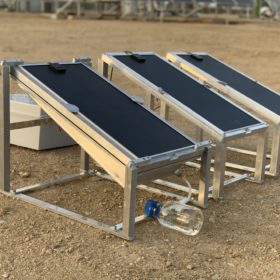
Researchers in Saudi Arabia have fabricated an integrated fully PV-powered system to extract fresh water from the atmosphere. The system uses excess heat from the solar modules to evaporate and condense water that can then be used to grow crops. Part of the water is also used to cool down the solar modules through an active cooling technique.
New US license to bring vanadium redox flow batteries to market
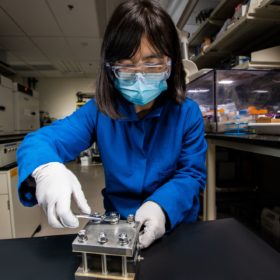
The US Department of Energy’s Pacific Northwest National Laboratory has made a third semi-exclusive commercial license for vanadium redox flow battery technologies, in order to help bring the technology to market.

PV-powered filling/recharging station for all kind of vehicles, including EVs and fuel cell cars
Built by Korean oil provider SK Energy and the Seoul Metropolitan Government, the “Energy Super Station” is equipped with 20kW of solar panels and 300kW of fuel cell stacks. It can refuel conventional combustion vehicles as well as electric vehicles and fuel cell cars.
Spanish start-up launches solar luggage
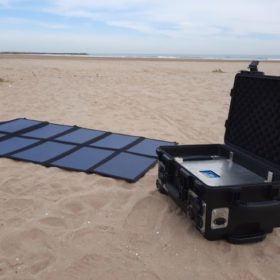
The device integrates various current outlets that enable it to recharge, simultaneously, mobile phones, tablets or computers as well as all kinds of low-consumption electronic devices such as small appliances or electric tools, by simply unfolding the solar panels and connecting them.
New, powerful way to make micro supercapacitors
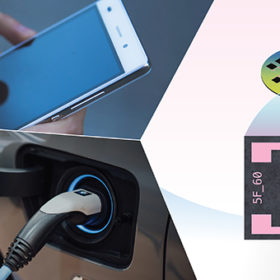
Swedish researchers have developed a novel way to manufacture micro supercapacitors, also known as system-on-a-chip, so they are compatible with other components in system circuits and can be easily tailored for different uses.

Full organic battery with 2.8V ouput voltage
The realization of biodegradable batteries is a step closer thanks to research from South Australia’s Flinders University, which has developed a 2.8V organic polymer battery. While this battery was made from synthetic polymers, research lead Zhongfan Jia told pv magazine Australia the team’s future iterations will source “materials directly from nature” saying this promises to reduce waste and reliance on mined materials and could have novel applications in fields like biotech.
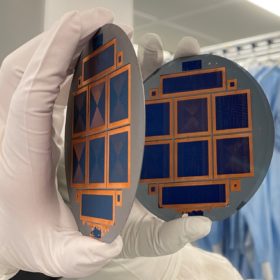
Copper-plated heterojunction solar cell with 22.1% efficiency, 0.99 bifaciality factor
Built by a Dutch-Chinese research team, the cell is relying on a new type of hybrid-shaped Cu finger consisting of a rectangular bottom part and a round top part, which was integrated into the cell through a 2-step electrochemical deposition process. The Cu-plated device outperformed both optically and electrically a reference cell fabricated via screen printing.
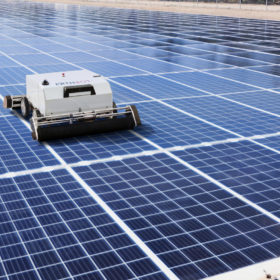
US rackless, earth-mounted solar supplier secures funding
Erthos has secured $17.5 million in a Series B funding round and has a 2.5GW project pipeline.
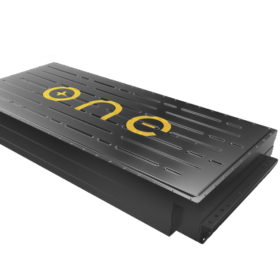
US EV battery manufacturer demonstrates 750+ mile range, raises $65 million
Michigan’s Our Next Energy (ONE) said it will use the funding led by BMW to accelerate R&D and build a US manufacturing facility.
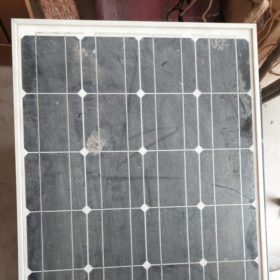
Roadmap for solar module recycling in Bangladesh
Bangladesh currently does not have a recycling center for PV module recycling. But according to a group of local scientists, the country could evolve into a regional hub for PV waste recycling if proper guidelines are implemented.
