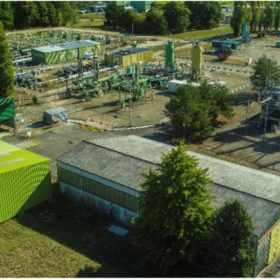
The Hydrogen Stream: Underground hydrogen storage for 1 MW electrolyzer in France
Elsewhere, several hydrogen projects were announced in Norway, Germany, India, China and the UK. Royal Dutch Shell started operations at the power-to-hydrogen electrolyzer in China and Germany’s Linde Engineering signed a contract for the construction a green hydrogen demonstration plant in Norway. Furthermore, Green Hydrogen Systems signed a supply agreement with Edinburgh-based Logan Energy to deliver electrolysis equipment for a project in England.
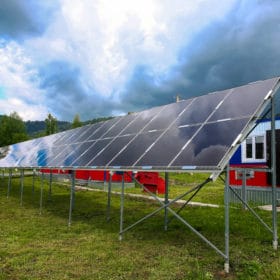
Russia deployed 233 MW of solar in 2021
Most of the deployed capacity comes from utility scale solar plants selected in the country’s tender scheme for renewables.
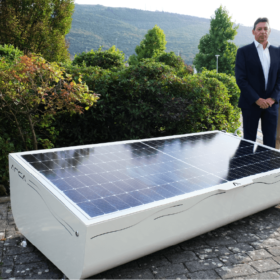
Solar-plus-storage autonomous power generator from Spain
Developed in Spain, the Arca system integrates solar panels, power electronics, and energy storage. Arca Lite has a rated power of 490 Wp, and Arca Plus of 980 Wp.
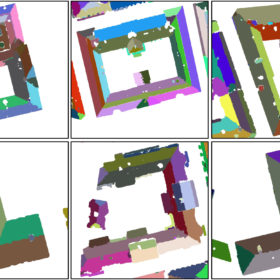
Novel methodology to identify solar-suitable roofs
Swedish scientists developed a three-step method that integrates techniques used for the automatic extraction of buildings along with their underlying roof faces, as well as the identification of utilizable rooftop areas for solar arrays. The novel methodology is claimed to avoid overestimating actual potential of buildings for PV deployment.

Venture capitalist sees billion-dollar opportunities for solar and storage innovators
Bill Nussey describes in his new book a much larger role that he foresees for local solar and storage, and a correspondingly altered role for electric utilities.
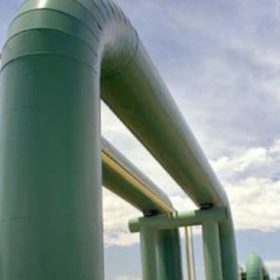
Long-distance hydrogen interconnectors from an LCOE/LCOS perspective
New research from the U.K. shows the increasing competitiveness of long-distance hydrogen interconnectors over the next three decades. Compared to high-voltage electricity cables, hydrogen interconnectors may soon achieve a much lower levelized cost of storage and their ability to further reduce the final LCOE will depend on how much electrolyzer costs will reduce over the years.
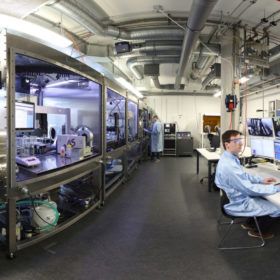
Perovskite solar cell with 1,400-hour stability at high temperatures
German scientists have developed a perovskite PV cell with remarkable stability by adding a bilayer of polymers that protects the perovskite from corrosion. This design helps to shield the extremely sensitive perovskite interface and provides the cell with extraordinarily high conductivity.
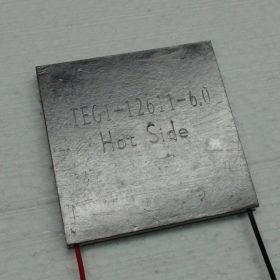
Coupling photovoltaics with thermoelectric cooling
An international research team has investigated how solar could be combined with thermoelectric coolers (TECs), which are small solid-state heat pumps used either for heating or for cooling. A system was built with six solar panels, an air duct system, four batteries, a charge controller, TECs, an inverter, heat sinks, a test chamber, and condenser fans.
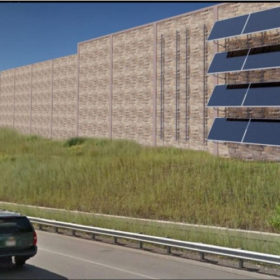
Solar noise barrier along highway in Massachusetts
A massive solar noise barrier in the US state of Massachusetts is expected to generate 802,000kWh of electricity per year, or the equivalent of annually supplying 120 homes with power.
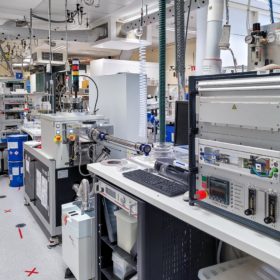
The fine art of gettering
Scientists in Australia have analyzed the state-of-the-art of all gettering technologies used in the solar industry. This technique, which is aimed at reducing defects in wafer manufacturing, may become more important in the future, as cell efficiencies increase and become increasingly sensitive to traces of metallic impurities.
