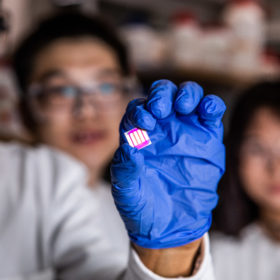
Making the case for perovskite quantum dots
Quantum dots, a type of semiconductor based on tiny nanometer sized particles, are a cause for excitement in many disciplines thanks to their unique electronic properties. In solar cell technology, quantum dots fabricated from perovskites could have several advantages over more commonly researched “bulk” perovskite materials, and researchers are beginning to take note of these. A group of scientists in China evaluated recent progress in perovskite quantum dot solar cells, noting both strong potential and a long way to go for this early-stage technology.
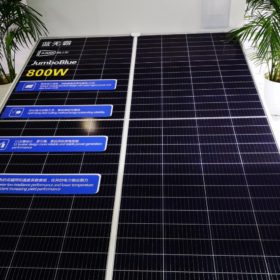
Chinese PV Industry Brief: JA Solar increases production capacity in Vietnam, IDG Energy enters solar business
JA Solar is expected to put another 3.5GW of cell capacity into operation by the end of June and Hong Kong-based IDG Energy Investment will venture into cell manufacturing by establishing a “foreign invested” project company.
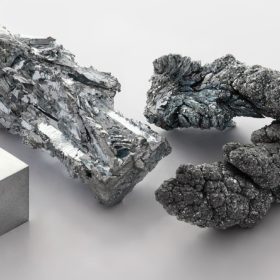
Zinc batteries: Old technology brings new values
In battery storage, there is no silver bullet chemistry type and as we move towards more ambitious decarbonization goals, room is being made for diverse systems. As an old technology with new vitality, zinc-based batteries are edging closer to commercialization, leveraging their unique ability to be configured for short and long duration operation. They are safer, longer lasting and, in some cases, reportedly up to 50% cheaper than lithium-ion batteries and, following recent game-changing advances, the prospects for zinc look much more exciting. pv magazine sat down with the manager of the newly established, global Zinc Battery Initiative, Josef Daniel-Ivad, to discuss the technology’s market position and developments.
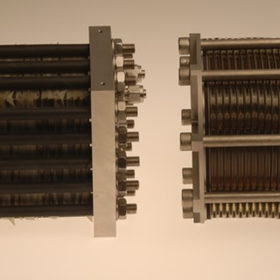
Large scale alkaline electrolyzers may be built at €444/kW in 2030
Researchers at Germany’s Fraunhofer ISE have estimated the costs for both alkaline (AEL) and proton exchange membrane (PEM) electrolyzers and have found that AEL systems have bigger margins for cost reduction. According to their calculations, the costs of a large scale AEL electrolyzer with a capacity of 100MW should drop from €663/kW in 2020 to €444 in 2030.

EU Chips Act proposed to address semiconductor shortages
The European Commission wants to introduce legislation to back semiconductor research and to address the immediate problem of supply chain bottlenecks by drumming up more than €43 billion, with member states and the private sector expected to contribute.
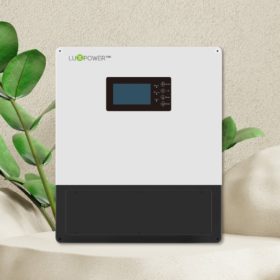
LuxpowerTek launches 8-12kW hybrid inverter
The Chinese inverter manufacturer said the new device can be used for residential and commercial projects as well as to replace diesel power generators or as back-up power. The device features an efficiency of 97.5% and a European efficiency of 98%.
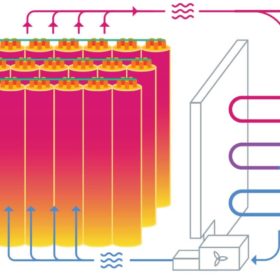
Renewable energy heat batteries for industrial applications
Startup Rondo Energy closed a $22 million Series A funding round to decarbonize industrial processes with equipment that converts solar and wind energy into thermal energy.
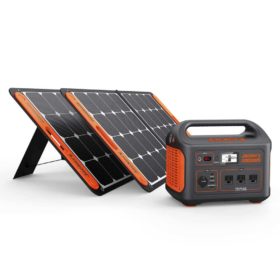
Offgrid solar generators for RVs, camping
Jackery displayed its latest portable solar generators at the recent Quartzsite RV Show, which is the world’s largest event for recreational vehicle enthusiasts.

The Hydrogen Stream: Fortescue develops tech based on photocatalytic water splitting coupled with solar
Australia’s Fortescue Future Industries wants to develop a green hydrogen technology based on photocatalytic water splitting coupled with solar radiation. Elsewhere, Linde has signed a long-term agreement with German chemical company BASF for the supply of hydrogen and steam in France and Nel has received a contract for a containerized PEM electrolyzer and light-duty hydrogen fueling station package from an unnamed U.S. power utility.
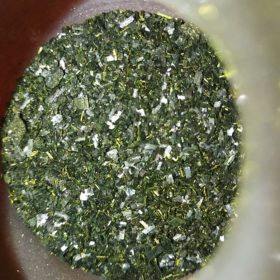
Doped carbon for a reliable lithium sulfur battery
Scientists in South Korea developed a porous carbon material that, when applied as a coating to the separator film in a lithium-sulfur battery, was shown to reduce an unwanted side effect and improve the battery’s performance and reliability. The coating is based on methylene blue, a type of salt commonly used in textile dying.
