
Italian research agency ENEA launches call for innovative agrivoltaics
The agrivoltaic facility may have a capacity of 1 to 3 MW and will have to be designed to comply with landscape requirements and the agricultural practices of NeoruraleHub, which applies a blue economy model to agriculture.
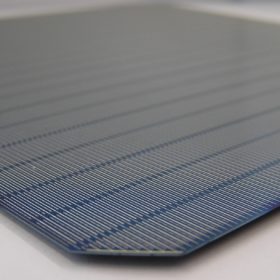
POLO-IBC solar cell with 23.7% efficiency
Scientists in Germany have developed two kinds of solar cells based on n-type doped electron-collecting poly-Si on oxide (POLO) junctions with aluminum-alloyed p+ contacts. Both devices are claimed to be possible upgrades of PERC technologies. The best-performant cell is an IBC device showing a power conversion efficiency of 23.71%, an open-circuit voltage of 711.5mV, a short-circuit current of 41.3mA/cm2, and a fill factor of 80.9%.
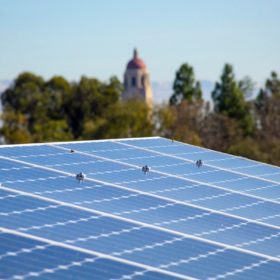
Stanford University now running on 100% renewables
Stanford University is flipping the switch on a 88MW solar array this week, marking a major milestone toward its goal of net zero emissions by 2050.
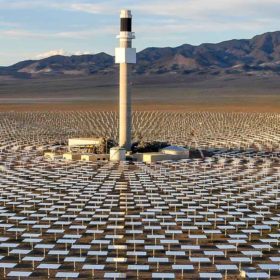
Concentrating solar power with heat storage could compete with batteries
For short-term storage in a 100% renewables grid, thermal energy storage located at concentrating solar power plants could compete with batteries, according to a new study using an idealized grid model. Seasonal storage needs could best be met with power-to-gas-to-power technology.
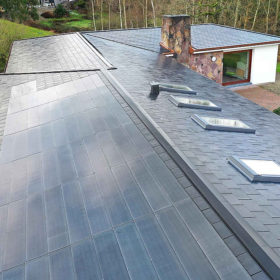
New solar tiles from Denmark
Danish BIPV specialist Dansk Solenergi has added two more tiles to its product range – an 18.15%-efficient dark grey panel and a 16.7%-efficient terracotta product. Both panels have an operating temperature coefficient of -0.34% per degree Celsius.

World’s largest solar tree record smashed
With a PV panel surface area of 309.83 sq.m, the solar tree is officially certified by Guinness World Records (GWR) as the largest solar tree in the world.
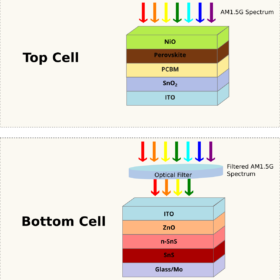
Double-junction perovskite-tin sulfide PV cell design with up to 28.92% efficiency
An Iranian-Italian research group has simulated a double-junction tandem solar cell based on perovskite and tin sulfide. They said that it can reach an efficiency rating of between 22.9% and 28.92%.
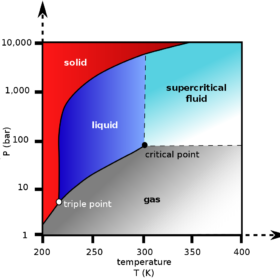
Storing renewable electricity with supercritical CO2 heat pump
Researchers in Spain have designed a pumped thermal energy storage system that uses supercritical carbon dioxide as a heat pump and a heat engine. The proposed system is claimed to achieve an efficiency of 80.26% and an LCOS of €0.116/kWh.
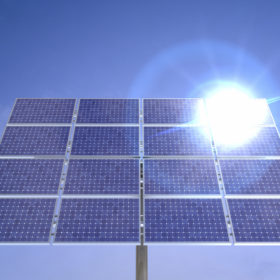
Temperature-dependent model to calculate solar LCOE
Developed by researchers in Saudi Arabia, the novel approach considers both the temperature-dependent power yield and the solar module time to failure (TTF), among other factors. According to its creators, the model can be applied to all kinds of module and cell technologies.
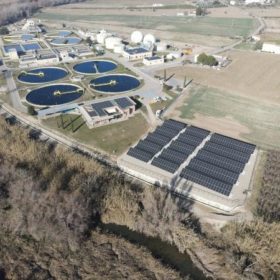
Spanish consortium wants to produce green hydrogen with sewage
The Zeppelin project is expected to generate more than 135,000 tons of green hydrogen from 99 million tons of waste and 50 million tons of municipal wastewater.
