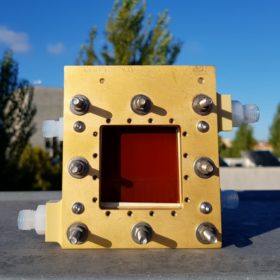
Solar redox flow cell for residential energy storage
The device was designed by scientists in Portugal to optimize light absorption by the semiconductor and ensure an effective diffusion of redox species while offering minimal electronic and ionic transport resistance. The cell has a 25cm2 photoactive area and relies on ferrocyanide/anthraquinone redox flow chemistry and a nanostructured hematite photoelectrode.

Low-bandgap GaInNAsSb solar cell for multi-junction architectures
Developed by researchers in Finland, the solar cell is intended to be used as part of lattice-matched multi-junction solar cells. It achieved a short-circuit current density of 15.2 mA/cm2 and external quantum efficiency of 0.79.
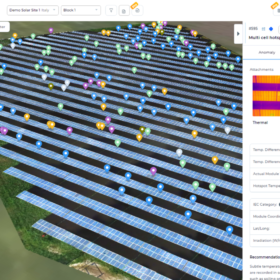
DroneBase acquires solar analytics specialist AirProbe
DroneBase has picked up AirProbe’s artificial intelligence solution for aerial solar inspections and proprietary data analytics. The acquisition expands its reach into markets such as India and Europe.
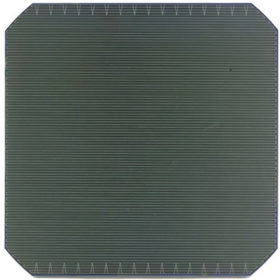
Large-area bifacial TOPCon solar cell with 23.01% efficiency
The n-type cell was built with phosphorus-doped LPCVD poly-Si passivating contacts and achieved a remarkable open-circuit voltage of 691.7 mV. According to its creators, with some adjustments the cell may be suitable for commercial production.
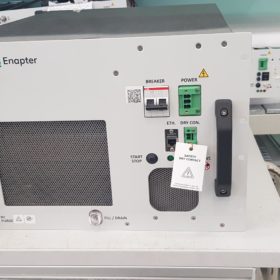
The Hydrogen Stream: Longi wants to reach electrolyzer capacity of 2 GW by 2023
Elsewhere, Air Products is planning to build a 2 GW electrolysis plant in Saudi Arabia and Protium is deploying its first 100 kW electrolyzer in the U.K.

Semi-transparent antimony trisulfide PV cell for solar window applications
The 5.5%-efficient cell was fabricated through a low-temperature, two-step manufacturing process that is compatible with existing window glass manufacturing technology. Cells made with 70nm antimony trisulfide films achieved the best fill factor of around 57%, while the highest power conversion efficiencies were achieved with films ranging from 70 to 100nm.
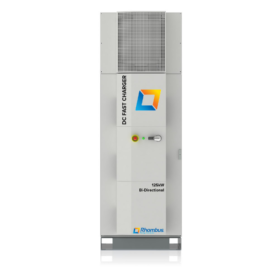
Ever heard of synchroinverters? Grid-stabilizing devices connecting renewables to distributed energy resources
A U.S.-Israeli consortium is developing synchroinverters – inverters that mimic a synchronous generator and are able to actively respond to the grid’s frequency changes while stabilizing the voltage. The new devices are expected to do this simultaneously and provide grid stability services in less than 16.67 milliseconds.

US solar sector shoring up resilience to cyberattacks
As solar and storage technologies are deployed on the U.S. grid in record numbers, there’s no time like the present to take steps to prevent solar and storage from cyberattacks.
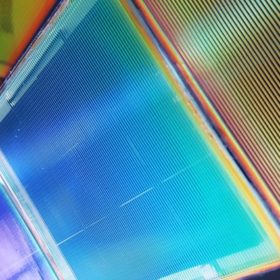
Colored optic filters for BIPV products
Dutch researchers have used optic colored filters to make building-integrated PV products more suitable for urban environments with cultural heritage value. They discovered that the filters do not affect a cell’s open-circuit voltage and fill factor, but only the short-circuit current.
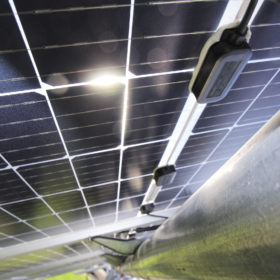
Behind PID in bifacial solar cells
New research from Germany outlines mechanisms behind a form of potential-induced degradation specifically affecting the rear side of bifacial solar cells. Results suggest that the issue may be more complex than previously thought; and avoiding irreversible damage to cells in the field will require a rethink of testing standards.
