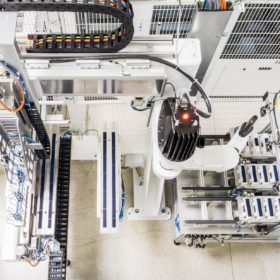
New ‘matrix’ layout for shingled solar cells
German equipment supplier M10 and research institute Fraunhofer ISE will unveil a new prototype stringer for shingled module layouts at the Intersolar Europe trade show later this week. Employing an offset layout for the shingles, the approach promises a relative efficiency gain of up to 6%, compared to a conventional half-cell module.
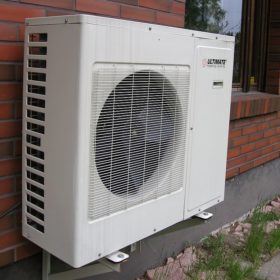
Ireland announces plan to install 600,000 heat pumps by 2030
The move is part of the National Development Plan 2021-2030, which aims to increase the share of renewable electricity in the generation mix up to 80% and to allocate around 15.5 GW of wind and solar capacity through an auction scheme.
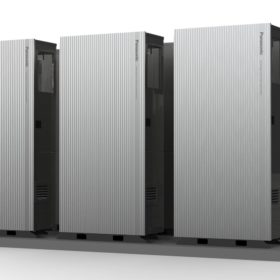
Panasonic launches 5 kW fuel cell system for commercial applications
The system has dimensions of 834×417×1,766 mm and weighs 205 kg including the design panel. It achieves an electrical efficiency of 56% and can be connected with a hot water storage unit.
M-Tec launches modular battery with integrated hybrid inverter
The modular battery can be cascaded up to 30.7 kWh of storage capacity. The Energy Butler is a storage kit made up of up to eight modules.
New discovery could make organic PV competitive with crystalline silicon
A group of international researchers has observed how non-radiative charge recombination occurs in organic PV and claims to have identified a potential solution that could bring this solar tech closer to crystalline silicon in terms of power conversion efficiency.
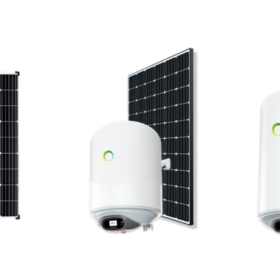
Photovoltaic-plus-boiler solution from Germany
The photovoltaic boiler can be easily be installed by the users themselves. The solar modules are connected to the boiler via an MC4 contact plug, and heat the water.
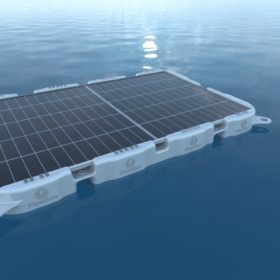
New mounting structure for floating PV
The float can host conventional solar modules with a 120-cell design, a power output of over 400 W, and a weight not exceeding 30kg. It is being developed by South Africa-based Phelan Energy Group, in Dubai.
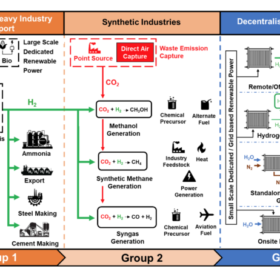
Australian engineer develops tech to produce green ammonia from air, water, PV
Chemical engineer Rose Amal arrived in Australia from Indonesia 38 years ago to study at UNSW. Now her leadership and research are contributing to a new sustainable economy for Australia and clean fuels for energy-hungry industries.
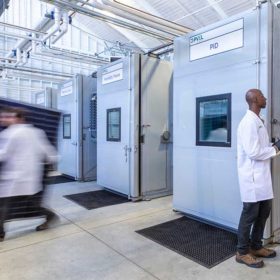
PVEL to offer third-party data for inverters
In the latest edition of its annual publication, PV Evolution Labs shares results from solar panel stress tests focused on specified and verified bills of materials.
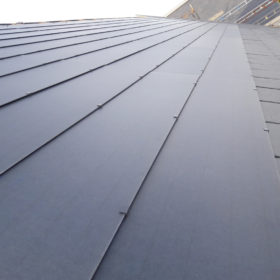
Solar tile with 14.2% efficiency from Denmark
Dansk Solenergi ApS has developed a 13.6 kg tile that can be used for both new buildings and building renovation. The device is currently being produced in Denmark, where the company operates a 40 MW line.
