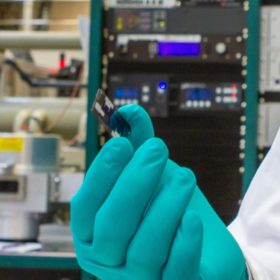
Solliance hits 29.2% efficiency on perovskite/silicon tandem solar cell
The Solliance consortium has built a solar cell in a four-terminal tandem configuration that combines a 17.8%-efficient highly near-infrared transparent perovskite cell with a prototype of an 11.4%-efficient c-Si interdigitated back contact silicon heterojunction cell developed by Panasonic.

H2X to make hydrogen fuel cells, equipment in Australia
H2X, a hydrogen vehicle manufacturer, has announced a deal with Gippsland Circular Economy Precinct in Australia to make a range of hydrogen-focused products. The move comes less than a week after Pure Hydrogen bought a significant stake in H2X Global.
The Hydrogen Stream: Hydrogen-powered heavy-lift unmanned aerial vehicle from Korea
UK research firm Wood Mackenzie reports that Northeast Asia and Europe are expected to become the main hydrogen importers, accounting for 55% of seaborne hydrogen trade, whereas Australia, the Middle East and, possibly, Russia and the U.S. have the greatest export potential. Plug Power and Lhyfe closed a deal to build green hydrogen generation plants throughout Europe.
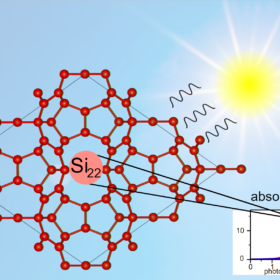
A whole new structure for silicon
Scientists in the United States theorized that a new allotrope of silicon – the same element arranged into a different atomic structure – could show greatly improved photovoltaic performance compared to that used in today’s solar cells. The allotrope, Si22, could also have important properties for use in quantum computing, carbon sequestration and other applications – though fabrication and actual physical testing of the material will be needed to back up the theoretical findings presented so far.
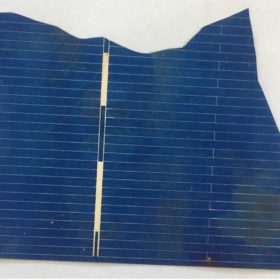
New tech to recover pure silicon from end-of-life solar cells
An Indian research group has used three different chemicals instead of commonly used hydrofluoric acid to separate silicon from the cell. The technique is claimed to be able to deliver recycled silicon with a purity of up to 99.9984%.

India launches tender for 50 GWh of battery cell output with subsidy support
The Indian authorities have opened global bids to set up advanced-chemistry battery cell manufacturing units in India under the production-linked incentive scheme. Applications are open until Dec. 31, but bidders must commit to setting up a minimum of 5 GWh of capacity to qualify for the government subsidy.

Should I include a battery with my home solar project? Part 1
A growing share of residential solar projects now attach energy storage batteries. In part one of this new series, we consider the backup power feature of batteries.
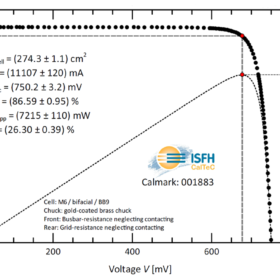
Longi improves efficiency of its heterojunction cell from 25.82 to 26.30% in just one week
The result was confirmed, once again, by Germany’s Institute for Solar Energy Research Hamelin (ISFH).
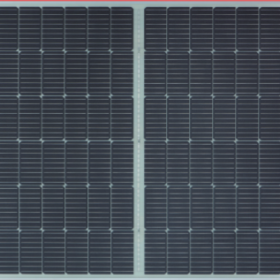
Sunman unveils 430 W glass free solar module
The new product has a power conversion efficiency of up to 19.3% and a weight of 11.2 kg. The module is produced with glass fiber reinforced plastic, which the manufacturer says reduces light reflection and opens up new assembly options.
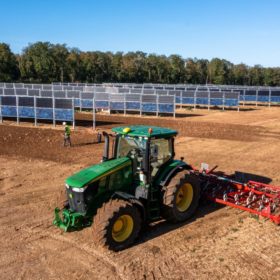
TotalEnergies commissions vertical agrivoltaic demonstrator in northeastern France
The 240 kW facility was built with the support of German mounting system provider Next2Sun.
