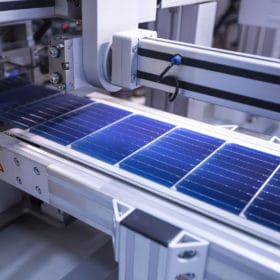
Longi achieves 25.21% efficiency for TOPCon solar cell
The Chinese module manufacturer said the result was confirmed by the Institute for Solar Energy Research in Hamelin, Germany.
Flexible bifacial kesterite solar cell at 9.3% efficiency
Scientists in China developed a new kesterite solar cell they say could be suitable for indoor or outdoor applications. The bifacial solar cell reached 9.3% frontside efficiency, and also achieved a 9.0% on the backside.

Assessment of floating PV potential at African hydropower reservoirs
European researchers have estimated the potential of floating PV deployment at Africa’s existing hydropower reservoirs which exceed 5 MW in size, by using satellite images and hydropower reservoir data. Under the most likely scenario presented in the study, utility scale floating solar may reach a capacity of more than 20 GW by using less than 1% of the water surface area at 108 hydropower plants spread across the continent, assuming a capex of €0.40/W.
Swedish perovskite startup picks up new investment
Norway based renewables investor Magnora has increased its stake in startup equipment supplier Evolar, which is aiming to bring a production line for perovskite solar cells to market. Magnora will now hold a 40.7% stake in the company as part of a long-term deal between the two, with options to further increase the stake available down the line.
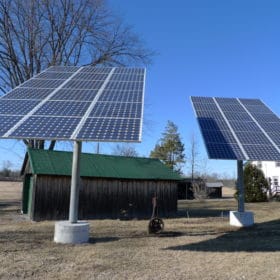
Artificial neural networks and fuzzy logic for fault detection in PV systems
Researchers in China have developed a fault detection method for PV systems that combines both neural networks and fuzzy logic principles within a single framework. It considers seven input variables and an output variable.
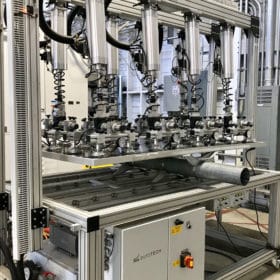
Module testing reveals increase in mechanical failures
Last week, testing specialists PV Evolution Labs launched its latest Module Reliability Scorecard, which names more than 100 products from 26 manufacturers as top performers, after being put through their paces in extensive lab testing. This year’s scorecard reveals an increase in modules seeing at least one failure during the testing procedure, with newly added mechanical stress procedures causing the greatest number of failures.

Adhesive mounting system for any kind of solar modules
The system, developed by Spanish specialist Alusín Solar, is being tested by Endesa in a 9.8 MW project for self-consumption. The mounting structure is made with aluminum bars that, instead of being fixed to the roof with screws, are attached through a double-sided adhesive.
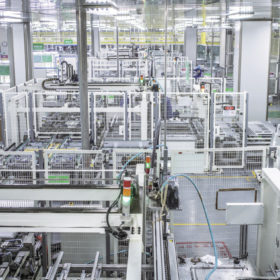
JinkoSolar improves efficiency of n-type monocrystalline TOPCon solar cell by 0.35%
The Chinese module manufacturer said the record efficiency of 25.25% was obtained through material upgrades integrated into the cell process and fabrication. The result was confirmed by China’s National Institute of Metrology.
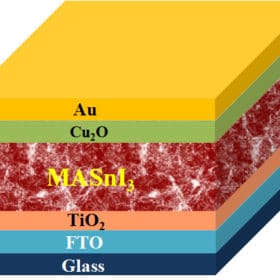
Lead-free perovskite solar cell with potential efficiency of 27.4%
Scientists in India have simulated a perovskite cell based on methylammonium tin iodide which they claim may achieve a short circuit current density of 25.97 mA per square centimeter, an open-circuit voltage of 1.203 V, and a fill factor of 87.79%. The cell is composed of a fluorine-doped tin oxide (FTO) substrate, a titanium oxide layer, a methylammonium tin iodide perovskite film, a copper oxide hole transport layer (HTL), and a layer made of gold (Au).

The Hydrogen Stream: Germany keeps the lead, flurry of movements from France
The German Federal Ministry of Economics and the German Federal Ministry of Transport selected 62 large-scale hydrogen projects to receive €8 billion in government funding. Furthermore, 11 projects have been selected in the framework of H2 Hub Airport, a call for expressions of interest to contribute to the surge of the hydrogen airport ecosystem in France. French energy company Total acquired a 20% stake in Hysetco, a French company developing hydrogen mobility in cities.
