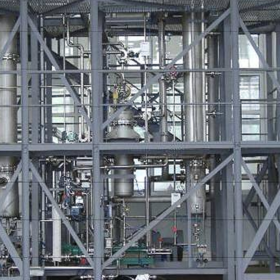
Blue is not the new green
A new study from Stanford University and Cornell University shows that blue hydrogen can produce more greenhouse emissions than heat produced by coal and gas. The modeling classifies blue hydrogen emissions as carbon dioxide and unburned fugitive methane, as well as lifecycle emissions linked to the mining, transport, storage, and use of methane.
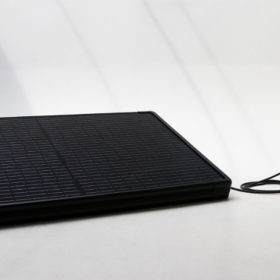
Plug-and-play solar module from the Netherlands
Supersola has developed a 315 W, half-cut monocrystalline PV module. It costs €699 and can be coupled with other two panels to form a 1 kW residential PV system.

AI-powered bidding platform for Australia’s biggest solar farm
The operators of Australia’s largest solar farm have turned to a software-based bidding solution as they seek to optimize dispatch and manage the facility’s market trading and power purchase commitments amid increasing market volatility.

Portable charging trailer for commercial EV fleets
U.S.-based Xos offers a mobile charging station for commercial electric fleets, in order to provide power without making fixed infrastructure upgrades.
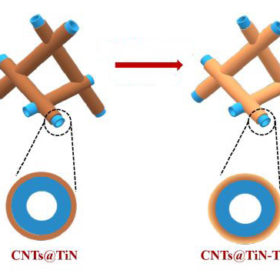
Lithium-sulfur battery with shorter charging time, longer lifespan
Japanese scientists have developed a new lithium-sulfur battery by using titanium oxide and titanium nitride to prevent the formation of polysulfides during the fabrication process. This allows the battery to retain 85% of its capacity after 500 cycles at 2 C.

Ligand-free perovskite quantum dot solar cell with 9.3% efficiency
The quantum dots used for the device are based on methylammonium lead iodide and are synthesized within a porous silica (SiO2) matrix. Compared to its bulk counterparts, the ligand-free solar cell exhibited a more stable performance.

German manufacturer unveils 10-busbar, half-cell PV modules
Bauer Solartechnik GmbH has released its new 400 W and 405 W BS-M10 PV panel series for rooftop projects.

Australian science agency looks to space to test next-gen PV cell tech
The Commonwealth Scientific and Industrial Research Organisation is pushing the limits of flexible solar PV cells by partnering with Australian startup Space Machines Company to test the technology in space.
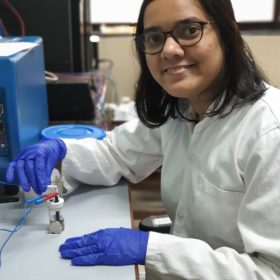
Indian researchers increase hydrogen yield three-fold through carbon-cobalt catalyst interface
The researchers showed a premagnetized carbon-cobalt catalyst interface could deliver up to 650% enhancement in electrocatalytic kinetics of hydrogen evolution reaction. The synergistic interface was able to sustain magnetization, and thus rapid hydrogen evolution rate, for prolonged time periods.

Indium supply not an issue for CIGS industry
Scientists Ayodhya Tiwari and Daniel Lincot recently spoke to pv magazine about the future of copper indium gallium selenide solar tech, which could play a key role in providing flexible, lightweight products in the building-integrated PV segment.
