
New tool aims to streamline fast-charging EV station design
A new project offers a design and validation framework for renewables-based microgrid configurations that deliver electric vehicle fast charging, energy security, and value-added grid services.

Scotland announces massive plan for heat pump deployment
The Scottish government wants to deploy renewable-powered heat pumps on at least 1 million homes and 50,000 non-domestic buildings by the end of this decade. For this purpose, it has created an advisory group and is now seeking to gather all potential stakeholders.

Photovoltaics and geothermal heat pumps for domestic hot water heating
According to a new study from LUT University, domestic water heating costs may be reduced by combining rooftop PV with geothermal heat pumps. Scientists developed a control method to minimize these costs by taking advantage of cheap spot market electricity and maximized PV power generation, as well as considering heat demand, PV generation forecasts, and heat pump efficiency.
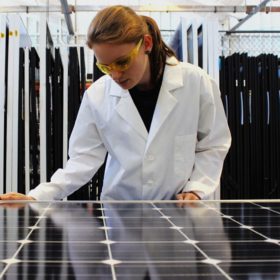
Takeaways from the PVEL 2021 reliability scorecard
The annual publication from PV Evolution Labs shares results from solar panel stress tests focused on specified and verified bills of materials.

Solar makes a lot of sense at ground level, too
Solar projects that support native grasses can sequester more carbon than farmland alone.
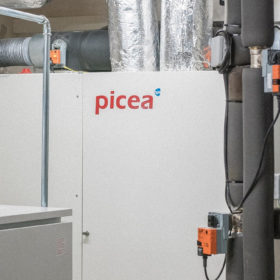
Hydrogen-based storage system for residential applications
The system is based on a power-to-gas hydrogen technology and is intended to enable one and two-family homes to have an independent power supply throughout the year.

The Hydrogen Stream: US government wants to reduce green hydrogen cost by 80% to $1 per kilogram in one decade
Furthermore, Swiss energy company Axpo and Swedish-Swiss electrical equipment giant ABB committed to combining their technologies and skills for several projects related to green hydrogen in Italy and Germany’s gas transmission system operators Gascade and Ontras announced a plan to set up a platform for the hydrogen industry in eastern Germany, with an initial grid to cover 475 kilometers of pipelines.

‘Where appropriate, agrivoltaics can certainly be a viable and meaningful alternative to large-scale solar’
US expert in environmental and energy policy Alexis Pascaris spoke with pv magazine about opportunities and barriers associated with agrivoltaics. Agrivoltaics are a very practical and advantageous alternative to large-scale solar, specifically in places where there are land-use constraints or needs for rural economic development, she explains. Differences in costs related to ground-mounted solar can typically be attributed to the raised racking systems or additional fencing, but these upfront investments in specialized hardware are eventually recovered as agrivoltaic systems produce dual-revenue streams.

Investigating all-manganese flow batteries
Scientists in Germany fabricated an all-manganese flow battery, which they say serves as a proof of concept for the potential of such devices. Their results working with various battery configurations show that cheap, abundant manganese has plenty of potential for flow battery applications; and is worthy of further investigation in the frame of developing sustainable energy storage technologies.
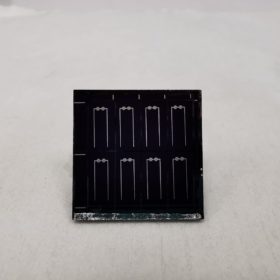
Pure sulfide CIGS solar cell with 15.2% efficiency
The device was built by an international research team. The cell features a buffer layer based on zinc sulfide oxide and a low copper absorber. The cell showed an open-circuit voltage of 920 mV. And though a different material from the widely commercialized CIG selenide PV thin films, the researchers claim similar processes could be used in its large-scale manufacturing.
