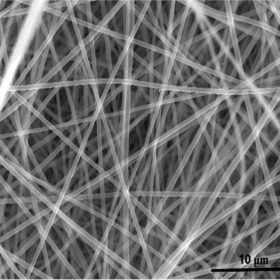
Using PET waste bottles to make batteries
Scientists in the U.S. claim to have successfully upcycled PET waste bottles into an electrochemical active-carbon material that functions as a double‐layer supercapacitor substance. They said that this achievement may lay the ground for the production of more sustainable batteries. Devices built with the proposed technique would not store as much energy as lithium-ion batteries but they could charge much faster.

Pilot project to couple wind and solar with heat pumps in Germany
The Institute for Solar Energy Research Hamelin (ISFH) is testing if renewables can cover 80% of electricity and heating demand combined in some town districts in southern Germany.
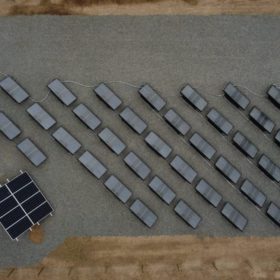
Chilean startup using PV to produce potable water from humidity
A Chilean startup is using solar energy to produce high-quality drinking water from the humidity in the air. The first plant is located in Chile, but there are plans in the works to expand to Colombia and Peru.

Battery storage 30% cheaper than gas peaker plants for firming renewables
The contest is over. Faster, cheaper, more flexible than gas turbines – battery energy storage must be the future peaking energy service provider of choice, according to a new paper by Australia’s Clean Energy Council.
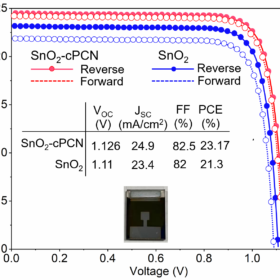
Perovskite solar cell with larger grain size and 23.17% efficiency
The result was achieved for a small area device with the size of 0.1 sq cm. The cell was fabricated with a Tin(IV) oxide electron transport layer modified with crystalline polymeric carbon nitrides (cPCN).
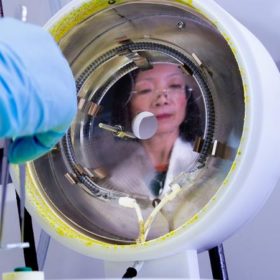
Hair! Coming to a next-generation PV cell near you
Scientists have found that a human hair derivative can protect, stabilize and enhance the performance of perovskite solar cells.

The Hydrogen Stream: strong push from France, new plans and deals in UK, Italy, Brazil, Philippines, Saudi Arabia, Portugal
The nascent hydrogen economy has seen a good amount of developments in a week that showed an increasing number of players taking part in the game. In the UK, British Airways has invested in hydrogen-electric aircraft developer ZeroAvia with a focus on hydrogen-electric power solutions for 50-plus-seat aircraft. In Brazil, Petrobras has joined forces with Siemens to develop green hydrogen solutions. In Portugal, the government and the European Investment Bank signed a non-binding memorandum of understanding for hydrogen cooperation.
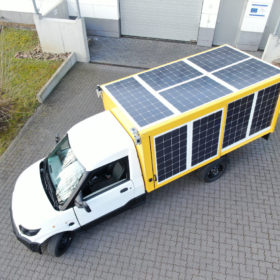
Vehicle-integrated PV for light commercial vehicles
A German consortium is building a light commercial truck prototype powered by 10 PV modules featuring Meyer Burger’s heterojunction cells. Initial estimates suggest that the panels could cover more than 25% of a vehicle’s total annual driving distance, and researcher Robby Peibst told pv magazine that the vehicle-integrated photovoltaic market could hit 5 GW by 2030.

PCM-based passive cooling for BIPV systems
Indian scientists tested four kinds of phase change materials (PCMs) for solar module cooling in building-integrated photovoltaics. The PCMs were encapsulated with the PV system and the building envelopes and were also found to be beneficial to the thermal comfort inside the buildings.
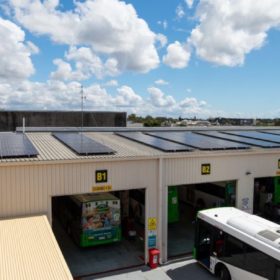
PV-powered ‘megawall’ to charge electric bus fleet
Australian public transport operator Transdev will use a “green mobility megawall” comprising 250 solar modules and 10 Tesla Powerwall units to charge two new electric buses in Brisbane.
