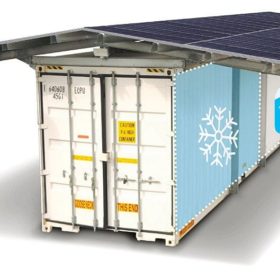
Cold room powered 100% by solar
The Cryosolar solution consists of a 20-foot or 40-foot container equipped with a plug-and-play PV system installed on the roof. It has 180 mm thick insulation and 10 to 35 cubic metres of storage with shelves.
Model agreement to make solar and wind share same connection point in the Netherlands
The model agreement was outlined by Dutch consultancy Ventolines B.V. and follows the introduction of new provisions for the sharing of the same connection point issued by the country’s government last year.
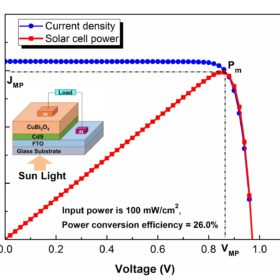
Heterojunction design for 26%-efficient copper bismuth oxide thin-film solar cell
Researchers in Bangladesh have simulated a solar cell based on a copper bismuth oxide material, used as an absorber, with n-type cadmium sulfide (CdS) utilized as a buffer layer. In the experiment, the device achieved an efficiency of 26.0%, an open-circuit voltage of 0.97 V, a short-circuit current density of 31.61 milliampere per square centimeter, and a fill factor of 84.58%.
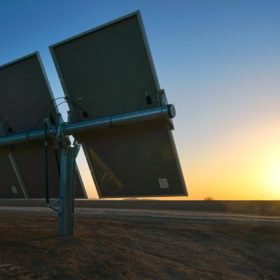
First Solar claims lowest module degradation rate in the industry
The US cadmium telluride thin-film module maker said its Series 6 CuRe panels are able to retain 92% of its performance at the end of the 30-year warranty. The improved stability of the product was achieved by eliminating copper and placing Group V elements such as antimony or arsenic onto the tellurium crystal sites.

Green hydrogen and the cable-pipeline dilemma
New research from Singapore has found that gas pipelines for the onshore transport of green hydrogen and the cables for the transport of electricity to produce it at a distant location have similar costs at a 4000 km transmission distance. For longer distances, gas pipelines were found to be cheaper than cables, although the electric lines are said to benefit from scaling up and higher utilization. For both options, however, a currently too high hydrogen LCOE remains the biggest barrier to overcome.
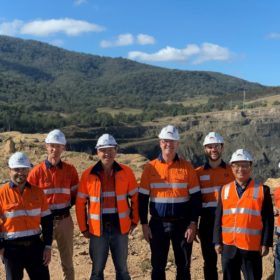
Australian coal mine to transform into pumped hydro facility
Australian utility AGL is transforming its operations in a number of ways, from restructuring the company itself, to building energy storage facilities for flexible distribution of renewable energy into the future. The company is also planning to build a pumped-hydro facility at a disused open-cut coal mining site in eastern Australia.
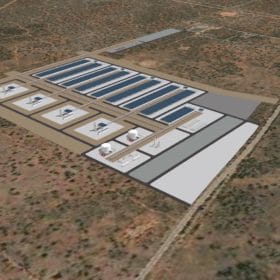
The Hydrogen Stream: 39,700 km European hydrogen network planned, Germany means business
Several heavyweights in Germany have announced projects to move forward with green hydrogen. RWE, Uniper and Bosch have all announced large-scale projects and the German government has allocated €52 million for hydrogen research. The European Hydrogen Backbone (EHB) initiative is proposing a hydrogen network of 39,700 km by 2040, with further growth expected after 2040.
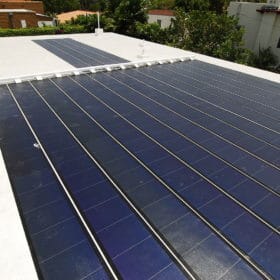
Amorphous silicon solar cells still niche market
In the second interview of a series, Arvind Shah, a professor at École polytechnique fédérale de Lausanne, told pv magazine about the challenges facing amorphous silicon cells. He said the tech could be used in some window applications and greenhouses, but not in rooftop projects, as the stabilized efficiency of these cells is too low.
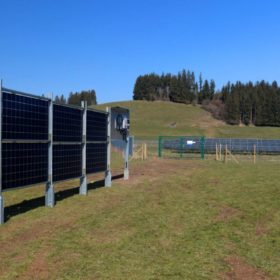
German power provider tests vertical agrivoltaics
Lechwerke is testing two pilot systems close to existing solar parks. It also aims to build its first large-scale project.
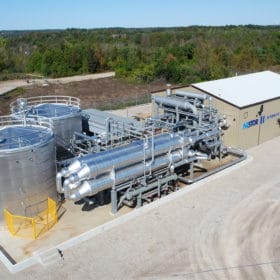
New compressed air storage tech from Canada
Canadian compressed air storage specialist Hydrostor said that projects built with its technology have a capex range of between $175 and $250/kWh. The company secured C$4 million ($3.19 million) in funds from Natural Resources Canada’s Energy Innovation Program and Sustainable Development Technology Canada to pursue the development of its global pipeline.
