
JA Solar reveals TÜV Nord-certified results from desert solar module trials
A TÜV Nord-certified white paper demonstrating JA Solar’s DesertBlue module series says the modules, which are specifically designed for desert regions and wastelands, transcend industry benchmarks and offer an optimized levelized cost of electricity.
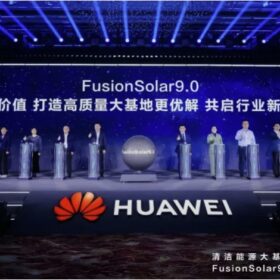
Huawei unveils FusionSolar 9.0 platform with AI, grid-forming tech
Huawei’s FusionSolar 9.0 is a new integrated solar-plus-storage platform featuring smart inverters, AI-driven management, and grid-forming capabilities to turn solar plants into active grid-support assets. It boosts efficiency, reduces costs, and enhances stability in weak grids with high renewable penetration, according to the company.

Optimal solar-plus-storage sizing for heavy industry operation
Australian researchers developed a high-resolution energy modeling framework to assess how PV and batteries can supply 24/7 electricity to heavy industries, considering cost, grid interaction, and load flexibility. They found that, while technology cost reductions help, smart grid integration and flexible industrial operations are far more effective in lowering electricity costs and enabling 100% renewable energy use.
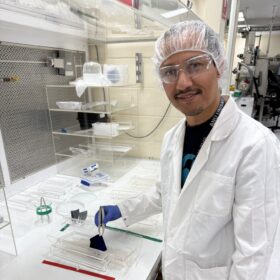
Antimony vs. phosphorous doping in solar wafer manufacturing
An international research team comprising scientists from Chinese module manufacturer Longi has investigated the resistivity distribution of antimony- and phosphorous-doped wafers used in solar cell manufacturing and have found that they offer comparable mechanical strenght. However, their work also showed that antimony-doped wafers have a more uniform resistivity, with a slight increase near the tail end.

Building the perfect perovskite, one layer at a time
A University of Cambridge-led team of researchers have demonstrated precisely controlled layer-by-layer epitaxial vapor growth of two-dimensional halide perovskite films in an industrially compatible process. Their findings could help develop more thermally stable perovskite solar cells.

New ultra-reflective color steel promises big efficiency gains for bifacial rooftop PV
Dongkuk CM has introduced an ultra-high-reflectivity color steel sheet designed to boost the performance of bifacial rooftop PV systems, increasing solar reflectance to 80–85. The new material also offers enhanced corrosion resistance, long-term durability, and added cooling benefits thanks to its advanced plating and dual-layer design, according to the manufacturer.

Indonesia think tank seeks partner for offshore floating solar study
Indonesia’s Institute for Essential Services Reform (IESR) is seeking proposals by Dec. 3 for a preliminary feasibility study on offshore floating solar development in Sulawesi, including techno-economic assessments and regulatory analysis.
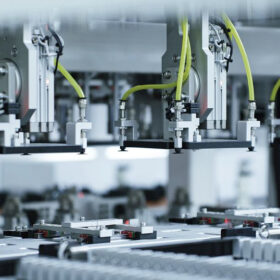
JinkoSolar achieves 34.76% efficiency for perovskite-silicon tandem solar cell
JinkoSolar says it has increased the efficiency rating for its perovskite-silicon tandem solar cells from 34.22% to 34.76%, confirmed by China’s National PV Metric & Testing Center (NPVM).

Enerin offers industrial heat pump delivering heat up to 250 C
The Norwegian industrial heat pump specialist said its HoegTemp system has a heat supply capacity of 0.2 MW to 5 MW and a coefficient of performance above 2 at high lifts.
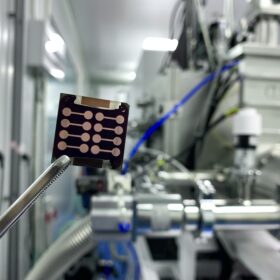
All-perovskite tandem solar cell with dipolar passivation achieves 30.1% efficiency
Researchers in China have developed a dipolar passivation method that reduces defects and improves charge transport in solar cells based on narrow-bandgap tin lead perovskite. The approach has enabled the fabrication of all-perovskite tandem solar cells with efficiencies of around 30% and enhanced stability,
