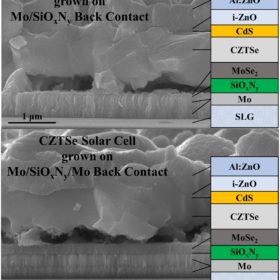
New manufacturing method for kesterite solar cells
German scientists have designed a manufacturing process to reduce the thickness of the molybdenum diselenide interface layer in kesterite solar cells. They used two different configurations of silicon-oxynitride diffusion-barrier layers.

Transparent PV-based greenhouse takes shape in Australia
Western Australia-based solar glass developer ClearVue has commenced installation of its transparent solar PV glazing panels at what will be the world’s first clear solar glass greenhouse.
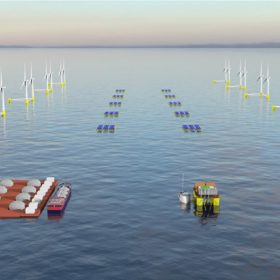
Offshore hydrogen production powered by floating PV
Spain’s Repsol will develop a €4.5 million ($5.5 million) pilot project to produce green hydrogen with floating PV for the Santander Port Authority. It will be completed in December 2023.
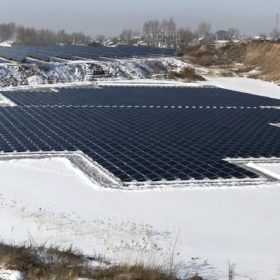
What happens to floating PV when the water surface freezes?
What happens to a floating PV system located in cold climates during freezing temperatures? How is the plant handled and which kind of risks could be associated with these unfavorable climatic conditions? We have sought to answer these questions with the help of Kane Wang, manager of Sungrow Floating’s system solution department.
Germanium-based solar cell tech for agrivoltaics
German scientists have fabricated an enhanced amorphous germanium PV cell that confines light in an ultra-thin absorber. It has the potential to combine PV with photosynthesis in new solar applications on bio-reactors, greenhouses, and agricultural land.

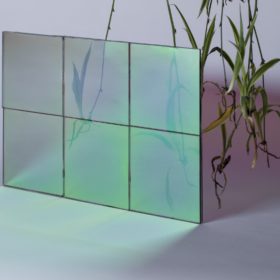
Fraunhofer ISE develops technique to produce glowing colored solar modules
The German research institute has proposed a technique based on the surface structure of the wings of the morpho butterfly to produce colored BIPV panels for facades and rooftops. The process is claimed to make it possible to color the modules with an optical effect and not with color pigments, which reduce their efficiency.

Complementary hybrid PV systems can reduce reliance on storage
Looking back over years of research into the topic of hybrid systems based on different combinations of solar, wind, hydro and other renewables, an international group of scientists found strong potential for strategies to exploit complementarity between the different sources integrate more intermittent renewables onto regional and national grids. The scientists present a series of conclusions and recommendations that aim to push research in hybrid renewables forward.
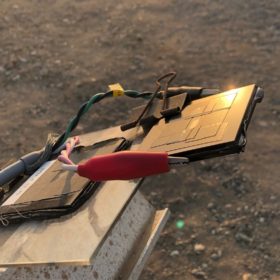
Bifacial perovskite-silicon tandem cell with 25.2% efficiency
International researchers have developed a silicon heterojunction PV cell with textured surfaces to accommodate the perovskite top cell. They optimized the rear transparent electrode to collect as much albedo as possible and achieved five different perovskite bandgaps by altering the iodide-to-bromide ratio in the perovskites, resulting in a higher open-circuit voltage.
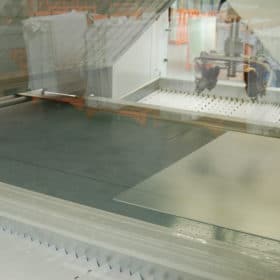
Anti-soiling nanocoating for large-scale PV
Dutch company Rads Global Business has developed an anti-soiling coating for solar PV modules that is claimed to reduce cleaning cost by around 60%. The anti-reflective and anti-corrosive coating is also said to mitigate potential-induced degradation (PID).
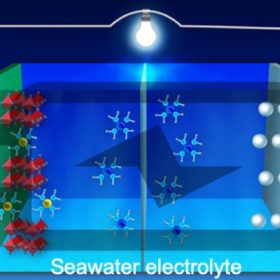
Seawater aqueous battery based on alloy of zinc and manganese
Scientists in the United States developed a new anode for aqueous batteries. A working battery utilizing this anode, with seawater as an electrolyte, demonstrated impressive energy density, and remained stable after 1,000 hours of high current cycling. The group is already discussing the potential of their approach in large-scale manufacturing.
