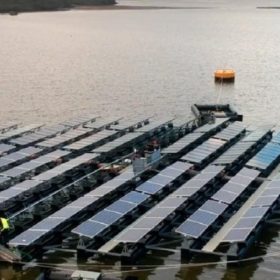
‘Floating PV systems are storm-resistant’
Netherlands-based Floating Solar says its pilot floating PV project at the port of Rotterdam has been able to withstand four severe storms.

Dual-ion battery prototype promises safe and cost-competive energy storage
Scientists have fabricated a working battery using a new type of dual-ion chemistry. The design avoids many of the rare or expensive materials found in today’s lithium-ion batteries, and also comes with an inherently lower risk of fire. The battery showed promising performance, and its creators say they have identified several areas where performance could potentially be improved.
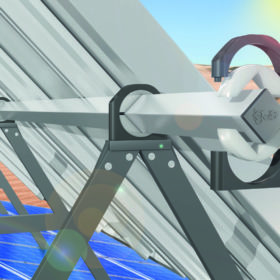
Lubrication-free pedestal bearings to align solar modules
According to the manufacturer, the range of its pedestal bearings for the solar sector has a service life of more than 72 years.

PPA for PV facade in Germany
A 50 kW PV system is being built on the facade of a radiology center near Marburg’s main train station. The Marburg municipal utilities and the Sonneninitiative association have concluded a PPA that ensures the long-term financing of the project.
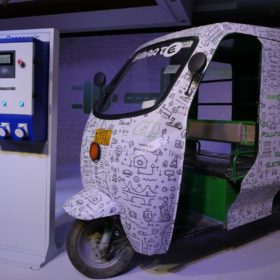
Electric vehicle adoption in India will be led by three-wheelers
Electric vehicles will account for 65-75% of new three-wheeler (3W) sales by 2030. Intra-city transport buses will see 25-40% EV penetration and two-wheelers 25-35%. In four-wheeler passenger vehicles, the market will be driven by shared mobility, while just 10-15% of new car sales for personal mobility will be electric.
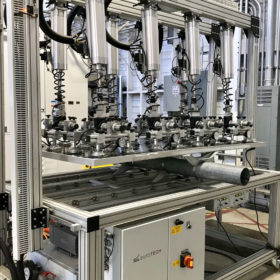
Holistic approaches to reliability
A new report published by the European Technology and Innovation Platform outlines the need for continuing research into the reliability of PV systems and components, and for the collection and sharing of performance data. The report recommends a holistic approach to reliability, going beyond current testing standards to identify new degradation mechanisms, and making use of sensors and drone imaging to monitor systems in the field to prevent and report on system failures.
How temperature affects tandem solar cell performance
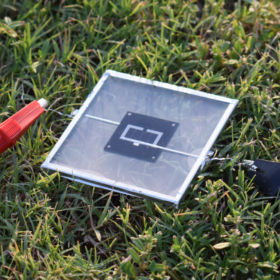
New outdoor tests conducted at Saudi research center King Abdullah University of Science and Technology (KAUST) have shown that an increase in temperature affects the performance of a tandem perovskite/silicon solar cell not only because of voltage losses but also because of current mismatch between the two sub-cells.
Shedding light on amorphous silicon
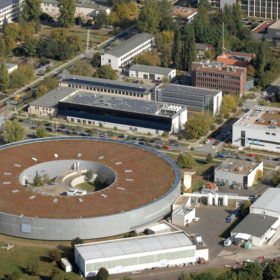
Scientists in Europe took a very close look at the thin amorphous silicon layers used in heterojunction and tandem solar cells, building a full picture of the material’s structure at the nanoscale. Their findings could help scientists solve the long-standing mystery of light induced degradation.
Cooling effect of water for floating PV arrays
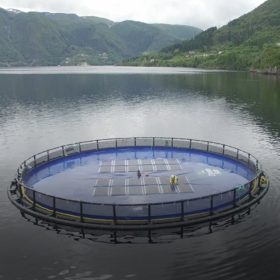
Norwegian researchers have quantified the cooling effect of water in direct contact with floating PV arrays. They tested a computational fluid dynamics model to estimate U-values and used it on a 6 kW floating system deployed by Ocean Sun.
Terawatt scale by 2050
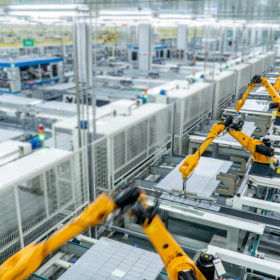
In a new paper published in the journal of Renewable and Sustainable Energy, renowned PV scientist Pierre Verlinden examines the solar industry’s trajectory towards the 70 TW of installed capacity that will be needed by 2050, as the best choice for meeting climate targets set out in the 2015 Paris agreement. Silver consumption and recycling, according to Verlinden, will be the biggest challenges in the years to come, as well as ensuring balanced growth and avoiding a major installation rush in the years close to 2050.
