
The weekend read: Adding blockchain to battery supply chains
Responsibility in battery supply chains has become a growing focal point over the last few years and will remain a key theme as demand for mobile phones, electric vehicles, and alternative forms of energy continue to increase. Alexander Preston from SAFE sets out how the application of blockchain technology can deliver visibility, build trust, and facilitate the battery sector’s digital transformation.

IEA report appears to acknowledge 2050 net zero may be beyond us
A study into the clean energy tech innovation rate required to keep global heating under control may suggest concepts such as lithium-air could yet keep us to the mid-century ambition, but it is also starting to contemplate the temperature rise to be expected if we only achieve net-zero by 2070.
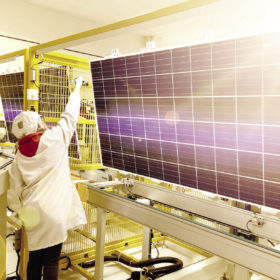
Canadian Solar joins the 500 W-plus panel club
The Chinese-Canadian company has unveiled a range of high-power modules which are set to go into mass production by early next year. The series includes a commercial and industrial rooftop-dedicated product offering a reported 405 W.

Lobbying clears the way for European solar trade show in September
The organizers of the Solar Solutions International event which was postponed in March have persuaded the Dutch government industry events should not be subject to the same Covid-19 restrictions as concerts.
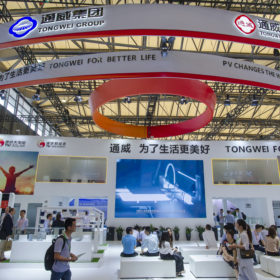
Chinese PV Industry Brief: Tongwei freezes cell prices, state body opens procurement round
Longi has also joined the 500 W-plus module club with its new Hi-Mo5 product, while Sunport has announced to expand production of its MWT module.

Longi launches 540-Watt Hi-MO5 module
The Chinese manufacturer has debuted two models in the new bifacial, double-glass series to join the scramble for a slice of the 500 W-plus market and to stake its claim to have the 182mm, M10 wafer adopted as the industry standard.
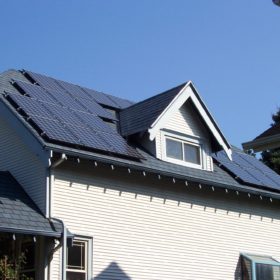
Efficient rooftop solar+storage without MPPT
A German research group is trying to determine whether the combination of solar and storage with direct coupling and without the aid of maximum power point tracking (MPPT) electronics is feasible. According to its findings, this particular configuration might be efficient, but it will likely require special panels and batteries.
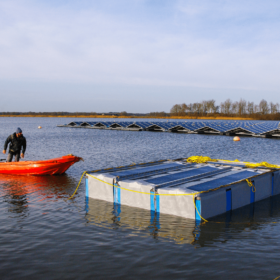
A flexible approach to offshore solar
Scientists in the Netherlands are trialing a floating solar installation based on flexible thin-film PV modules. The idea behind their concept is that such modules, in combination with a newly designed flexible racking system, will create a system able to roll with the movement of the water, rather than attempting to defy it.

Sub-nanometric particles to stabilize lithium-oxygen batteries
The storage technology promises ten times the energy density offered by lithium-ion batteries but notorious cycling instability remains a concern. Researchers in South Korea may have come a step nearer a solution.

Shielding PV against Earth’s magnetic field
Researchers in Kenya are seeking to reduce the influence of the Geomagnetic field on PV panel performance by replacing aluminum module frames with a steel cage. They have specified they have been unable to quantify costs related to the solution, and that more research is needed.
