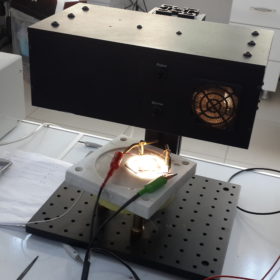
Assessing the impact of micro-cracks in solar glass
A Turkish research team has analyzed how big changes in temperature can affect absorbance, light transmittance and reflectivity in two types of solar glass. The scientists demonstrated lower efficiency in solar cells and the glass itself were attributable to a large number of micro-cracks and deformations on the glass surface.
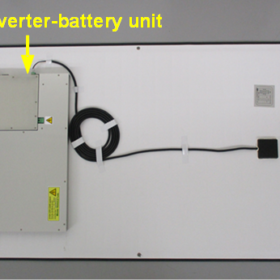
Downsizing silicon carbide inverters
Japanese researchers have investigated the effectiveness of SiC devices in sub-kilowatt applications. A 790g device was tested in a mini PV generator system which included a battery and maximum power point tracker circuit in the same housing. Compared to traditional mini inverters the SiC device showed 3% higher efficiency.
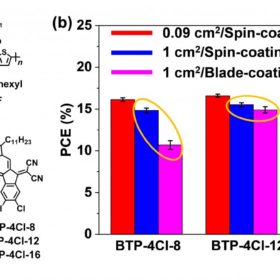
New non-fullerene electron acceptor for 17% efficient organic solar cell
Chinese scientists have developed a cell with a new blade-coating method and BTP-4Cl-12, a kind of acceptor that is a derivative of the Y6 acceptor, which is widely used in organic PV applications. The researchers also claim that the cells can maintain good efficiency levels, even if its surface is lightly expanded.
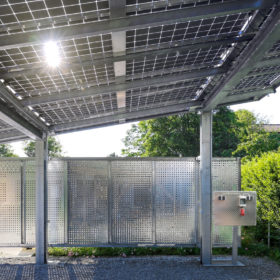
FuturaSun launches glass-glass mono module
The Italian manufacturer said the product has a 30-year performance warranty and strong resistance to adverse weather. The 330 W panel has a claimed efficiency of 19.78% with FuturaSun reporting the 325 W and 320 W versions have efficiencies of 19.48% and 19.18%, respectively.

Healing the cracks for a more stable perovskite
Scientists in the United States have demonstrated simple methods for ‘healing’ the cracks that form in perovskite solar cells. While it is far from clear how the approach could be applied commercially, the work suggests possibilities for maintaining the performance of perovskite cells in long-term operation.
A titanium solar cell with 24% efficiency
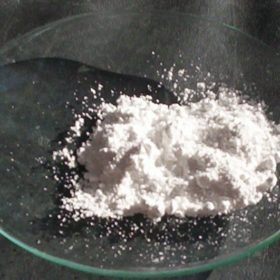
The Australian research team which developed the device said the higher efficiency was achieved through a nanowire design which eliminates the interface inside the titanium dioxide band.

An inverted perovskite cell with 22.3% efficiency
Saudi researchers have developed a cell which is said to exhibit improved structural and optoelectronic properties as well as enhanced carrier mobility and diffusion lengths. The feat was achieved by reducing voltage losses using a new passivation technique.
The inner workings of a lithium battery
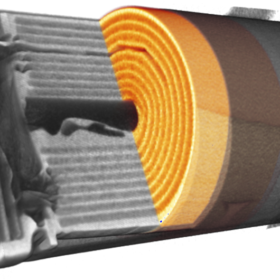
An international group of scientists has developed a comprehensive method to track the microscopic processes at work in lithium batteries. Employing a ‘virtual unrolling’ model developed for ancient manuscripts too sensitive to be opened, the group peeked inside the layers of a commercial battery to gain a better understanding of the processes at work and the degradation mechanisms affecting them. Their findings, the group says, could provide a benchmark for battery characterization.

India’s future energy options all add up to coal, agree the experts
Panellists including a government representative and a member of the chief policy thinktank used by Narendra Modi agreed coal will continue as the staple source of Indian power into the mid century and technology should be employed to ‘clean’ it.

Trimming optical losses in tandem perovskite cells
Spanish researchers have unveiled a monolithic nano-structured perovskite silicon tandem device they claim can reduce optical losses by more than a third compared to planar perovskite cells of the same kind.
