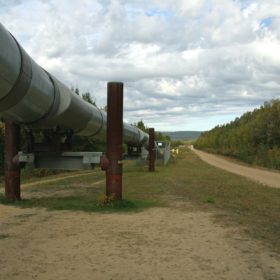
Hydrogen economy needs public policies
According to the 2020 Global Gas Report by Snam, the International Gas Union and BloombergNEF, public policies are required to support clean hydrogen reach industrial clusters and to facilitate large-scale use. The authors of the report acknowledged the advantages of using wind and solar to directly power electrolysis, but they do not discard the possibility of using gas power with carbon capture storage. The experts of the three parties also identified barriers to remove for future development.

Solar, storage-centric approaches to DC coupling
A new white paper by Alencon outlines the differences between PV-centric and battery-centric coupling.

Light and shade of 500 W plus solar panels – part III
In the third article in a series, pv magazine editor Pilar Sánchez Molina and industry experts continue their discussion on the challenges and opportunities created by new panels with power output exceeding 500 W.
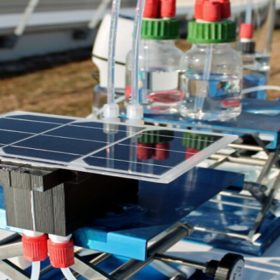
Different combinations of PV-powered electrolysers
An EU-funded research project coordinated by German research institute Helmholtz-Zentrum Berlin has tested several configurations for solar-powered hydrogen generation. First results showed which may be the most suitable PV technologies for electrolysis.
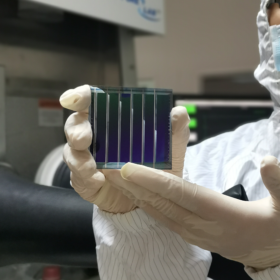
Organic solar module with 14.4% efficiency
Scientists in China have developed an organic module with an area of 18 cm2 based on a non-fullerene acceptor called DTY6. The device has a certified efficiency of 13.98%, but when a non-halogen solvent was used, it even reached 16.1%.
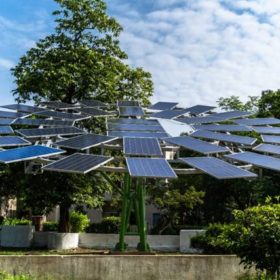
A solar tree for agricultural applications
The Internet of Things (IOT)-enabled solar tree — using 35 solar PV panels with a 330 Wp capacity each — is especially useful for the agricultural community in providing electricity for high-capacity water pumps, e-tractors and e-power tillers. It can also allow precision agriculture through IoT-enabled features such as real-time humidity, wind speed, rainfall prediction and soil health monitoring.
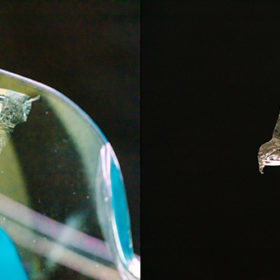
A cell so thin, it can rest on a soap bubble
Scientists at Saudia Arabia’s King Abdullah University of Science and Technology demonstrated an organic PV cell that can simply be printed onto a piece of paper. The cell set a new efficiency record for a fully inkjet-printed device, and its designers envisage applications in integrated medical sensors.
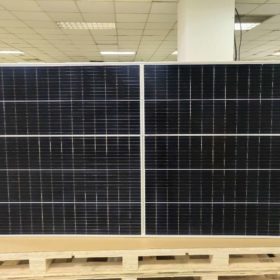
Light and shade of 500 W plus solar panels – part II
In the second article in a series, pv magazine editor Pilar Sánchez Molina and industry experts keep discussing the challenges and opportunities created by new panels with power output exceeding 500 W.
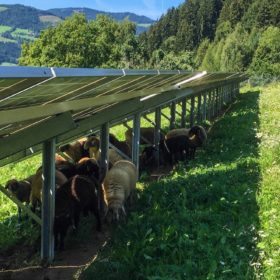
Solar projects enable biodiversity
Eco-Tec, an Austrian PV company, is cooperating with a startup, Meine Blumenwiese, to ecologically upgrade ground-mounted solar projects. The two companies aim to generate clean energy while also creating new habitats for a range of insects and animals.

Computational method shows Italy may install 144.5 GW of PV by 2050
According to a new study, PV may reach an installed power of 144.5 GW in Italy by the end of the first half of the century, followed by onshore and offshore wind with 59.6 GW and 17.6 GW, respectively. The research is based on a new computational model that identifies the best spatial distribution of renewable energy sources in an individual country or electricity system while avoiding problematic concentrations of technologies
