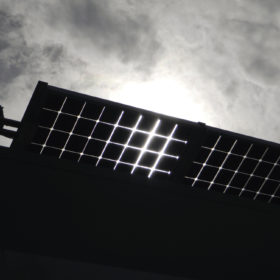
Webinar Q&A: Simulating the gains of bifacial and tracking installations, where’s the rub?
Following up on the webinar held with Trina Solar about the new algorithms needed for bifacial and tracking installations, the word is that gains of 20-30% are not unlikely. To attain that, however, the sweet spot of front and rear side yield has to be reached. Trina has showcased a new algorithm alongside its bifacial n-type modules and claims it can do just that.
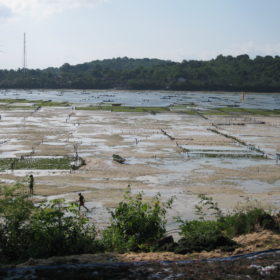
Aquavoltaics in the Philippines
An EU funded solar-plus-storage project has been tendered in the Philippines. The United Nations is seeking bids for the system, to support the seaweed industry on the island of Tawi-Tawi. Combining PV with aquaculture brings many advantages for both, including water conservation, a more controlled aquatic environment, and ecosystem restoration.
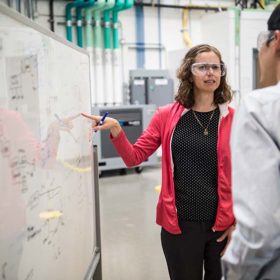
Stitching together the grid of the future
A vision of a decentralized, renewable-powered electricity grid is being brought a step closer by scientists at the U.S. National Renewable Energy Laboratory. Their project, Autonomous Energy Grids, aims to take an overarching look at the solutions that will power this grid of the future, and to fill any gaps that appear between them.
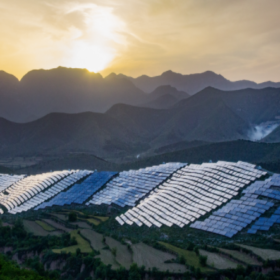
GCL-Poly posts $141m loss in H1
The Chinese PV group recorded a loss attributable to owners of the company of roughly $141.1 million, as its solar materials division posted a loss of approximately $185.5 million.
Using machine learning and cheap satellite data to design rooftop solar power
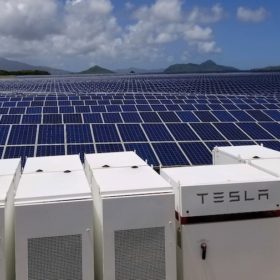
Researchers have built a tool to use cheap satellite imagery – like Google Maps – to automatically create solar designs with a 91% accuracy rate.
A close look at nature could lead to cheaper hydrogen
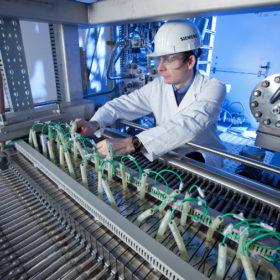
Scientists at the Australia National University have observed a key stage in the process of photosynthesis which could be copied to greatly increase the efficiency of sunlight-powered water splitting processes used to produce hydrogen.

The bearable lightness of solar
The weight of a thin-film rooftop PV installation at Netherlands football club AZ Alkmaar has been highlighted in media reports as a possible cause of a stadium roof collapse. However, a full investigation is yet to be launched and one German specialist said studies have shown flush-mount PV panels do not increase static wind loads on rooftops.

Agrivoltaics good for agriculture and panel efficiency
A U.S. research team has found the most efficient locations for agrivoltaics include western America, southern Africa and the Middle East. The researchers found crop land, grasslands and wetlands were the best environments for PV projects linked to agriculture. Conditions suitable for crops are ideal for improving solar module efficiency.
The weekend read: Perovskites step out of the labs
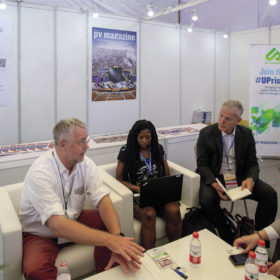
Michael van der Gugten, Sales and Marketing Executive at Smit Thermal Solutions, is convinced that perovskite solar cells have reached maturity, and that they are ready to make the step from the lab to production. He is leading the organization of a conference on this topic and expects that the perovskite community, production equipment suppliers and crystalline silicon cell manufacturers will discuss the implementation of perovskite-silicon tandem cells or the production of standalone perovskite modules.
Hanergy sets new efficiency record for heterojunction cell
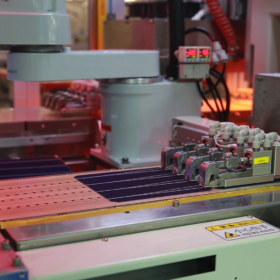
Chinese thin film producer Hanergy has set a new record of 24.85% module efficiency for silicon heterojunction technology. The record was achieved at the company’s research & development center in Chengdu, China, and has been confirmed by the Institute for Solar Energy Research in Hamelin, Germany.
