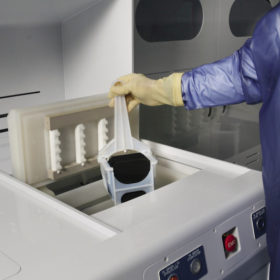
The blackest black for more efficient solar cells
MIT scientists claim to have created a material 10 times more black than anything witnessed to date. It is said to be able to absorb more than 99.96% of incoming light and reflect 10 times less light than other superblack materials. The invention may be interesting for the development of black silicon PV technology and carbon nanotube-based solar cells.
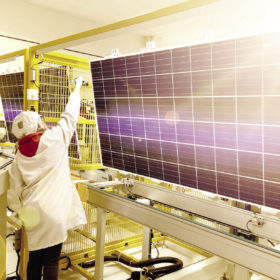
Canadian Solar raises efficiency record for mono cast cell
The result was verified by Germany’s Institute für Solarenergieforschung GmbH. The Canadian-Chinese manufacturer claims to have achieved 22.8% efficiency for its multi-crystalline P5 cell, produced with a mono cast manufacturing process.

EU approves Eon’s bid to take over Innogy
It took a while, but now the energy giants can finalize the mega deal. Rival energy companies have criticized approval of the deal amid fears Eon could dominate the German market.
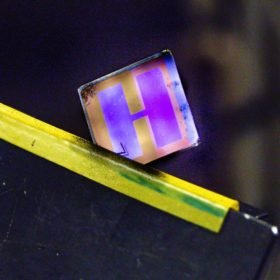
An organic solar cell for indoor light
A Swedish-Chinese research team has developed an organic cell said to be ideal for wide use in daily life to power internet of things-enabled devices. The cell could be used to power sensors that detect and measure moisture, particle concentrations, temperature and other parameters indoors.

Brexit paralysis and lack of incentives leave community energy facing uphill struggle in the UK
The future benefits of technology such as smart meters and the associated aggregation of small scale generation are not being adequately rewarded, support for solar and wind is being cut off and parliament is fixated solely on one issue.
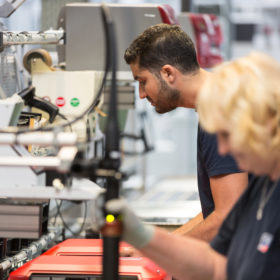
SMA: ‘We can’t be credible if we’re not sustainable’
Credibility comes not just from offering products that generate clean electricity, but also from the way in which those products are manufactured, says SMA Solar Technology CEO Jürgen Reinert. Here, transparency and sustainability are key. That’s why one of the world’s largest PV inverter producers has partnered with pv magazine’s UP sustainability initiative. In the following Q&A, Reinert lays out what SMA is doing to step UP its green game.
Silicon and perovskites should stick together, say Korean scientists
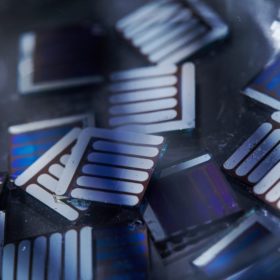
Researchers from the Ulsan Institute of Science and Technology have demonstrated a new method of fabricating perovskite-on-silicon tandem devices, using a transparent conductive adhesive to combine the two cells. The scientists have developed devices with demonstrated efficiencies of 19.4%, and propose strategies to bring that above 24% using existing technology.
Swiss scientists identify causes of defects in silicon carbides for power electronics
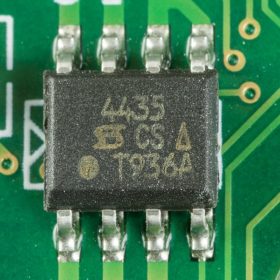
Carbon clusters of a few nanometers in size could be responsible for the defects affecting the thermal stability of SiCs. The defective carbon accumulations arise during the oxidation of silicon carbide to silicon dioxide under high temperatures.

Five takeaways from EU PVSEC 2019
This week, pv magazine headed to Marseille for the 36th edition of the EU PVSEC conference and exhibition. During the week-long show, leading universities and research institutes presented their latest results to the industry and public. As the conference heads into its final afternoon, we’ve put together five key takeaways from this year’s event.

Discovery challenges accepted wisdom on organic PV
Researchers at the University of Warwick in the U.K. have made a discovery that could lead to new designs for organic PV devices. Their findings could open up a new range of materials for the electrode layer and bring low cost, flexible organic PV devices a step closer commercial reality, say the academics.
