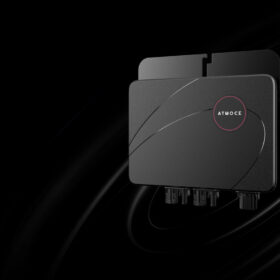
Atmoce debuts microinverter connecting two solar modules
Atmoce’s new MI microinverter series connects two PV modules per unit while still providing module-level power optimization.
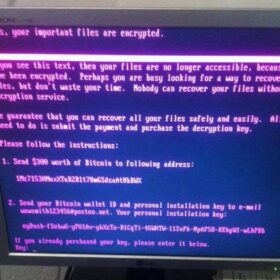
Cyber threats for PV: What are ransomware attacks and how do they work
Ransomware attacks encrypt or lock critical PV system data and control platforms, preventing operators from accessing or managing their assets until a ransom is paid. These attacks can disrupt operations, reduce energy production, and create safety risks, making robust backups, segmentation, and incident response essential for resilience.
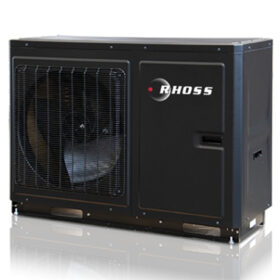
Rhoss unveils propane air-to-water heat pump for residential, small commercial applications
The Italian manufacturer has launched a compact range of propane air-to-water heat pumps for heating, cooling, and domestic hot water in residential and light commercial applications, offering up to 15.5 kW heating capacity, a seasonal coefficient of performance of up to 5.18, and water temperatures up to 80 C.
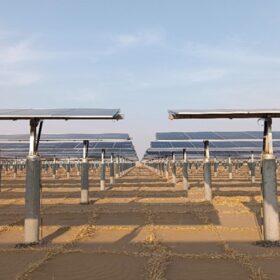
How solar farms shape local climate and vegetation in arid regions
Researchers in China found that PV plants in arid regions create a measurable cool island effect that varies strongly with season, location, and plant design, influencing surrounding vegetation in complex and spatially uneven ways. They showed that cooling intensity and distance differ widely across sites, are driven mainly by plant morphology,
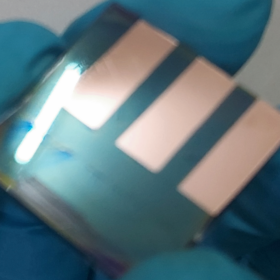
Reduced graphene oxide boosts stability in perovskite solar modules
Indian scientists have fabricated perovskite mini-modules with reduced graphene oxide interface engineering, achieving 16.6% efficiency and over 1,300 hours of stable operation. The graphene oxide layer improves film quality, reduces defects, enhances charge transport, and enables scalable fabrication, offering a promising route toward efficient and durable perovskite solar modules.
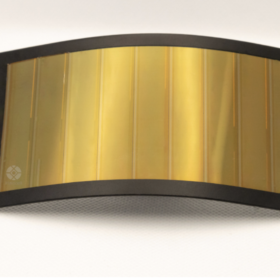
Halocell Energy, Sofab Inks advance perovskite collaboration
An ongoing collaboration between Australia’s Halocell Energy and U.S-based Sofab Inks finds that perovskite modules incorporating Sofab’s Tinfab electron transport layer maintain approximately 100% of their normalized efficiency after 1,300 hours under accelerated combined light and damp-heat testing.
Managing cyber risks in the era of decentralized energy
The move toward decentralized energy resources offers resilience and flexibility in power generation, but it also introduces new complexities that demand proactive security measures.

Dismantled 28-year-old PV system reveals wasps nest in junction box
Researchers in Austria discovered a wasp nest inside the junction box of a 1998 rooftop PV module, illustrating how insects can exploit even sealed electrical components. The affected module showed significant degradation and partial failure, though overall results confirmed the surprising durability of older PV module designs.

Cooling solar modules with nanofluids based on graphene oxide, Mxene
An international research group has developed a novel solar module passive cooling system that integrates three-dimensional oscillating heat pipe (3D-OHP) with different combinations of nanofluids based on hybrid graphene oxide (GO) and a two-dimensional titanium carbide known as MXene (Ti3C2Tx). MXene compounds take their name from their graphene-like morphology and are made via selective etching of […]

Cyber threats for PV: What are man-in-the-middle attacks and how do they work
Man-in-the-middle attacks are a serious threat to networked PV systems, allowing attackers to intercept, modify, or disrupt communications, potentially causing operational failures, physical damage, financial losses, and safety hazards. Effective defense requires a layered approach combining encryption, strong authentication, network segmentation, firewalls, IDS, and continuous monitoring to detect, prevent, and limit the impact of such attacks.
