
Tax relief deadline sparks selloff
From the beginning, 2026 is shaping up to be a year of radical change for all, and the solar industry is no exception. A calm end to 2025 was shattered in January, and the new year has already brought a PV manufacturing overhaul. Martin Schachinger of pvXchange examines the impacts of a sudden increase in module prices.
Market transformation
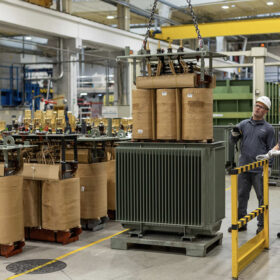
Securing connection to the grid has increasingly become a bottleneck for solar and energy storage projects, partly due to short supply of transformers and other vital components. Manufacturing expansions are moving ahead but will take time. Renewable energy companies are making investments in the grid equipment space, both to secure connections for their own projects and to take advantage of a market that’s expected to see significant growth out to 2030 and beyond.

Plugging the gas leak
Demand for gas turbines has never been higher, with an anticipated spike in future energy demand filling order books for years to come. Complex engineering makes expanding manufacturing capacity tough, but can solar and energy storage plug the gaps left by gas?
Buffalo solar
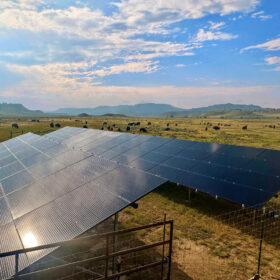
Indigenized Energy recently led a project deploying an off-grid solar-plus-storage solution for a buffalo ranch owned by the Northern Cheyenne Tribe in the US state of Montana. pv magazine spoke with Serena Romero, the company’s director of marketing and communications, about the potential of off-grid renewables to empower North America’s indigenous peoples.

Lessons from the solar frontier
Utility-scale solar projects are larger, interconnections are slower, and engineering decisions must anticipate regulation and supply chains years in advance. At the CT Solar Platform in Snyder, Texas – a 1.6 GW AC single-site development – the first phase, CT Solar One (110 MW AC), has been a test bed for integrating civil design, BOS optimization and domestic-content strategy. Levona Renewables led the development and engineering of the project and CEO Fernando Queiroz shares some key lessons.
Growing pains
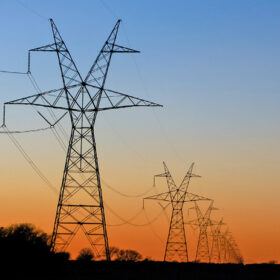
The electricity grid is a real bottleneck for energy in the United States, and it’s not only utilities and grid operators who are struggling. Grid congestion also puts pressure on renewable energy project owners and is as much a business problem as it is a technical one, writes Alon Mashkovich, CEO of energy management business software supplier enSights.
Solar in the snow
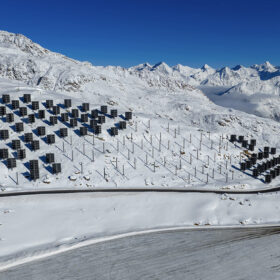
As vertical PV innovators make inroads with their proprietary solutions, including projects in locations with snowy winters, pv magazine looks at four providers: Helioplant, an Austrian solution for high-elevation PV sites, Norway’s Over Easy, Germany-based Next2Sun, and pv magazine Deutschland Top Innovation 2024 prize winner Solyco.

No silver bullet for cell costs
While silver prices are skyrocketing and new solar cell technologies demand more of the precious metal, researchers are exploring ways to reduce or even eliminate silver from PV manufacturing. With copper, aluminum, or nickel on the front and rear of cells, novel metallization strategies are achieving silver-level efficiencies, and manufacturers are taking note.
US solar’s push for domestic bliss
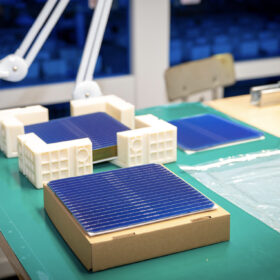
Incentives in the US Inflation Reduction Act (IRA) of 2022 drove a surge in announcements of new solar manufacturing facilities across the United States, and the country now hosts more than enough module production capacity to meet forecast domestic demand for several years. A shift in policy priorities has created uncertainty, but the continued availability of manufacturing tax credits and a focus on domestic industry have US module makers looking to add cells and other components to their production plans.

Palpable perovskite production
It is now widely accepted that PV module efficiencies can be increased by combining silicon with perovskites. pv magazine visited module maker GCL Optoelectronics at its factory near Shanghai, where it is ramping up production of these tandem modules. Founder Fan Bin believes that cost parity with today’s module technologies could be achieved as early as 2028.
