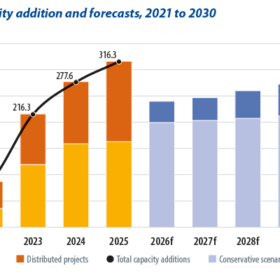
From rapid growth to high quality in China
China’s domestic market remains a key pillar of global PV demand. Market attention has shifted from pure capacity expansion to optimizing returns in a new cycle of high-quality development, according to Vikey Zhao of InfoLink Consulting.
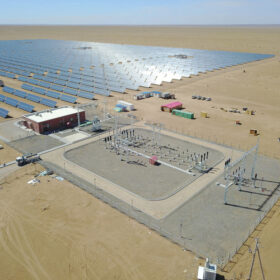
Mongolia’s solar opportunity
About 25% of Mongolia’s total energy consumption today comes from Russian and Chinese imports. As the country’s economy and population expand, energy demand is growing by 15% to 20% per year, leading to shortages. Momentum in the country’s small but growing renewable energy sector is driven by efforts to diversify its coal-based energy mix and tap export opportunities in neighboring China.

Policy risk and capital friction
As the US solar industry continues to adjust to life under the One Big Beautiful Bill Act (OBBBA), Jesse Pichel and Lev Seleznov of Roth Capital Partners note two risks that are drawing attention across the market. These include the potential for a second reconciliation bill that could reopen elements of solar policy, and continued friction in tax equity and tax credit transfer markets tied to unresolved Foreign Entity of Concern (FEOC) and Prohibited Foreign Entities (PFE) guidance. Taken together, these issues show that policy risk has not disappeared for US solar – in some respects, it is evolving.
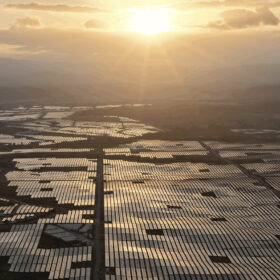
The Philippines’ PV and storage mega-project
The MTerra solar project in the Philippines is set to become one of the world’s largest integrated solar-plus-storage facilities once fully completed. Ajay Mullangi, principal at global infrastructure investor Actis, which is developing the project alongside partners, updated pv magazine on progress since the groundbreaking in November 2024 and explains why the development is integral to the Philippines’ future energy security.

Powering design
There is a lot of focus on the challenges of building data centers and obtaining grid connections for power, but what about design considerations? As chips become more powerful and compute tasks more demanding, data center developers’ ability to adapt their facilities to an uncertain energy future will distinguish them from competitors.
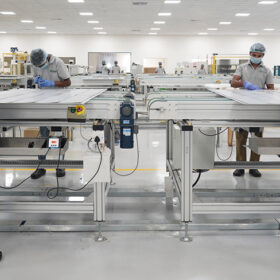
PV manufacturing diversified
The solar manufacturing landscape is today comprised of three key countries trying to create profitable operations across the value chain from polysilicon to modules: China, India and the United States. Each of these countries faces different challenges, shaped by legacy investment levels and policy initiatives. Finlay Colville, founder of Terawatt PV Research, examines the factors that are driving capital expenditure and technology selection in 2026.

Powering up perovskites
Perovskite solar devices continue to move closer to large-scale manufacturing in 2026, with encouraging results from outdoor testing and megawatt-scale pilot lines. pv magazine spoke with Yang Chen, director of overseas business development at Chinese perovskite startup Microquanta, about the direction and prospects for perovskite PV in 2026.

The best laid plans
Elon Musk made the latest in a series of ambitious claims about his business plans on a stage in Davos-Klosters, Switzerland, in January. He said SpaceX and Tesla teams are working separately to build 100 GW a year of solar manufacturing capacity in the United States, a process that he expects will take about three years. pv magazine USA’s Ben Zientara assesses the likelihood of these plans coming to fruition.
When glass gives way
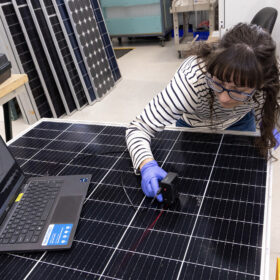
Instances of cracks in PV module glass started appearing about five years ago. Spontaneous glass breakage is now one of the solar industry’s top issues, but manufacturing pressures and a lack of standards are hindering solutions.

BBDF 2026: financing, grid fees, flexibility and growth
More than 530 delegates from across Europe’s fast-growing battery energy storage system (BESS) sector gathered in Frankfurt for the second annual Battery Business & Development Forum (BBDF), jointly organized by pv magazine and ESS News, Conexio-PSE, and SolarPower Europe. Engaging presentations, lively discussions and the chance to connect with industry leaders from across key markets made this year’s event a major success.
