Risking progress
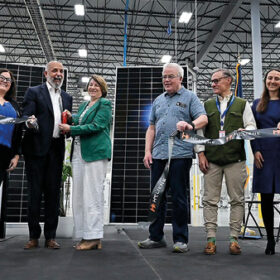
While changes to US clean energy tax credits and other restrictions in the One Big Beautiful Bill Act (OBBBA) create a new level of uncertainty, US solar and energy storage manufacturers vow to march on with the previously planned buildout of domestic solar manufacturing capacity.

Turbulent times for US energy storage
US President Donald Trump signed the One Big Beautiful Bill Act (OBBBA) into law on July 4, dealing a blow to clean energy. The OBBBA kills many of the provisions in the US Inflation Reduction Act that were most impactful for the energy storage industry, and while no one is fully sure what comes next, many are bracing for turbulence, as Phoebe Skok reports.

Chile moves on storage to ‘decarbonize the night’
Chile has emerged as a world leader in hybrid systems and standalone energy storage since implementing its Renewable Energy Storage and Electromobility Act in 2022. Ensuring projects are paid for injecting power into the grid during peak periods has supported growth, and ambitious battery energy storage system (BESS) targets are now being pursued to tackle curtailment.

Solar in technicolor
Colored building-integrated PV (BIPV) modules can turn building facades into art, with companies like Kameleon Solar, FuturaSun, and Onyx leading the way in module and glass design. However, Büsra Yilmaz Depondt, chief technology officer at Kameleon Solar, says developers who focus solely on aesthetics tend to neglect crucial areas like efficiency and safety.

Bridging the knowledge gap
Education, more so than regulation and subsidies, is the answer to deploying more building-integrated PV (BIPV) projects across Europe. That’s the view of Dieter Moor, founder of engineering consultancy Arconsol. The company aims to convince estate agents, architects, local authorities and the construction sector that BIPV is a long-term investment and not to be compared with standard PV prices.
Beyond ideas, into action
This month’s final thought comes from Nabih Cherradi, leader of the integrated PV working group at the European Technology and Innovation Platform for Photovoltaics (ETIP), and CTO of Desert Technologies.
Brazil bets big on batteries
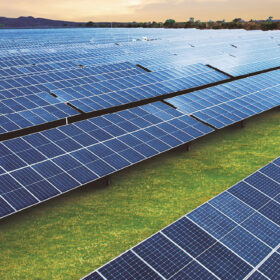
Energy storage in Brazil is entering a period of accelerated growth. Despite the lack of a legal framework for project operations, companies are moving to expand domestic battery production, diversify business models, and ensure that energy storage is ready to play a central role in the country’s energy transition.
Pair with PV for charging profitability
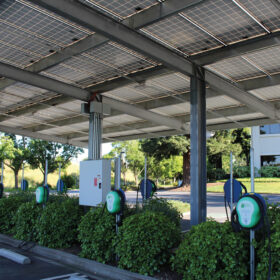
Electric vehicles now match and in some cases exceed the performance and reliability of internal combustion engine vehicles. Today, the most serious barrier to adoption is not EVs themselves, but deficiencies in charging infrastructure. Paired Power CEO Tom McCalmont explains how solar power and the right software could solve key challenges facing charger networks.
Repowering Germany’s renewable energy act
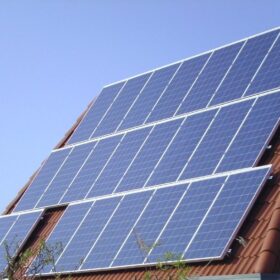
Germany’s energy industry changed when its Renewable Energy Sources Act came into force on April 1, 2000. It introduced a feed-in tariff for renewables and laid the foundations for a quarter century of progress for solar. Despite many disagreements, and the seven amendments that have followed since, few would dispute its significance in Germany and beyond. Twenty-five years later, and the current discussions in German parliament could soon decide the EEG’s future. These could frame the law as a model for the future, or as an obsolete set of ideas best left in the past.
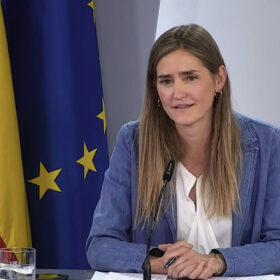
Questions remain in wake of Iberian blackout report
The entire Iberian Peninsula experienced a power cut in April, with outages lasting up to 24 hours, as a combination of factors pushed Spain’s grid past the point of no return. The first report on the incident, published in June by a government-appointed committee, said a series of power surges led to a chain reaction of disconnections. Recriminations continue between stakeholders as the investigation proceeds and Spain accelerates plans to reinforce its grid.
