
BESS: A hotbed of innovation
Jurors had a tough task selecting a battery energy storage system (BESS) award winner in 2025, with more than 60 entrants vying for the prize. Some entrants debuted entirely new approaches to energy storage, while others demonstrated continuous performance optimization, including round-trip efficiency gains, capacity utilization and degradation. This year’s winner takes an innovative approach to the C&I segment, with a modular system that breathes new life into second-hand batteries.
The business case for C&I storage
In 2024, European businesses installed roughly 20 GW of commercial and industrial (C&I) solar, but only around 1 GW/2 GWh of C&I battery storage. The gap is striking. Both technologies promise lower energy bills, improved resilience, and decarbonization, but batteries are yet to achieve the same commercial traction that solar enjoys. LCP Delta’s Dina Darshini asks why the gap persists.

BoS: Boosting bottom lines
Balance-of-system (BoS) products can have a major impact on solar plant safety and performance. The right equipment and components can increase reliability and reduce operations and maintenance (O&M) costs, and as this year’s winner shows, BoS innovation can have a major impact on project economics.

Forecasting big things
The output of a solar power plant is as unpredictable as the weather. Utilities and other stakeholders require forecasting on timeframes of between three days and 30 minutes ahead to optimize operations and ensure grid reliability. Reuniwatt’s Hannah Bergler reveals the complexity of providing forecasts at a PV mega project in the United Arab Emirates.

Solar anywhere
From the quiet plains of Alsace to some of the planet’s harshest frontiers, French company Ecosun Innovations is shipping out plug-and-play solar containers to bring instant, reliable power to off-grid sites. What began as a solution for construction crews and humanitarian missions is now attracting the attention of a new, fast-growing customer: the world’s armed forces, hungry for energy independence and low-carbon field operations.
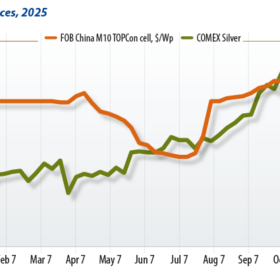
Consolidation mode
Policy developments, or the lack thereof, continue to shape market sentiment along the solar supply chain. Hanwei Wu of OPIS sees growing likelihood that China will implement a rumored plan to purchase and shut down excess polysilicon capacity, but slow progress keeps prices in a holding pattern.

Modules: Pushing to the efficiency summit
Selecting a winner from this year’s crop of modules was a difficult task. Perovskite-silicon tandem products were on the shortlist for the first time, provoking serious discussion, but questions remain over the market readiness of this technology. Several entries exemplified the industry’s impressive progress with tunnel oxide passivated contact (TOPCon) technology, including new milestones in efficiency, bifacial performance, and overall power rating. Ultimately, the jurors chose a winner that is treading a different technology pathway, the one most likely to bring single-junction silicon solar to its practical performance limits.
From scrapheap to strategy
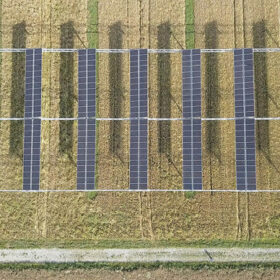
As many PV plants approach the midpoint in their typical lifespan of 25 to 35 years, the industry faces crucial decisions about what comes next. Much of the focus so far has been on managing modules, particularly on recovering their silicon and other materials. But the conversation must also extend to mounting structures. As the backbone of all solar plants, these structures represent a significant share of material use and a plant’s embodied carbon footprint. Everoze’s Kuba Gajewski explores reuse and end-of-life strategies for these structures and the practical barriers impeding their implementation.

Projects: The grid of the future
Major obstacles to further solar deployment are tackled by this year’s winner, an energy storage project that provides the kind of grid-shoring support that will be vital in global markets before long. From synthetic inertia to software-informed module cleaning, the pv magazine Awards Projects jury has rewarded those that have used technological innovation to achieve world firsts and significant cost savings.

Building competitive battery manufacturing in India
India must prioritize a policy framework that integrates the entire value chain, from raw materials and recycling to cell manufacturing and deployment, if it is to ensure long-term resilience for its battery manufacturing sector. That was the view of pv magazine Insight session panelists at The Battery Show, held alongside the Renewable Energy India Expo 2025 in Greater Noida, India, as Uma Gupta reports.
