
Field test supports viability of 20% hydrogen in German gas network
TÜV Rheinland, Rheinische Netzgesellschaft, and GVG Rhein-Erft have supplied 100 households in Erftstadt, Germany, with gas mixed with 20% hydrogen. They have found there were no disruptions to systems, devices, or the network itself.

New platform to purchase and sell PV, wind projects in Spain
NTeaser is a new platform that connects developers and investors to sell renewable energy projects and assets without intermediaries.

President Biden vetoes legislation to repeal moratorium on solar tariffs
Biden vetoed the repeal, saying it would undermine the efforts to ramp up domestic manufacturing to support a burgeoning solar industry and would create uncertainty for businesses and workers in the U.S. solar industry.
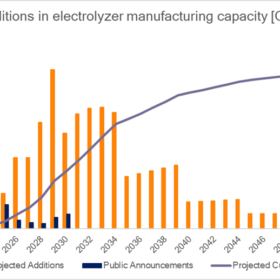
The Hydrogen Stream: Green hydrogen market could hit $850 billion in 2050
Research outfit Rethink Energy says the green hydrogen market could reach $850 billion in value by 2050.

Tongwei led global polysilicon capacity in 2022, says Bernreuter Research
The world’s top four largest polysilicon producers in 2022 were Chinese companies, led by Tongwei with 345,000 metric tons (MT), followed by GCL Technology, Daqo, Xinte, and Wacker Chemie.
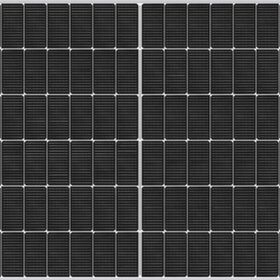
Sharp unveils 570 W TOPCon solar panel with 22.07% efficiency
Sharp’s new IEC61215- and IEC61730-certified solar panel offers a power conversion efficiency of 22.07% and a bifaciality of more than 80%. The operating temperature coefficient is -0.30% per C and its power tolerance is 5%.
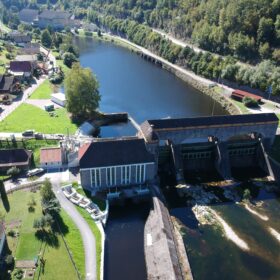
EnBW builds pumped hydro storage facility in Germany
German power utility EnBW says its new pumped hydro storage project will require an investment of €280 million ($304.9 million). It is scheduled for completion by the end of 2027.
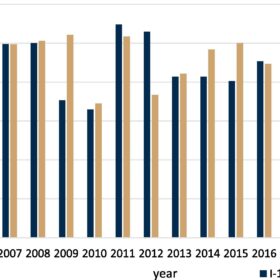
Researchers assess degradation in PV systems older than 15 years
Scientists have used the US National Renewable Energy Laboratory’s (NREL) HOMER software to calculate the degradation of solar panels deployed in two rooftop PV systems operating in Germany since 2003. Their calculations focused on the energy productivity of the systems.
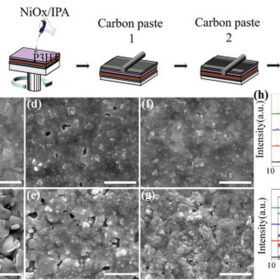
Carbon electrode perovskite solar cell with 20.8% efficiency
Researchers in China have built one of the most efficient carbon electrode perovskite solar cells ever reported to date. The device uses an organic/inorganic planar hole transport layer structure that purportedly has superior electrical contact.
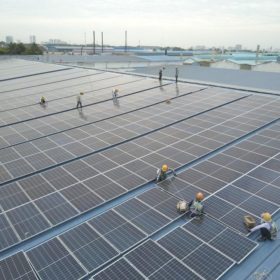
Vietnam’s solar development moves to rooftops, net metering
The Vietnamese government has announced a $135 billion energy strategy, with half of the country’s residential rooftops to be equipped with PV systems under a net-metering scheme. The nation also aims to become a power exporter by the end of the decade.
