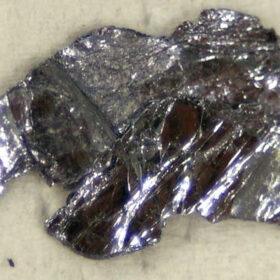
Initial attempt to build thin-film solar cells from molybdenum disulfide
A team at Colorado State University has proposed making thin-film solar cells from naturally abundant molybdenum disulfide. It has conducted a series of experiments to show that extremely thin films of molybdenum disulfide have unprecedented charge carrier properties.
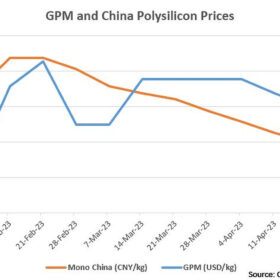
Polysilicon prices fall 1.33% to six-week low of $37.218/kg
In a new weekly update for pv magazine, OPIS, a Dow Jones company, provides a quick look at the main price trends in the global PV industry.

Installed heat pump costs to fall by 20% by 2030, says UK research institute
The UK Energy Research Center says that the total installed cost of air-source heat pumps could fall by 20% by 2030. Non-equipment costs may decline by 30%, while equipment costs alone could drop by 17%.

Germany hits 70 GW milestone
Germany added 2.65 GW of new PV capacity in the first three months of this year. In March alone, the nation’s new PV additions hit 944 MW.
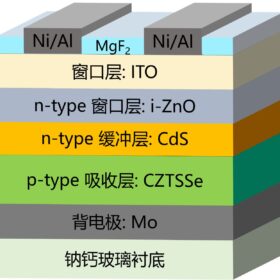
New selenization process paves way for 14%-efficient kesterite solar cells
Scientists in China claim to have gauged the selenization annealing process for kesterite solar cells, in order to achieve a kesterite absorber with low defects. They have developed a device with a certified efficiency of 13.8%.
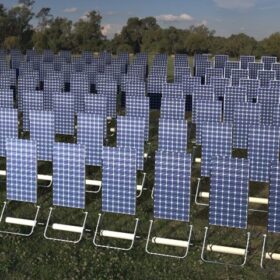
German startup unveils mobile, tiltable PV modules
Sinn Power is offering new tiltable solar panels for vertical PV systems in nature reserves and water-protection areas. They are not anchored to the ground and use a pendulum weight to return to their proper positions when hit by strong winds.
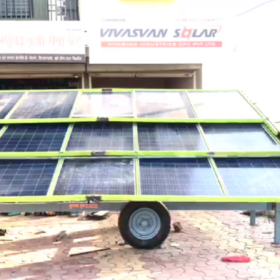
Mobile solar system for farms
India’s Vivasvan Solar has designed a foldable solar structure mounted on a trolley. The system has mechanisms to prevent damage to the panels during transit and is especially useful for agricultural farms.
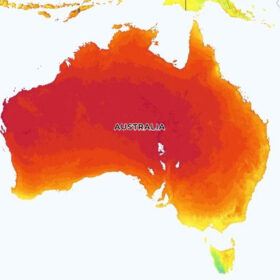
Australia paving way for global solar energy adoption
All of the leading countries for per capita solar and wind generation are in Europe except for Australia, which is generating more solar electricity per capita than any other country. Per capita, it is also a leading producer of wind energy.
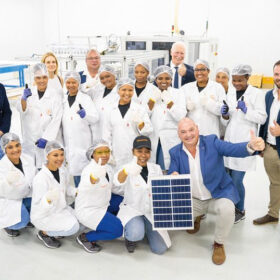
The green jobs promise
Promising to replace fossil fuel jobs with an identical number of clean energy roles in coal-dependent communities is overly simplistic and ignores the fact that communities need to be brought onside with credible expectations of better-quality employment.
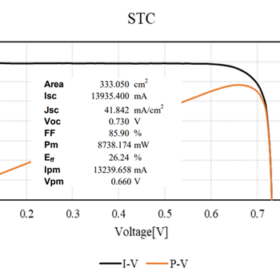
Das Solar claims record open-circuit voltage of 730 mV for n-type solar cell
Das Solar has achieved a world-record open-circuit voltage of 730 mV for an M10 n-type tunnel oxide passivated contact (TOPCon) solar cell, with a power conversion efficiency of 26.24%, according to the Chinese Academy of Sciences Institute of Electrical Engineering.
