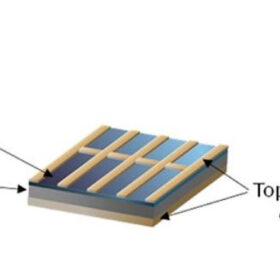
PEDOT:PSS/silicon solar cell built at room temperature with 10.1% efficiency
Japanese researchers have fabricated a heterojunction (HJT) solar cell with silicon and a polymer material known as PEDOT:PSS under room temperature conditions. It has an efficiency of 10.1%, an open-circuit voltage of 0.57 V, a short-circuit current density of 33.3 mA/cm2, and a fill factor of 0.53.
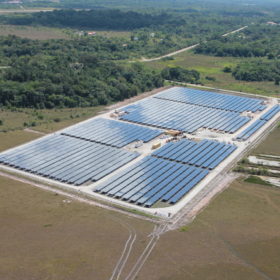
France to offer 2.3 GW of solar in tenders in June
The French government has announced the launch of a tender for 1.5 GW of ground-mounted PV and another tender for 800 MW of rooftop capacity, in order to compensate for the high failure rate of the third round of tenders for large-scale PV plants.
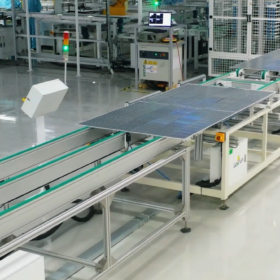
India’s Rayzon Solar to make TOPCon modules in US
Chirag Nakrani, the director of Rayzon Solar, told pv magazine that the company’s 500 MW PV module factory in the United States will start producing TOPCon solar modules by June 2024.
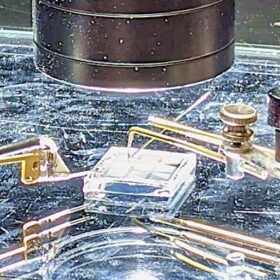
Bifacial CdTe solar cell achieves record power density via film lithography
The US National Renewable Energy Laboratory (NREL) and First Solar have used cracked film lithography (CFL) to build a bifacial cadmium telluride solar cell with a power density of 20.3 mW cm−2. They claim the cell has a higher bifacial power density than any polycrystalline absorber currently manufactured at scale.

German highway PV could generate up to 200 TWh a year
Surface limitations facing the expansion of photovoltaics in Germany have led to a bold vision: installing PV arrays along motorways and creating a vast DC smart grid in the process. The plan could even be implemented across Europe.
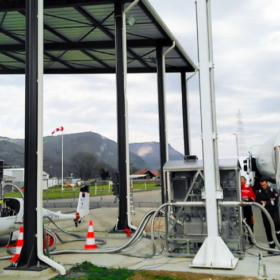
The Hydrogen Stream: Hydrogen-electric powertrain for aircraft
H2FLY has wrapped up initial filling tests with the liquid hydrogen tank for its HY4 aircraft, while Wingcopter has announced the development of a hydrogen-fed delivery drone.
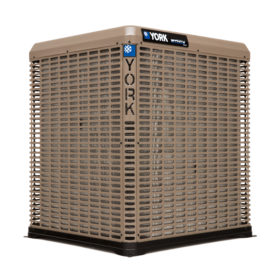
Canada launches cold climate heat pump rebate scheme
The government of Canada announced it is now accepting applications for its Oil to Heat Pump Affordability Program. Eligible low-to-middle-income Canadian households currently heating their homes with oil can apply for an upfront payment of up to CAD 10,000 ($7,413) toward purchasing and installing a new, electric, air-source cold climate heat pump.

Eritrea secures $50 million for 30 MW solar plant with 30 MWh of storage
The African Development Bank funding will help the country in achieving its 2030 target of increasing electrification and supplying 20% of electric power demand through renewable energy sources.
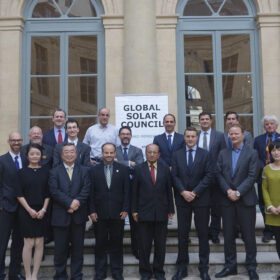
Remembering Shri Pranav Mehta
National Solar Energy Federation of India (NSEFI) founder and chairman Pranav Mehta died on Dec. 15, leaving a void in the industry. His vision helped establish India as a global solar leader and his contribution to the sector laid the foundation for the world’s fastest-growing solar economy.
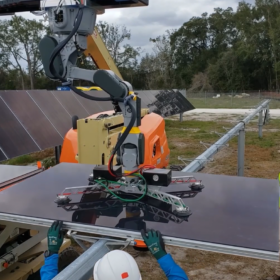
US company develops robotic solution to address installer shortage
Sarcos has designed a robotic PV construction solution that delivers, detects, lifts, and places PV modules in large-scale solar plants. It has recently field tested and validated the prototype solution in a pilot project funded by the US Department of Energy.
