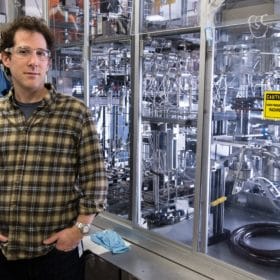
New approach to III-V tandems sets 32.9% efficiency record
A collaboration between the U.S. National Renewable Energy Laboratory and Australia’s University of New South Wales has yielded a new efficiency record of 32.9% for a tandem cell device utilizing III-V materials. Key to the achievement was a new technique enabling the researchers to take advantage of “quantum wells” in the material that serve to trap charges and enable tuning of the cell bandgap to absorb more of the light spectrum.
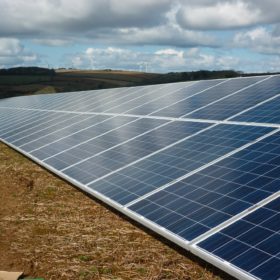
Merchant PV project announced in Italy
Italy’s Tages Group is planning to build a 4.5 MW solar plant in Sicily and sell the generated electricity to the spot market.
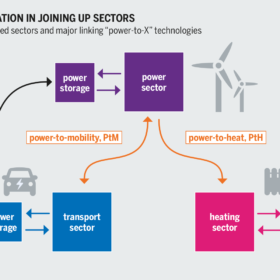
Power-to-X may cover 28% of global energy demand by 2050
The so-called powerfuels are primarily required for sectors that are difficult to electrify, such as aviation and shipping, as well as for the processing of raw materials. This is shown by a new study by Finland’s LUT University and the German Energy Agency.
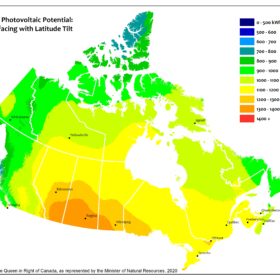
New tool calculates solar potential of any location in Canada
A newly developed digital platform calculates the expected energy generation in kilowatt-hours for grid-connected PV arrays without storage, under standard testing conditions.
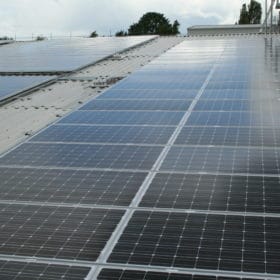
Thermal model to predict PV panel temperature
Scientists in Turkey have tested a transient thermal model to predict PV module temperature during a five-day interval in June. The model considers the heat capacity of a PV module, which is usually not provided by manufacturers in their product sheets, as a parameter for temperature prediction.

Scotland stimulates hydrogen economy with £100m investment
Scotland aims to install 25 GW of electrolyzer capacity by 2050.

Australian research improves scope, efficiency of PV light sensitizers
Australian scientists have developed an algorithm to increase both the efficiency and compatibility of light sensitizers in solar panels.

US to extend Investment Tax Credit for solar to 2024
The solar Investment Tax Credit will remain at 26% for projects that begin construction in 2021 and 2022, but will fall to 22% in 2023, and down to 10% in 2024 for commercial projects.
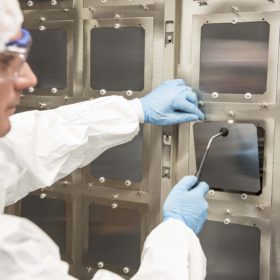
Oxford PV retakes tandem cell efficiency record
Perovskite developer Oxford PV has set a new world record for perovskite-silicon tandem cell efficiency at 29.52%, edging out the previous record set less than a year ago by Helmholtz Zentrum Berlin. The new record has been certified by the U.S. National Renewable Energy Laboratory.
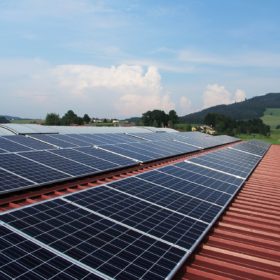
Solar claims all the 700 MW allocated in Poland’s latest small-scale renewables auction
Once again, solar was the only technology competing in the procurement exercise for renewables not exceeding 1 MW in size. The ERO reported a minimum price of PLN228.7/MWh ($61.2), which compares to PLN269.0 a year earlier.
