Competition in transmission sector will drive Indian renewables
Intra-state transmission infrastructure is the weakest link in the Indian grid. However, the introduction of competition from private players could help to drive down construction costs and promote timely completion of projects.
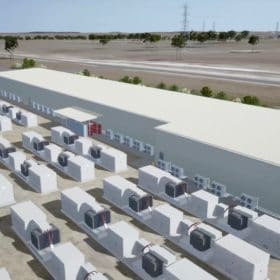
ING finances 100 MW/150 MWh storage project in Australia
Vena Australia has reached financial close on its Wandoan South Big Battery, thanks to ING Australia. The international bank is increasingly financing green energy projects, but this is the first standalone battery project it has financed in the Asia Pacific. Vena Energy Australia says this phase is just the beginning of a project that is to feature 650 MW of solar PV and 450 MW of battery storage.
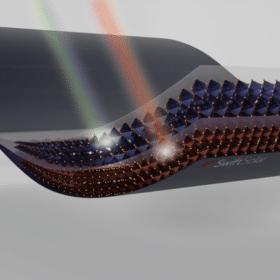
Swift Solar secures financing to expand perovskite R&D
The financing round was led by GitLab CEO Sid Sijbrandij and cryptocurrency expert James Fickel. The company will use the proceeds to expand R&D, develop prototypes and add staff.
The US deployed 3.8 GW of solar in Q3
According to the Solar Energy Industries Association (SEIA) and Wood Mackenzie, solar accounts for 43% of all new electric generating capacity additions through Q3 2020, more than any other electricity source.
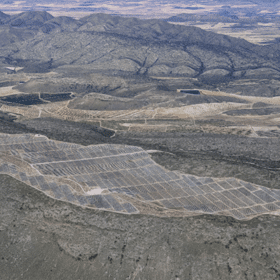
Cubico buys T-Solar for €1.5bn
Through the transaction, Cubico acquired 47 operating assets with a capacity of 274 MW – including 167 MW of PV in Spain as well as 7 MW of solar plants in Italy –and a portfolio of solar projects under development of about 1.4 GW.
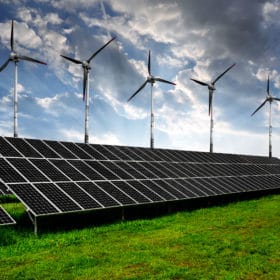
Chinese PV Industry Brief: 6 GW wind-solar-storage project in Inner Mongolia and a 5 GW cell factory in Fujian
A huge renewable energy complex is planned to include 5 GW of PV capacity. Furthermore, the State Power Investment Corporation has announced a plan to set up a 5 GW heterojunction solar cell factory in Fujian province.
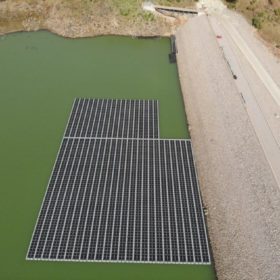
First unit of 250 MW floating PV project comes online in Ghana
The first 5 MW portion of the large floating power plant was connected to the transmission system of a 404 MW hydropower dam on the Black Volta River.
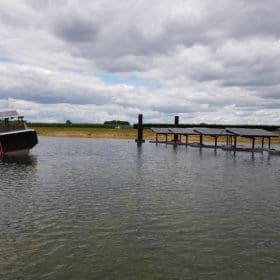
New study debunks several myths about floating PV
Dutch researchers have shown that bifacial floating PV arrays do not benefit significantly from sunlight reflected from the water, and claim that the water only reduces panel temperatures by a small amount. Bird droppings may also affect system performance, but floating PV could achieve a lower LCoE than ground-mounted arrays if such issues are addressed, they say.

Bulgaria and Romania set to be EU solar hotspots
Each of the nations, like Greece, will have gigawatt-plus solar additions in 2024, according to Solarpower Europe, enough to carve out a 3% slice of an anticipated 35 GW regional market.
Poland allocates 800 MW of solar in mixed PV-wind auction
Overall, the Polish energy regulator has allocated 1.7 GW of renewable energy capacity in a procurement exercise that was open to projects exceeding 1 MW in size. The auction concluded with a lowest price of $0.051/kWh, slightly up from the auction of the same kind held last year.
