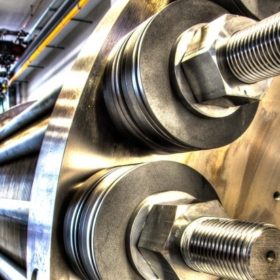
EDF expands hydrogen business in Europe
Hynamics, EDF’s hydrogen unit, has set up its own subsidiary in Germany. From there, the French group plans to expand its hydrogen generation business across the continent.

Rooftop PV vs. rooftop farming
U.K. researchers have developed a way to optimize urban rooftop use with solar PV and agriculture.
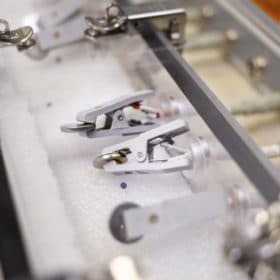
A new catalyst for lithium-air batteries
Scientists in the United States demonstrated a lithium-air battery with improved energy and stability performance, thanks to the use of molybdenum triphosphide as a catalyst for both charge and discharge reactions.
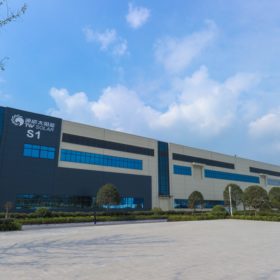
Chinese PV Industry Brief: JA Solar sells solar farms while Tongwei announces lower cell prices
JA Solar has agreed to sell three solar farms to China Power Investment Corporation, while Tongwei announced lower prices on a number of cells and eight leading players are calling for the standardization of PV products with 210 mm wafers.
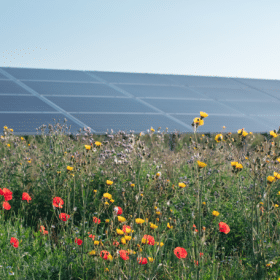
Denmark’s Better Energy designs solar park for lowlands
Better Energy is developing a new pilot project to demonstrate how future solar parks can be built on restored wetlands, not only reducing CO2 emissions by producing green power, but also by restoring carbon-rich lowland areas to wetlands.
Financing distributed solar energy in India
A new report by Auroville Consulting highlights gaps and challenges existing today in financing rooftop solar based on its evaluation of the implementation of international lines of credit at the state level (for Tamil Nadu), and the availability and accessibility of financial support.
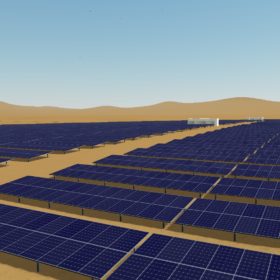
Asunim, I-kWh join Elsewedy Electric on PV-plus-storage project in South Sudan
Egyptian energy services company Elsewedy Electric T&D (EETD) recently secured a contract to build a 20 MWp PV plant and 35 MWh storage system in South Sudan.

India ranked the world’s most attractive PV market by Ernst & Young
The latest edition of the accountant’s renewables attractiveness index has placed the nation in top spot for photovoltaics, helping it to fourth spot for overall clean energy investment. Mexico has been hammered by the government’s attitude to clean power and France has also slipped, four places.
Boosting the energy transition: why the European Commission should support independent aggregators
Aggregators continuously monitor the needs of the electricity grid on one side and the energy consumption of a large number of distributed assets on the other. When the grid is stressed or out of balance, aggregators adjust the consumption or production of those distributed energy assets to help the grid restore balance. These services either lead to direct compensation from a transmission system operator (TSO), or a reduction in the total energy bill of the owner of the distributed asset.
Horizon looks to future with green hydrogen microgrid
Western Australian utility Horizon Power will build the nation’s first remote microgrid using renewable hydrogen generation at Denham, in the state’s northwest, having secured the support of the Australian Renewable Energy Agency (ARENA).
