
French government confirms retroactive FIT cuts for contracts signed before 2011
The cuts concern installations with capacities above 250 kW. The Ministry for the Ecological Transition said such projects account for just 0.3% of all contracts signed between 2006 and 2010. The targeted savings are between €300 million to €400 million. But Enerplan, the nation’s PV association, has described it as an “attempt by the government to force its way.”

SunPower raises guidance after solid Q3 driven by energy storage
It took a pandemic, but the U.S. residential solar and storage industry has finally figured out how to lower customer acquisition costs.

Perovskite-based solar window tech from NREL
NREL’s new solar window darkens in the heat of the sun, producing electricity via embedded perovskite film. The tech is based on formamidinium-based metal halide perovskite, an inherently thermochromic material exhibiting significant optical changes.
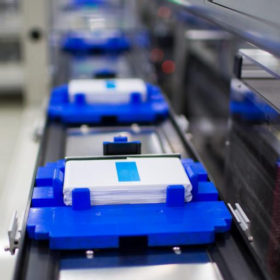
‘China must put EV battery reuse at heart of net-zero ambition’
The centralized nature of policymaking in Beijing would enable component standardization to ease the transition from EV to stationary energy storage use, according to Greenpeace East Asia.

REC Silicon could restart poly production at Moses Lake
The Norwegian polysilicon maker has been been frozen out of the Chinese solar market by political tensions between Beijing and the U.S. and mothballed its Washington State production line last year. However, two recent business agreements could change all that.

Netherlands wants to create hydrogen trade platform
The Dutch government is planning to initially create local trading points, a system for guarantees of origin, and a hydrogen price index.
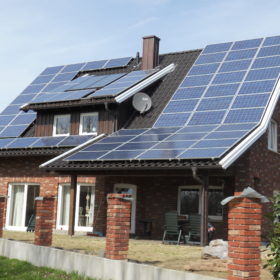
New rooftop PV inverter series from Indian manufacturer
Power electronics specialist Best Power Equipments has launched a product range with a power rating of 1-60 kW and efficiency of up to 98%.

Plasma passivation process to cut silicon cell costs
Scientists in Saudi Arabia have developed a new passivation process for n-type silicon solar cells, which they say could offer a simpler, lower-cost alternative to current processes used in manufacturing. The group fabricated wafers using this process with promising results, and now plans to integrate the process into a full silicon cell.

World is set for 3.3C temperature rise, predicts Bloomberg
Although the global solar industry might be cheered by the prospect of a healthy slice of an expected $12 trillion, 30-year windfall, governments are falling far short of steering us clear of catastrophic global heating, according to the analyst’s latest New Energy Outlook report.
Major economies should divert fossil fuel Covid-recovery cash to clean energy before it’s too late
A report by Finnish company Wärtsilä has estimated the potential impact if every dollar committed to a non-renewables energy sector recovery was instead funneled to clean power.
