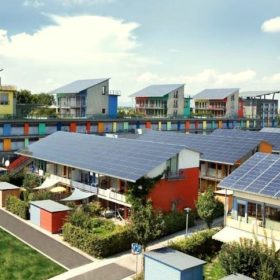
Italy awards tariff of €0.11/kWh for shared electricity in energy communities
Energy communities in Italy will be awarded a special tariff for all shared power in renewable energy systems not exceeding 200 kW in size. Surplus power can be injected into the grid, but with no remuneration, which may encourage the members of these communities to resort to storage.
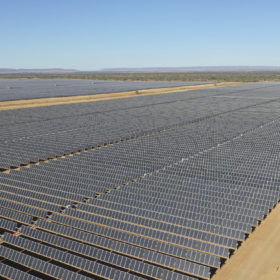
Enel plans to drive 120 GW of renewables capacity by 2030
The Italian energy business plans to spend €70 billion on clean energy this decade and also announced plans to invest in e-mobility and grid flexibility, in concert with outside investors.
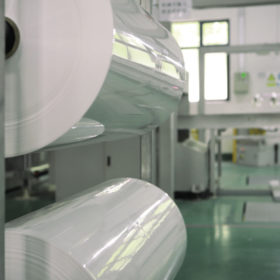
DSM unveils ‘all purpose’ polyolefin-based backsheet for PV panels
Dutch materials specialist DSM launched a new polyolefin-based backsheet that is claimed to have outstanding UV and abrasion resistance as well as good moisture barrier and hydrolysis resistance.

UK government leaves door open on more regular renewables auctions
Developers dodged more onerous supply-chain and carbon-footprint commitments in the results of a recent consultation exercise announced by BEIS but appear set to lose all Contracts for Difference top-up payments during periods of negative electricity prices.
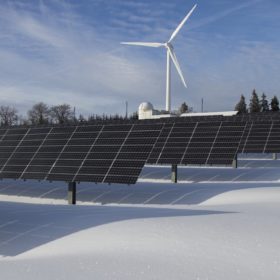
New round, same result: PV takes it all in Germany’s wind-solar tender
The German authorities allocated around 202 MW of solar power in the procurement exercise. Final prices ranged between €0.0518 and €0.0545 per kWh.
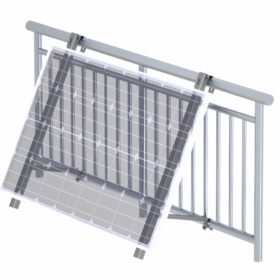
Mounting structure for balcony solar modules
Sino-Australian manufacturer Clenergy has unveiled a new mounting solution for PV panels installed in balconies. The structure is adjustable to different types of commonly-sized balconies with metal railings.
Online algorithm to estimate open-circuit voltage in PV systems
The new technique, proposed by researchers in Pakistan, is claimed to estimate the voltage, current and temperature of a PV system without interrupting the power flow to load.
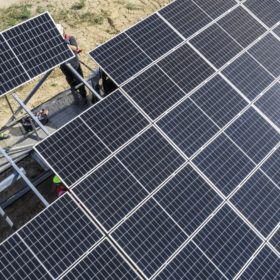
Germany’s largest solar park begins feeding power into the grid
Although still unfinished, the 187 MW solar park under construction by German utility EnBW near Berlin has already begun delivering power to the grid.
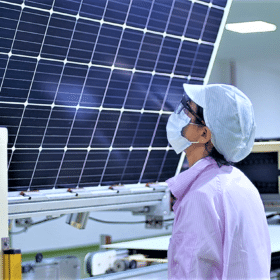
Production begins at 500 MW Mexican solar panel fab
Mexican solar module manufacturer Solarever has switched on the production lines of its manufacturing facility in Tecomán, in the state of Colima.

Carbon nanotubes in search of a solar niche
A group of German scientists has analyzed the possible trajectory of carbon nanotubes (CNTs) in photovoltaic research and industry and has suggested a roadmap to bring this technology closer to mass production. Despite a large number of challenges, the academics predicted a brilliant future for CNTs in PV applications, explaining that the barriers to their adoption are constantly being reduced.
