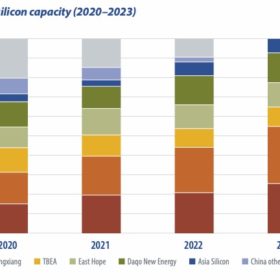
Xinjiang sanctions and the PV supply chain
Due to forced labor concerns, a ban on imports from Xinjiang to the United States appears likely. This could be another blow for polysilicon producers hit by industrial accidents and the threat of floods in the third quarter of 2020. Chinese polysilicon prices have surged more than 50% in a matter of a months. Consequently, wafer prices have skyrocketed, bringing increasing costs to the solar cell and PV module segments. In the face of price hikes, some projects are now postponed until the first half of 2021.

Former landfill to become largest US urban solar project
Developers will build the 50 MW Sunnyside solar project on a former landfill site just outside of downtown Houston.
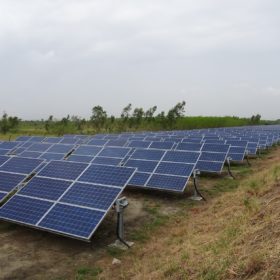
Indian utility launches call for 500 MW of PV
GUVNL, an electric utility in the Indian state of Gujarat, is seeking project proposals through competitive bidding, followed by a reverse auction. Bidding closes on Feb. 23.

Sumitomo reveals hydrogen plans in Australia, Oman
Sumitomo has signed a contract with an EPC for a PV-powered green hydrogen plant in Queensland, and has also started a feasibility study for a gray-green hybrid hydrogen project in Oman.

Silicon-carbide inverter for medium-voltage grids
Developed by scientists from German research institute Fraunhofer ISE, the silicon-carbide device claims 98.4% efficiency and could be used in utility-scale photovoltaic projects.
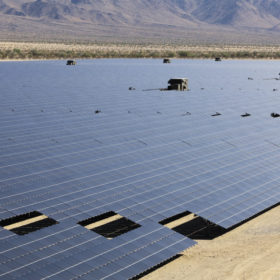
First Solar sells 10 GW solar pipeline for $261 million
The deal includes the Rabbitbrush, Madison, Oak Trail, Horizon, and Ridgely projects, which are expected to start construction in the United States in the next two years, and the 30 MW Barilla Solar project, which is operational.

Trina claims 3% energy gain with new tracking system over traditional trackers
The company’s integrated tracker manufacturer Nclave developed a new system designed primarily for large-form factor modules and with a new algorithm that promises to boost yield in diffuse light conditions.

Total leaves American Petroleum Institute
Total has decided not to renew its membership in the American Petroleum Institute, following a detailed analysis of its climate positions. The French energy giant said the group’s positions are at odds with its climate targets.

Bangladesh forms $125 million fund for sustainable technology
The new financing scheme is aimed at helping factories to upgrade, acquire renewable energy-related machinery and technology and increase environment-friendly production in an effort to achieve sustainable development goals.

How end-user subsidies can help achieve universal energy access
In a recent GOGLA discussion paper, 25 GOGLA members discussed the way forward on how end-user subsidies can be modeled to accelerate universal energy access in underserved markets.
