
Spain’s Endesa unveils ambitious plans for green hydrogen
The Spanish power utility announced it wants to deploy 23 green hydrogen projects by 2024. The company plans to build around 340 MW of electrolyzer capacity.

Germany installed 4.88 GW of solar in 2020
The country saw around 525 MW of new PV capacity come online in December alone. The feed-in tariffs for PV systems not exceeding 750 kW in size were reduced by 1.4%.
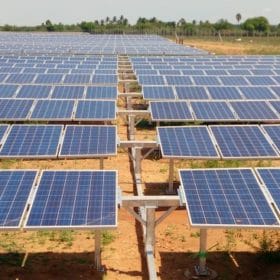
India’s state power companies invited to develop 5 GW of solar
The PV projects – tendered under the Central Public Sector Undertaking scheme – will be entitled to government support through ‘viability gap funding’, with the level awarded determined by reverse-bidding auctions for the project capacity.

Turkey sets fixed tariff for licensed PV projects
Large scale PV projects selected in public tenders held by the Turkish authorities will be awarded a 10-year tariff of TRL0.32/kWh ($0.044). The tariff will be indexed to inflation and dollar-euro exchange rate.

GCL-Poly cross defaults over unpaid $500m senior notes
Creditors refused to postpone payment of the three-year notes for another 36-month term and now face receiving less than 5% of the amount due once a proposed debt restructure is completed, with the balance kept back until January 2024 regardless.
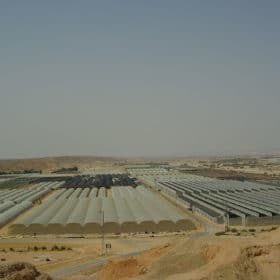
Israeli government wants to boost development of agrivoltaics
The Israel Ministry of Energy and the Ministry of Agriculture have decided to implement a pilot research program to assess the feasibility of agrivoltaic projects in the country. The possibility of combining PV and agriculture in a land with limited land availability and increasing energy demand is considered a win-win solution by the government.

Panasonic to exit solar manufacturing
The Japanese brand will continue to sell third-party-made modules under its brand in its home market, as it already does overseas, but in-house PV wafer, cell and module production will halt by the end of fiscal year 2022.

Malaysia to allocate another 500 MW of rooftop PV under net metering
The NEM 3.0 program will run until the end of 2023 and will see the participation of residential, commercial and industrial prosumers as well as public entities and government ministries.

France publishes first-quarter FITs for PV systems up to 100 kW
The feed-in tariff granted reduces each quarter, in line with how much solar capacity was installed in the previous three-month period.

Dual passivation tech for 20.14%-efficient perovskite solar cell
Europium ions have been used by Chinese researchers to passivate both the perovskite and electron transport layer (ETL) films of a MAPbI3 perovskite solar cell. As a result, the device’s efficiency was raised by approximately 1.5%. The dual passivation approach also achieved an increase in the cell’s fill factor and open-circuit voltage.
